

527.6K
Downloads
397
Episodes
Do you want ideas for questions to deepen your conversations? Do you want to feel intimately connected to your spouse? Do you desire to parent with purpose? If so, tune in each Monday with Laura, a licensed marriage and family therapist who specialized in Christian sex therapy. She interviews the best faith-based speakers to answer our questions and doesn't shy away from a wide range of difficult topics. Sexual intimacy is discussed once a month so that you can delight in your marital relationship, feel equipped to teach your children about sex, and learn practical ways to overcome hurt or addiction. Episodes on health and wellness cover topics of hormones and free lifestyle swaps, perimenopause, and what simple practices yield HUGE health benefits. Marital experts teach conflict resolution that actually works, parenting pros share wisdom from newborns to adult children, business leaders let us in on secrets of the trade, and the foundation of everything is Jesus Christ! Find joy here and live on purpose as you consider, “What’s your savvy sauce?!"
Episodes
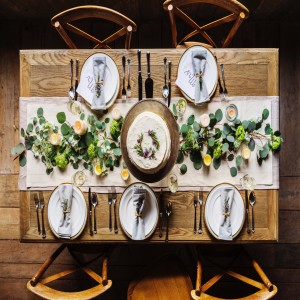
Monday Nov 12, 2018
Monday Nov 12, 2018
26. Practical Tips for Eating Dinner Together as a Family with Blogger and Cookbook Co-Author, Rachel Tiemeyer
**Transcription Below**
Psalm 34:8 (a) NIV “Taste and see that the LORD is good;”
Rachel Tiemeyer is one of the two moms behind the blog Thriving Home and a new cookbook titled From Freezer to Table: 75+ Recipes for Gathering, Cooking, and Sharing. She and her friend, Polly Conner, started their site in 2012 as a way to encourage other moms by sharing tips, stories, and healthy recipes from their own homes. After freezer cooking for their families for nearly a decade, they now jokingly refer to themselves as “freezer meal evangelists”. Their blog is a top-ranking site for healthy freezer meal resources, and they are currently writing their second cookbook that will focus on slow cooker and Instant Pot freezer meal recipes. Rachel and her husband have three elementary-aged children and live in Columbia, Missouri.
At The Savvy Sauce, we will only recommend resources we believe in! We also want you to be aware: We are a participant in the Amazon Services LLC Associates Program, an affiliate advertising program designed to provide a means for us to earn fees by linking to Amazon.com and affiliated sites.
Socials:
Instagram @thrivinghome
From Freezer to Table Cookbook
Table Talk Cards Sold Here
Article on Importance of Enjoying Dinnertime as Family Time
Thank You to Our Sponsor: Leman Property Management Company
Connect with The Savvy Sauce on Facebook or Instagram or Our Website
Please help us out by sharing this episode with a friend, leaving a 5-star rating and review, and subscribing to this podcast!
Gospel Scripture: (all NIV)
Romans 3:23 “for all have sinned and fall short of the glory of God,”
Romans 3:24 “and are justified freely by his grace through the redemption that came by Christ Jesus.”
Romans 3:25 (a) “God presented him as a sacrifice of atonement, through faith in his blood.”
Hebrews 9:22 (b) “without the shedding of blood there is no forgiveness.”
Romans 5:8 “But God demonstrates his own love for us in this: While we were still sinners, Christ died for us.”
Romans 5:11 “Not only is this so, but we also rejoice in God through our Lord Jesus Christ, through whom we have now received reconciliation.”
John 3:16 “For God so loved the world that he gave his one and only Son, that whoever believes in him shall not perish but have eternal life.”
Romans 10:9 “That if you confess with your mouth, “Jesus is Lord,” and believe in your heart that God raised him from the dead, you will be saved.”
Luke 15:10 says “In the same way, I tell you, there is rejoicing in the presence of the angels of God over one sinner who repents.”
Romans 8:1 “Therefore, there is now no condemnation for those who are in Christ Jesus”
Ephesians 1:13–14 “And you also were included in Christ when you heard the word of truth, the gospel of your salvation. Having believed, you were marked in him with a seal, the promised Holy Spirit, who is a deposit guaranteeing our inheritance until the redemption of those who are God’s possession- to the praise of his glory.”
Ephesians 1:15–23 “For this reason, ever since I heard about your faith in the Lord Jesus and your love for all the saints, I have not stopped giving thanks for you, remembering you in my prayers. I keep asking that the God of our Lord Jesus Christ, the glorious Father, may give you the spirit of wisdom and revelation, so that you may know him better. I pray also that the eyes of your heart may be enlightened in order that you may know the hope to which he has called you, the riches of his glorious inheritance in the saints, and his incomparably great power for us who believe. That power is like the working of his mighty strength, which he exerted in Christ when he raised him from the dead and seated him at his right hand in the heavenly realms, far above all rule and authority, power and dominion, and every title that can be given, not only in the present age but also in the one to come. And God placed all things under his feet and appointed him to be head over everything for the church, which is his body, the fullness of him who fills everything in every way.”
Ephesians 2:8–10 “For it is by grace you have been saved, through faith – and this not from yourselves, it is the gift of God – not by works, so that no one can boast. For we are God‘s workmanship, created in Christ Jesus to do good works, which God prepared in advance for us to do.“
Ephesians 2:13 “But now in Christ Jesus you who once were far away have been brought near through the blood of Christ.“
Philippians 1:6 “being confident of this, that he who began a good work in you will carry it on to completion until the day of Christ Jesus.”
**Transcription**
[00:00:00] <music>
Laura Dugger: Welcome to The Savvy Sauce, where we have practical chats for intentional living. I'm your host, Laura Dugger, and I'm so glad you're here.
[00:00:18] <music>
Laura Dugger: I want to say thank you to Leman Property Management for being such a loyal sponsor of The Savvy Sauce. They're located in Central Illinois and with over 1,600 apartment homes in all price ranges, they have listings throughout Morton, Pekin, Peoria, Washington, and Canton. They can find the perfect spot for you.
Check them out today at MidwestShelters.com or like them on Facebook by searching Leman, L-E-M-A-N, Property Management Company. We'll make sure and put a link in our show notes. Thanks again for the sponsorship.
Today we get to hear from Rachel Tiemeyer, who is one of the two moms behind the blog Thriving Home and co-author of the cookbook titled From Freezer to Table. Their blog is a top-ranking site for healthy freezer meal resources, and they are currently writing their second cookbook that will focus on slow cooker and instant pot freezer meal recipes. [00:01:18]
Today, we will discuss nutrition, practical steps to help mealtime become less hectic and more enjoyable, and we will learn more about her passion to provide nourishment to others. As a satisfied owner of their first cookbook, it's an honor for me to get to welcome Rachel Tiemeyer to The Savvy Sauce today.
Hi, Rachel.
Rachel Tiemeyer: Hey, Laura. Thanks for having me on your show.
Laura Dugger: Absolutely. So excited you're here. And let's just start by hearing a little bit more about you. Can you share a snapshot of your life?
Rachel Tiemeyer: Sure. I'd be glad to. I'm married to a guy named Nathan. He's a pastor at our church here in Columbia, Missouri and we've got three kiddos. They're all in elementary school now. I've got a fifth-grade son, a third-grade daughter, and a first-grade son. They are pretty fun. I love this parenting stage. They're all really close in age. They're all two years apart or closer.
So those little years were pretty intense. I stayed home with them and kind of worked part-time while they were at home, and I loved that stage. But boy, having them all in school and being able to participate and coaching their sports and being involved at school is one of my favorite things so far. [00:02:32]
Laura Dugger: You and Polly Connor started your blog, Thriving Home, years ago. So can you take us back? Because it sounds like that coincided with the time that you had those little kids at home.
Rachel Tiemeyer: Yeah, it did. We both started personal blogs back in 2008. So it was kind of the beginning of the blog era, kind of jumped in. And we had two separate, very different blogs. So mine was more about healthy living and cooking and sharing a bit about some things I was learning about a disease my son had which I can talk more about in a few minutes and her blog was more focused on creative endeavors. She's definitely the queen of sewing and makeovers in her home and things like that. And so pretty different, but we both had a similar goal, and that was to encourage moms.
So we both had these blogs from 2008 to 2011. We had already become friends, and that's a whole other story. We began swapping guest posts on each other's blogs. So that was kind of like this new concept. We were like, Whoa, look, we can share traffic with one another. [00:03:40]
So that was kind of how our interest in blogging began. Then in 2011, Polly became a stay-at-home mom. I was already home with my kids, actually working part-time for my church. So my background is when I graduated from college, I took a job right away with a new church. It was a church plant in Columbia, Missouri. It's called The Crossing, if anybody ends up in Columbia, Missouri, and wants to check it out.
But I worked full-time there for seven years as our director of children's ministry and then co-director of student ministries. So at that time, our church was fairly small and I could kind of wear both hats. But then when I had my first kiddo, I stepped back to work just part-time doing some children's ministry. And we always joke that Polly took my job. That's kind of how we met.
So she took over the student ministry side of things, and we really grew in our friendship during that time. And that's when we started dreaming together. We're both just kind of natural entrepreneurs, go-getters, we love to work hard, we're creative, and we really enjoy our friendship together. [00:04:45] And so we began dreaming, what would it look like to start a business together?
And when she had her first kid and she stayed home, and worked part-time for the church, we were like, Oh my gosh, what if we blended our two blogs and we started one blog that really just helped moms thrive at home or equipped them to thrive at home? And we kind of shared our journey of the things we were learning in our own homes. What if we did that on one blog and we really had earning income in mind as well? So, that's how Thriving Home began. We launched it in January of 2012, and that was the beginning of over-six-year journey so far.
Laura Dugger: Have you learned any tips, maybe things that you could share for ways to work well with a partner?
Rachel Tiemeyer: That's a great question. We get asked that a lot. The best way to describe going into business with someone else, I would say, is it's almost like a second marriage, which sounds weird. But if you think about it, there's so much trust involved. You're making big decisions together. You're sharing finances, which can really get sticky over time if you don't set up some expectations from the beginning. And if you don't talk very just honestly with one another regularly, those kinds of things can be hard. [00:06:05]
So I'm thankful that Polly... I always say that she's such a great friend and business partner in the sense that anytime we've had something that feels off, like feels, oh gosh, my feelings are hurt or I'm a little frustrated by something, I mean, she just calls me up and we're able to talk about it quickly.
We always say one of our big goals in our partnership is to keep short accounts. So that means we don't let things fester. We talk about them quickly. And along with that, we try to believe the best in one another. You know, we really are trying to communicate constantly to each other, kind of like I am in my marriage too, but that we're on the same team. We try to talk to one another that way and remember that we're for each other.
Laura Dugger: I love that. You're even using biblical principles to apply it to the relationship.
Rachel Tiemeyer: I'm really encouraged by it. One of my favorite things in life is being able to work with a friend on a creative endeavor that, oh, by the way, it's kind of a side hustle that earns some income for our family too. [00:07:09]
Laura Dugger: Yes, a way to serve them. Some of the listeners today may be in your same boat from when you started. Maybe they have little kids at home and they're starting something up right now. What did that look like for you to juggle having three kids at home working with a partner?
Rachel Tiemeyer: Right. First of all, if anyone out there is thinking about starting a blog as a business or something along those lines, I mean, I would think even podcasting kind of falls in this, so you can probably relate, Laura, but that is not a quick way to make money. So we always say that, you know, first and foremost, blogging is not a get-rich-quick kind of business. And probably my guess is most businesses aren't that.
So what we've learned is that plugging away consistently, persistently, being faithful to show up every week and provide good content and serve our audience and grow and learn. And we've had to pivot. You know, things are always changing in the blogging world. [00:08:06] By doing that, here we are over six years later, and we've grown this business quite a bit while also keeping our families first, our friendship first, God first, all those things. That's always been our goal.
But we started when the stakes were really low and our dreams were really big, but time was so slim at that time, right? Because here we are. Our first goal was to be good moms, to take care of our kids, to really make our homes a thriving home. And we sometimes joke that really it was more kind of like a surviving home but... you know those days, right? Well, actually it's like at some point during most days when you have kids at home, you're just like, I've got to survive.
But over time, as we kept plugging away, and I'm talking about like working during naptime, working in the evenings, grabbing a little time on the weekends for those first two years. And then as the business began to pick up... and guys, we didn't make a profit for a year and a half, okay? [00:09:09] So yes, we built it to be a business and earn income but we didn't pay ourselves our first paycheck... And put paycheck in quotes, please, because it was nothing to write home about.
But we were so proud and so motivated to see that we felt like we were using our God-given gifts and talents to help others and being able to be creative and being able to still serve our families and make them number one. That was beginning to kind of pay off. So it's been a journey. It is a hard balancing act, right, to keep your kids and your family and your marriage and God first, I would think in any job. But we have to keep going back to that and saying that is what's most important. Then our goal is to make Thriving Home hopefully a thriving business.
Laura Dugger: I love that. Well, it's exciting for us all to hear the backstory for how your blog began. But now let's move on to the journey from posting your first Thriving Home post to publishing a cookbook. Did that go as you expected? [00:10:15]
Rachel Tiemeyer: All right, so when we got into this, we had no idea what to expect. The stakes were low. I think from day one, we've always said, we're going to hold this loosely. We don't know what God's plans are for it, but we're also going to work really hard at it.
Both of us are super passionate about what we do. We love it. Like we wake up on the mornings that... like Polly gets a sitter a couple of days a week to work now. My kids are all in school. But on those days that we have designated to work on the blog, we both wake up and we're so excited to do what we do.
So the journey was we began posting blog posts and learning social media and those kind of things the first few years. And over time, what began to happen was Google started to pick up some of our posts. And some of our most popular ones happened to be about freezer cooking and our healthy freezer meal recipes. [00:11:14]
So at the time when I had my first kid, I had a dear friend of mine named Darcy, who also happens to be one of the smartest, most resourceful moms I know. She said, "Hey, what if we started a freezer club?" This was in 2011. This was pre-Pinterest. No one had any resources about freezer cooking online. It was just barely a new term. She had this idea and we got together and we're all like, "Okay, we're in. What's a freezer club?"
She explained and said, Okay, we're going to cook in bulk for each other's families every month and then swap meals and freeze them until we're ready to use them. We began doing that with very little knowledge. A lot of it was trial and error and figuring out what worked to freeze and what didn't.
And about that time too, it's interesting, there were six of us in this group, and again, all friends, and we all began this journey, maybe it's because we had little kids at home, some of us had some health issues, this journey of trying to cook from scratch and use whole food ingredients for the most part. [00:12:21] And that was really fun. I learned how to cook during that time. I really learned the tenets of freezer cooking. We stayed together for seven years cooking for each other's families.
So all of that is to say, I began to write about that on the blog, and soon thereafter, Polly jumped on board, she started doing freezer cooking. She was at home while her husband was in seminary taking night classes, and so she would prep some meals ahead and throw them in the freezer and have them handy for nights that he was gone, things like that.
So we began writing about freezer cooking, and within a few years, our blog rose to the top as one. If you Google healthy freezer meals, we're like one of the top hits. About three years into our blogging, we started getting calls from publishers or emails and saying, "Would you guys want to write a freezer meal cookbook?"
At about the same time, we also had readers start to email us and say, "Gosh, we really would love to have a cookbook. Your recipes are made with real food mostly, and they are kid-friendly. It's hard to find things like that." [00:13:24]
So we hadn't honestly really thought about making a traditional cookbook through traditional publishing. We had toyed with the idea of creating an eBook that way, but we didn't get very far on that. It's a huge undertaking. We were just trying to balance kids and keeping up with the blog and that kind of thing.
But after getting a few different calls from publishers, we thought, "Well, we should at least investigate this," right? So a good friend of ours, Kelly Smith from The Nourishing Home—she's a blogger as well—she told us about her cookbook journey. And she said, "It's really, really hard. It took a year of my life, but I'm so glad I did it. And if you guys are considering it, you need to get a literary agent."
And at that time, we were like, "Oh, okay, what's a literary agent?" But she pointed us in the direction of this incredible gal, her name's Maria. And Maria helped us put together a book proposal and then get it out to all the major publishers. [00:14:23]
During that time, we got five interested big-name publishers. Actually, they ended up giving us multiple offers that kind of bid against each other. So here we are like, "I cannot believe this. We just got a cookbook deal from the publisher we wanted." And that's when it began, the cookbook experience.
Laura Dugger: It's so great to hear that you were faithful in all these small steps and it just continued to grow. So, what encouragement do you have for others who are being obedient to a call that God has on their life, but maybe they're in a different phase right now than you are? They aren't seeing the fruit yet.
Rachel Tiemeyer: I love that you say they're not seeing the fruit yet. I think that's the thing, when I think back to our blogging journey, to even my time in full-time and part-time ministry, and even as a parent, which I think is the most important job that moms are called to right now, especially when you've got little ones at home, is this idea that it's a slow and steady journey. It's a journey of learning. You fail, but you get back up and you keep going. [00:15:28]
And over time, at least for us, you know, you do begin to see some of those seeds grow and some of the fruit of those things. But it really does take time. Even thinking about parenting back to that, those little years, oh my goodness. I just felt like I... Sometimes I was spinning my wheels. You know, I'd be at home all day and here I am changing diapers and making more food, and cleaning up the kitchen for the third time that day. Our house was a disaster by the end of every day.
It was easy to get discouraged in that but here I am now. I've got a fifth grader. He's going to middle school next year. And I feel like God gives us little glimpses of the fruit of that time in my life where I was able to be close with my kids and spend time with them and really talk to them about faith throughout the day and get to teach them things at home. [00:16:29]
And here we are now, and I'm starting to see the fruit of that as a parent. Now, I don't know his story, my son's story fully but I think that's the same thing for our blogging. What you said is it's a slow and steady, keep plugging away, work hard, and maybe don't expect to see fruit right away.
Laura Dugger: Thanks for sharing that. Let's take a quick break to hear a message from our sponsor.
Sponsor: Today's episode is made possible by our Central Illinois sponsor, Leman Property Management. They offer over 1,600 apartment homes throughout Morton, Pekin, Peoria, Washington, and Canton. Whether you're looking for the newest property in the hottest area of town or an economical location where you can get the most value for your dollar, they have you covered.
From efficiency apartments to 4-bedroom units and single-family homes, Leman Property Management has been providing a place for people to call home for nearly 40 years. Whenever you start a search for a rental, start that search with Leman Property Management. With a professional and friendly staff to serve you from the first time you walk in their doors, you won't be disappointed. [00:17:36]
Check them out at MidwestShelters.com and there you can search for their different communities. You can also like them on Facebook or call their leasing office at (309) 346 4159.
Laura Dugger: Has nutrition always been a focus for you both maybe when you were growing up and in your own current family?
Rachel Tiemeyer: I grew up in a family... I'm the oldest of four and my Mom worked part-time. Of course, my Dad worked and so we were a busy family. We're involved in a lot of sports and that kind of thing. We didn't really care that much about nutrition growing up.
I remember often having pop tarts and sugary cereal before and after school. You know, every kid's dream. But my Mom, to her credit, she was a great cook and she cooked from scratch and it was a high priority to get dinner on the table every night. So I do have that memory of sitting together with my family. And we weren't always great about sitting and talking and being intentional with talking and that kind of thing. That just wasn't kind of how we were. [00:18:39] But we did sit down and that was a priority. And I think that really helped ingrain that in me.
Kind of a side note on the nutrition part of my life. When I got to college, I didn't have many tracks to run on in terms of how to eat. So like a lot of freshmen, I started to gain weight. I chose to eat junk all the time and then began to actually have a pretty unhealthy relationship with food. So in my 20s, I would binge eat. I mean, at the time I was just like, "This is so embarrassing. Why am I doing this?" You know, kind of secretively overeating, but I really cared about how I looked and about exercise and that kind of thing.
So what began was I would binge eat. And then I would try to over-exercise or under-eat to kind of work it off. And I sort of was able to maintain my weight because of that unhealthy, you know, struggle going on. But during college, I developed IBS and, you know, just always kind of had an upset tummy. And most of all, I was pretty upset about my relationship with food. I just couldn't figure it out. [00:19:49]
Then I got married right out of college to a great guy. He was in seminary at the time. I really continued that struggle with disordered eating in my 20s, even while I was in full-time ministry and growing a ton in my faith. I had very supportive, godly friends, my husband, they prayed with me. I was able to talk to my friends about this. They were helping me apply truth in this area.
But then when I was about 27, I got pregnant with our first child and sort of a strange thing happened. I was super sick that first trimester, and I didn't want to eat anything practically. I don't know if that sort of broke the pattern for me, but for whatever reason, another thing happened too was my desire to care for about how I looked and my desire for getting what I wanted when I wanted it, which was a lot of times food, those desires changed significantly. And I began to care more about the little person growing inside of me and treating my body the right way. [00:20:56]
All that to say is I'm really, really thankful that God changed that in my life. I've had women ask me many times over the years, like, how did you get past that? Because I know a lot of women really do struggle with that. And I still marvel at how God changed my desires and helped me with that.
But anyway, that sent me down a path of kind of having more moderation and a better relationship with food. But then fast forward a year or so, and my firstborn son, he was a toddler at that point, and he began to get really sick. So at about 15 months old, he was losing weight. He wasn't eating. He actually began limping. He was already walking, but he went back to crawling. Maybe most noticeable was the fact that he had chronic diarrhea with blood in it. I mean, it was alarming. It was awful. It came on quickly.
So over the course of about three years, we struggled to find a doctor who would help us... Sorry, not three years, three months. We struggled to find a doctor who could help us with the diagnosis. But we eventually found out when he was 18 months old that he had Crohn's disease. [00:22:07] We had never heard of it. It doesn't run in our family, although it is a genetic predisposition for it.
Crohn's disease is part of a larger umbrella called inflammatory bowel disease that's different than IBS, irritable bowel syndrome. But it's an autoimmune disease where your autoimmune system attacks your digestive system, and it can be really debilitating. It is a lifelong struggle for people, lifelong disease. There's no cure for it.
However, there's a lot of great drugs now that we thankfully have benefited from. So my son actually has done really well. He really struggled as a toddler, but as soon as we got him on the right medication, I mean, I'm so thankful to God for this, but here he is. He's 11 years old now and he has done fantastic. I mean, he's one of the tallest kids in his class. The only reason I say that is because a lot of these kids don't grow correctly. And he plays sports. He has a completely normal life. He just has to... we go and get an infusion of this medication every six weeks. [00:23:11] But other than that, you would never know.
So, super thankful for that. But all of that is to say, that sent me as a mom down this path of figuring out, Okay, why did this happen to us? Is there anything in our environment that could have caused it? Is there anything in our environment that needs to change to help him stay as healthy as possible? And that's where I started doing tons of research about food and how our food is connected to our health and our body and that kind of thing.
One of the big convictions I had during that time was just that eating the processed food, fast food, or even the things we pick up in the store, canned foods, things like that, I started reading labels and I was going, what are these things in our food? You know, the farther you get down that path, the more you realize, wow, it's crazy the things that our culture... that we eat and our food system and that kind of thing.
So I started down that path and became convinced that I needed to feed our family a lot more vegetables, whole grains. [00:24:16] I switched to kind of organic milk and local or organic meat at the time. But just trying mainly to cook from scratch at home. That was, I guess, sort of my way. Not that I could ever control Jack's disease in any way, but that was my way of sort of saying, okay, I have some measure of control in our home of trying to provide some healthy food for them. And like I said, at that time I joined that freezer club, and what was cool is all these other families were on board with us, and we were able to cook for each other that way.
So that's my long story of where I've come in nutrition. And at this point in my life with our family, you know, I just try to do my best still to cook from scratch. I try to sort of keep it all in moderation because the last thing I want is for my kids to struggle and have an unhealthy relationship with food too.
Laura Dugger: That's an incredible story and I'm so glad you shared it. God is the ultimate healer and yet He works differently in everyone's life. So, if you're listening today and this is not your story because you have asked Him to remove this and you don't feel freed from disordered eating, perhaps He has a different journey for you. [00:25:24] I would love to suggest meeting with a licensed Christian counselor, especially one who specializes in this area. God may desire to use a person in your life as a catalyst to healing.
Cooking from scratch with your cookbook, it's not like it's these long drawn out recipes that take all day. It's easier than somebody listening might expect.
Rachel Tiemeyer: That's one of our goals. We want to help moms because, I mean, I get it. It's hard to have time to cook. And that's really why I'm so excited about freezer cooking is you can fit it in when you can fit it in and then freeze it and have it on hand for that five o'clock witching hour.
But also our desire is to create recipes that kids will actually like for the most part, you know, and that aren't too complicated. All of our recipes have recognizable ingredients in them, or at least we strive for that.
Laura Dugger: It definitely comes through. I just love hearing your passion about all of this. Thanks for sharing about your son and your history with disordered eating and how all of this plays a part. But looking at bigger picture, why are you passionate to provide practical ways to nourish people?
Rachel Tiemeyer: I began to understand our relationship with food. It is a physical one. You know, it is important to be eating the right kinds of things. I tell my kids, if you put the wrong kind of gas in your tank of your car, your car's not going to run very long or very far or very efficiently. [00:26:53] Well, the same is true with food. So, I want to be feeding my family the right kinds of things that we're kind of built for.
But I also think there's sort of a spiritual component to it in the sense that God's given us our bodies to take care of. We glorify Him through the way we treat our bodies. Also, I try to tell my kids this too, but food is a gift from God and it is something to be enjoyed. You'll see on our blog Thriving Home and in our cookbook, we're not trying to have the lowest fat meals or even cut out all sugar and things like that. But I really believe in moderation. And that's what you can sustain over the long haul.
I'm excited to help other families sort of learn that and have that vision because I think that's where we can enjoy food and also benefit from the health benefits of eating right. But secondarily, cooking and providing food for my family is absolutely one of the favorite things I get to do in my home. Laundry would be at the very bottom of the list. And I know for some people, cooking is at the very bottom of the list.
But to me, it's much more exciting to put a fun meal on the table and my kids and my husband get excited about it. Now, mind you, there's always one person in the family who like turns up their nose at it, right? Especially when they're little, you have no idea. [00:28:20] Like one day you'll put spaghetti in front of them and they're excited and the next day they won't touch it, right?
But I love that time of sitting together at the table. And it has to start early, I think. Even though it's hard, it's hard to get everybody at the table, a two-year-old and a seven-year-old and a mom and a dad. That's hard to get everybody to the table, but our families always try to make that a priority as much as we can, imperfectly. It's messy.
But now, my kids, like I said, they're a little older, that's a time that we get it. We get that we need to sit down. It's a time to pray together, to look each other in the eye, to talk about maybe one significant thing before everybody's ready to get up. But I'm excited to see more and more the fruit of sitting down over a meal together, even as they get into their teen years.[00:29:13]
Laura Dugger: I love this practical part. So do you have any other reasons why, for you personally, mealtime is so important as a family?
Rachel Tiemeyer: I've done a lot of reading about this over the years. I think there's just so many stats. There's been a lot of studies on families who eat together. And sort of across the board, what these studies have shown is that children who are in families where they eat together about three times or more a week, around the table, I mean, maybe it's breakfast, maybe it's dinner, but these kids do better in almost every way—socially, academically, physically, and emotionally.
And I would almost argue spiritually too, because it's that time. Like I said, it's a ritual for us. We pray before we eat. Sometimes we end up having sort of these organic spiritual conversations. Polly and I, just developed some what's called table talk discussion cards that we sell in the store on our blog. They're just like a printable that have discussion questions on them for various ages. [00:30:15] So we created them for all different ages. But it's just a fun way to connect with your kids. I think that's really important for families.
Laura Dugger: We will definitely link to those in the show notes. For anybody listening, if you're driving right now or you can't write it down, don't worry, we'll link to the blog and to the cookbook, and that new resource. How can we involve our kids in this endeavor to eat healthy and to teach them to prepare meals alongside us?
Rachel Tiemeyer: Well, this is an area that I feel like I'm on the journey right alongside a lot of other moms, right? It can be a challenge to figure out the best way to teach our kids this kind of thing. But I think for me personally, I tend to want to teach all of it at once.
I think because my son has a disease that really affects his health, I can kind of be overvigilant about it. So one of the things I don't want to do is I don't want to be too strict with my kids. So what I'm trying to do and from what I've read that helps people have a healthy relationship with food is I want to be a good example myself. [00:31:21] I want to provide healthy, well-balanced meals for them and snacks. I want to offer those kind of things.
You know, I do want to encourage them to make moderate choices, but I'm trying not to freak out. You know, you'll notice this as your kids get older they just want to have more autonomy over the food they select. Like my son went on a field trip yesterday and they got to go to this college campus and he chose to have like Taco Bell and buy a giant soda and get candy and all the other kids were doing it, too.
He didn't want to tell me about it at first. He's a truth teller, so eventually he told me. But I was like, "Hey, dude, that's okay. You know, sometimes there's times to just have fun and do that." I said, "But I hope as you get older, you begin to learn that, you know, we do those things in moderation and we try to do it in a way that glorifies God."
So those are the kinds of conversations I'm trying to have with my kids. I'm not saying I'm doing it perfectly. But my goal is that as they grow, I hope they enjoy the gift of food and make wise choices, obviously, that will help their health. [00:32:29]
One of the other ways I think is really great is just to get your kids in the kitchen with you. Especially the younger they are, if you can start that, give them little jobs to do. I mean, I even taught my kids how to use a knife when they were five. I know that's not for everyone or every kid. Some of my kids are more focused and listen to me better than others.
Give them some responsibility, like real responsibility. I mean, my kids used to chop salad for me, and they'd make the little salads that I taught them how to make, a vinaigrette, and they were so proud of themselves that they could make a vinaigrette.
Laura Dugger: That's really neat to hear, even at this specific age five, because I think our kids are capable of so much more than sometimes we're willing to take the time to train them on.
Rachel Tiemeyer: Yeah, I think so too.
Laura Dugger: Did you know podcasts like The Savvy Sauce are estimated to cost roughly $500 per episode to produce? This cost includes expenses such as equipment, web hosting, and programming, in addition to the many hours our team spends to bring you the high-quality episodes. [00:33:30]
Sponsors are not always consistent, and that gives you an opportunity to support conversations you love and make more possible. Our team is so delighted for the opportunity to do this work and get the good news to as many nations as possible. Will you consider partnering with us? Go to thesavvysauce.com and click the "Patreon" tab for more information. Thanks for participating.
Well, would you mind explaining a freezer club and a freezer party for anyone who's not familiar with those two terms?
Rachel Tiemeyer: All right, so let me backup a second. Some people might not be familiar with freezer cooking. So this concept, all it is is you're preparing a meal. So think of it as meal prep. You're not fully, typically not fully cooking something and freezing it. But the way we think of it is you've prepped a meal up until the point that it needs to be cooked, and you throw it in your freezer.
It does take knowing what kinds of things freeze well and how to freeze and thaw them well for it to turn out right. I think a lot of times the people we talk to when we give seminars and things like that, a lot of people are like, okay, I'm gonna be honest. I think of freezer meals as kind of beige and boring and mushy. [00:34:46] And we say, uh-uh, we really, really believe and we know from experience, like I've been doing this for over 10 years, that a freezer meal can taste just as a fresh meal if you do it right.
So all I have to say is our cookbook walks you through all of that. And we've got a lot of resources on our blog as well, thrivinghome.com, that will help people with that. But one of the things that's made freezer cooking doable for our homes is this concept of either throwing a freezer party or being in a freezer club.
So let me walk you through the differences. A freezer party, there's a few ways you can do it, but this would be a great first step into freezer cooking, kind of the toe in the baby pool. So it's a one-time event where you get friends together. We usually recommend like six people is a good number if you have a kitchen that can hold that many because then you'll go home with six different recipes. [00:35:43]
So you invite friends, you assign everybody a recipe. We've actually got menu plans in our cookbook. We've identified the recipes that work best for this kind of thing. And then you'll come together and everybody brings their ingredients for their recipe. And the person hosting tries to provide most of the utensils and that kind of thing in their kitchen.
Then the way we do it is we divide up into teams of two, and you and a friend plug away at prepping, mostly prepping. There's not a ton of cooking usually. Sometimes you might have to brown some meat or something, but we try to select recipes that's more like just putting food together in freezer bags or freezer containers.
So, with a friend at one of your stations, you would put together two meals for everybody at the party. So, everybody's doing that over the course of the evening. Usually, it takes two to three hours to do it. We like to provide food and fun drinks and music and that kind of thing. [00:36:44] So, you're just hanging out, you're cooking, you're prepping food for each other, and at the end of the night, it's totally like Christmas because you go home and stock your freezer with all these great meals. That would be the freezer party.
Now, the Freezer Club is an ongoing thing. The way ours worked, and Polly's in one right now, and I can kind of talk to you a little bit about how they've made some adjustments for their group. We would meet every four or five weeks. There were six of us that got together. Sometimes we actually had more people in it than that. But we get together every five weeks or so at someone's house and we would plan a menu for the following week.
So everybody came prepared with a few recipes that they were excited to make. Now, we always say before you start a freezer club, you want to set expectations. You want to make sure everybody's on the same page with sort of their food values. You know, if you have people that have severe allergies, that's going to be hard. If you yourself have an allergy, it's really great to like, you know, link arms with people who have similar needs for their family. [00:37:49]
But all that to say you get together... And this was really like one of my favorite times of the month because I got to hang out with my friends, I got to talk about food, got to plan a menu for my family for the following month. And then after you plan your menu, we would swap meals from the previous month.
I know that might sound confusing, but let me explain. So, you would plan your menu, and then during the course of that next month before you met again, you would prepare the meal that you were assigned to make for everyone. So, on your own time, you make a big batch of, you know, whatever it is, cheddar chive burgers. That's a recipe from our cookbook. That's pretty easy. You'd freeze a batch for every family. When you got back together the next time, you swap meals.
So this is how we ate. This is how I fed my family for a good seven years and it was awesome. I have a few favorite things about it. But one was that it saved me time because when you're cooking in bulk you're cutting down on trips to the store. If you're browning one pound of beef, why not brown a few pounds? It's just kind of like why not do the cleanup for all of it at once? So it saves you time. It does save you money because you're buying in bulk and because you pull it out and you eat that at home instead of going out to eat. [00:39:06]
Then a couple of other things that surprised me. One is I really grew as a cook. So making all these different kinds of recipes really forced my hand to try different things. Along with that, you know, people always go, well, did you like all the recipes that people made? Well, no, not always, but it forced us to try new things and it forced my kids to try new things. And a lot of times they were more willing to try something that Ms. Darcy had made versus what Mom had made, you know? So that was really a fun benefit that I hadn't expected, was it expanded our palate.
Laura Dugger: Well, and these ideas are genius for so many reasons. It's brilliant that it's a way to have community, to enjoy your time with your friends, to have something to look forward to. Like you mentioned, you get to save time, money, and calories. If somebody wants to start one today, what's just the first step a listener can take?
Rachel Tiemeyer: Okay, if they want to start a freezer club, I would get our cookbook and read the chapter. [00:40:11] But really, I would say it's finding friends that you line up with in terms of your vision for what kind of food you want to have, how often you want to meet, that kind of thing. Because you got to be on the same page. That's a big thing that we learned in our group is that if everybody's not on the same page and also things like you got to think about all of us have kind of a different food budget as well.
So you want to make sure you kind of set some guidelines for things like that. You know, think about... I think in our group we used to say, and this was years ago, so I don't know if this would still apply, but we wanted to spend about $8 to $10 per meal per family. And sometimes it would be less. Now remember, we were trying to buy organic ingredients and things like that, so it could be a lot less if you were not investing in those kind of ingredients. But set sort of a range maybe of what you want to spend.
Some groups also, when it comes to finances, will say, everybody bring your receipts, let's tally them up, let's figure out the difference, and let's make it the same. In my opinion, that gets very tedious, very fast, and is not really worth it, because over the years, I felt like it worked out. [00:41:24] You know, if I made an expensive meal one round, I knew, okay, time to make a vegetarian soup the next round and save a little money. So overall, everybody tried to kind of Police themselves and that kind of thing.
So just getting on the same page. I would say find the people who can be on the same page with you. And we run through the kind of questions you want to ask to set up your group in our cookbook.
Laura Dugger: Which I love those pages in your cookbook. It just empowers any reader to be able to know what their action step is. As we conclude today, our podcast is called The Savvy Sauce for a reason. "Savvy" means practical knowledge or discernment. What is your savvy sauce?
Rachel Tiemeyer: I love that question. I have two short ones. I love exercise. I'm a big believer in exercise. I don't mean just like going to a row-based class or hitting the gym or whatever, but I've noticed over the years that it really changes my day if I move. And especially when I was at home with little kids, I noticed if we could get outside and do some kind of exercise, and not just for me, for the kids too, it changed our attitudes. [00:42:34] And for me personally, it helps me sleep better and feel better and all those things. As I get a little bit older, I have fewer aches and pains when I work out.
So my savvy sauce is, over the years, I've tried to just do something to move every day. And I always try to tell myself something is better than nothing. So, it might be just simply... You're going to laugh. I'm so practical. But I'm like, if I can fold laundry and walk in place and get exercise at the same time, I mean, I would do that in the middle of winter or walking up and down the steps while I talk on the phone or riding bikes with my kids around the neighborhood, that kind of thing. So, I would say try to move every day in some way. And especially if you can get outside, that's a bonus.
My second thing that I've learned over the years is when you're making dinner already at night, why not double your recipe, especially if it's a freezable recipe, which like I said, all of them in our cookbook are, and then freeze one for later. [00:43:34]
Polly and I both do that. We've been doing that for years and it's awesome because over time you kind of stock up your freezer and you have a meal to pull out when you need it most.
Laura Dugger: Those are so good. Rachel, you are so kind and gracious. It's been a pleasure talking with you. Your blog and first cookbook continue to be a hit, and I'm sure the next one will be great, too. So I've really enjoyed our conversation. Thanks again for joining us.
Rachel Tiemeyer: Me too. Anytime. Thanks, Laura.
Laura Dugger: Guess what? It's giveaway time again. If you head over to our website, thesavvysauce.com, you can click on our "Giveaways" tab and there you'll find instructions for how to enter for your chance to win Polly Connor and Rachel Tiemeyer's book, From Freezer to Table Cookbook. Thanks for participating.
One more thing before you go. Have you heard the term "gospel" before? It simply means good news. And I want to share the best news with you. But it starts with the bad news. Every single one of us were born sinners and God is perfect and holy, so He cannot be in the presence of sin. Therefore, we're separated from Him. [00:44:42]
This means there's absolutely no chance we can make it to heaven on our own. So for you and for me, it means we deserve death and we can never pay back the sacrifice we owe to be saved. We need a savior. But God loved us so much, He made a way for His only Son to willingly die in our place as the perfect substitute.
This gives us hope of life forever in right relationship with Him. That is good news. Jesus lived the perfect life we could never live and died in our place for our sin. This was God's plan to make a way to reconcile with us so that God can look at us and see Jesus.
We can be covered and justified through the work Jesus finished if we choose to receive what He has done for us. Romans 10:9 says that if you confess with your mouth Jesus is Lord and believe in your heart that God raised Him from the dead, you will be saved. [00:45:44]
So would you pray with me now? Heavenly, Father, thank You for sending Jesus to take our place. I pray someone today right now is touched and chooses to turn their life over to You. Will You clearly guide them and help them take their next step in faith to declare You as Lord of their life? We trust You to work and change their lives now for eternity. In Jesus name, we pray, amen.
If you prayed that prayer, you are declaring Him for me, so me for Him, you get the opportunity to live your life for Him.
At this podcast, we are called Savvy for a reason. We want to give you practical tools to implement the knowledge you have learned. So you're ready to get started?
First, tell someone. Say it out loud. Get a Bible. The first day I made this decision my parents took me to Barnes and Noble to get the Quest NIV Bible and I love it. Start by reading the book of John. [00:46:43]
Get connected locally, which basically means just tell someone who is part of the church in your community that you made a decision to follow Christ. I'm assuming they will be thrilled to talk with you about further steps such as going to church and getting connected to other believers to encourage you.
We want to celebrate with you too. So feel free to leave a comment for us if you made a decision for Christ. We also have show notes included where you can read Scripture that describes this process.

Monday Nov 05, 2018
Monday Nov 05, 2018
25. Leadership Principles and Practices with Former NFL Player, J Leman
**Transcription Below**
Matthew 6:33 (NIV) “But seek first his kingdom and his righteousness, and all these things will be given to you as well.”
J Leman is a former American football linebacker. He played college football at the University of Illinois, and was recognized as a consensus All-American. He was signed by the Minnesota Vikings as an undrafted free agent in 2008, and has also been a member of the Oakland Raiders, Carolina Panthers, Philadelphia Eagles, and San Diego Chargers. He is currently a football analyst for the Big Ten Network, in addition to other entrepreneurial endeavors. He is married to Katy and they have three children.
At The Savvy Sauce, we will only recommend resources we believe in! We also want you to be aware: We are a participant in the Amazon Services LLC Associates Program, an affiliate advertising program designed to provide a means for us to earn fees by linking to Amazon.com and affiliated sites.
Connect with J on all the social platforms: @jleman47
The Miracle Morning by Hal Elrod
The Complete Guide to Buying and Selling Apartments
The 5 Love Languages by Gary Chapman
Thank You to Our Sponsor: Leman Property Management Company
Connect with The Savvy Sauce on Facebook or Instagram or Our Website
Please help us out by sharing this episode with a friend, leaving a 5-star rating and review, and subscribing to this podcast!
Gospel Scripture: (all NIV)
Romans 3:23 “for all have sinned and fall short of the glory of God,”
Romans 3:24 “and are justified freely by his grace through the redemption that came by Christ Jesus.”
Romans 3:25 (a) “God presented him as a sacrifice of atonement, through faith in his blood.”
Hebrews 9:22 (b) “without the shedding of blood there is no forgiveness.”
Romans 5:8 “But God demonstrates his own love for us in this: While we were still sinners, Christ died for us.”
Romans 5:11 “Not only is this so, but we also rejoice in God through our Lord Jesus Christ, through whom we have now received reconciliation.”
John 3:16 “For God so loved the world that he gave his one and only Son, that whoever believes in him shall not perish but have eternal life.”
Romans 10:9 “That if you confess with your mouth, “Jesus is Lord,” and believe in your heart that God raised him from the dead, you will be saved.”
Luke 15:10 says “In the same way, I tell you, there is rejoicing in the presence of the angels of God over one sinner who repents.”
Romans 8:1 “Therefore, there is now no condemnation for those who are in Christ Jesus”
Ephesians 1:13–14 “And you also were included in Christ when you heard the word of truth, the gospel of your salvation. Having believed, you were marked in him with a seal, the promised Holy Spirit, who is a deposit guaranteeing our inheritance until the redemption of those who are God’s possession- to the praise of his glory.”
Ephesians 1:15–23 “For this reason, ever since I heard about your faith in the Lord Jesus and your love for all the saints, I have not stopped giving thanks for you, remembering you in my prayers. I keep asking that the God of our Lord Jesus Christ, the glorious Father, may give you the spirit of wisdom and revelation, so that you may know him better. I pray also that the eyes of your heart may be enlightened in order that you may know the hope to which he has called you, the riches of his glorious inheritance in the saints, and his incomparably great power for us who believe. That power is like the working of his mighty strength, which he exerted in Christ when he raised him from the dead and seated him at his right hand in the heavenly realms, far above all rule and authority, power and dominion, and every title that can be given, not only in the present age but also in the one to come. And God placed all things under his feet and appointed him to be head over everything for the church, which is his body, the fullness of him who fills everything in every way.”
Ephesians 2:8–10 “For it is by grace you have been saved, through faith – and this not from yourselves, it is the gift of God – not by works, so that no one can boast. For we are God‘s workmanship, created in Christ Jesus to do good works, which God prepared in advance for us to do.“
Ephesians 2:13 “But now in Christ Jesus you who once were far away have been brought near through the blood of Christ.“
Philippians 1:6 “being confident of this, that he who began a good work in you will carry it on to completion until the day of Christ Jesus.”
**Transcription**
Laura Dugger: Welcome to The Savvy Sauce, where we have practical chats for intentional living. I'm your host, Laura Dugger, and I'm so glad you're here.
[00:00:18] <music>
Laura Dugger: Today's episode is brought to you by one of my favorite brands in Central Illinois, Leman Property Management. With over 1,600 apartment homes in all price ranges throughout Morton, Pekin, Peoria, Washington, and Canton, they can find the perfect spot for you.
Check them out at MidwestShelters.com or like them on Facebook by searching Leman, L-E-M-A-N, Property Management Company. Thanks for sponsoring today's episode.
Our guest today is J Leman. J is married to Katy and they are raising three small children. J is a former NFL football player and currently he's an analyst for the Big Ten Network. This is in addition to other entrepreneurial endeavors. He's going to share leadership principles and practices with us. Here's our chat.
Laura Dugger: Welcome to The Savvy Sauce, J.
J Leman: Hey, thanks for having me. What a pleasure to be on The Savvy Sauce. I gotta tell you. I love the title. I think it's very original and I love that it kind of has... Like "savvy" is not feminine, but I think when you have sauce as a little bit of a feminine twang to it and I'm a guy and I'm gonna be on this, I think it's cool
Laura Dugger: Well, we are very honored to have you today. For those listening who aren't aware of this fun fact, J and I are actually second cousins, but we didn't meet until we were both in college. From the first time we hung out, J, it was just obvious that you have a sincere joy in the Lord. So can you start by telling us a little bit more about your upbringing and where your faith began?
J Leman: For sure. My parents are kind of, you know, I was born and raised in the area between Bloomington and Peoria, Illinois, and faith is a very strong part of their lives. They went to the University of Illinois. Long story short, they kind of turned away from God. [00:02:23]
My dad had pretty much committed: I never want to be a Christian, I never want to work on a farm, and I definitely don't want to ever be a pastor. The funny thing is, they ended up getting married, and they were unable to actually have children for seven years.
It was in that time, in their desperation, they actually returned to their faith, their childhood, asked Jesus Christ to come into their life, and gave their life over to Him. Then they started reading the Bible that Jesus actually still does miracles. And so they started to pray for a miracle that my mom could have kids. She was told by a couple of hospitals she couldn't have kids.
They started praying and praying, and miraculously, my mother was able to get pregnant after she had been diagnosed that she would be barren the rest of her life. Because they were so blown away that she was healed, they ended up starting a church with my aunt and uncle and them, so four people.
That started in 1977. They started meeting, they grew the church from 1977 to now to about 3,000 people. [00:03:28] It's the Vineyard Church in Champaign-Urbana, Illinois. She ended up having four more kids, so I was the fourth kid out of five, four boys and a girl.
We just grew up in a home where our family motto was, Seek first the kingdom of God and His righteousness and all things will be added to you. That's Matthew 6:3. So we grew up in that and, you know, very important part of our life. It's not something that we do lip service for. It's something that we really live out because we believe that, you know, we're a miracle family because none of us kids were actually supposed to be born, but God had different plans. I think that carried us... The way we were brought up, all in the faith, has really carried us on, and we've all continued in the faith as well.
So my story really begins back in Champaign, Illinois. Like I said, I was born and raised in a Christian home. I was kind of an undersized athlete but my senior year I started to grow. I was kinda late bloomer. My second to last game of my senior year I got an offer. [00:04:29]
I didn't have any scholarship offers at all other than to Illinois State. I was offered to play a tight end there, which is an offensive position. But I had no offers to play linebacker, which is a defensive position football until university offered me with like a game left in my senior season.
So they offered me a scholarship. I was able to go to University of Illinois, and really came in at the bottom of the depth chart, but was able to start within a year of actually getting there, became a four-year starter, became an All-American linebacker there, and one of the top tacklers in the history of the game, led the team to the 2007 Rose Bowl. And then went on to the NFL for four years, got hurt my fourth year. I got cut seven times, never really made it.
As great as my college career was, I was devastated in my pro career, because I got cut seven times, seven times. Remember I wasn't good enough. And I got three concussions in one season. That led me to post-concussion syndrome. I had to retire from football.
At 27 years old, I had a baby on the way and was married, but didn't know if I would ever have a head that didn't hurt. [00:05:35] So about eight to nine months later, my head finally got better. I got into the business world, doing some work in the nutrition space, and built a business of about a thousand people that sell a product with me called USANA, which is really a vitamin product that really helps people kind of live their best life from a health perspective.
Have done that and also have announced football games on TV for the Big Ten Network for the last six or seven years. I'm also an active entrepreneur and a real estate investor in Iowa and in the state of Illinois. I'm always, always up for the next big entrepreneurial hustle because I think that's kind of how I was raised.
I've been active in my church since I was a boy, but I have a wonderful wife, Katy, who I met at the University of Illinois. She played volleyball. We have three kids, six, four, and one, and we're having a blast in Champaign.
Laura Dugger: Well, that is a full plate. You talk about your parents instilling scripture in you. What characteristics did they instill in all of you kids from a young age? [00:06:39]
J Leman: The big three are basically faith, work, and sports. Faith was always central. I talked about Matthew 6:33. My dad grew up on a farm in Eureka, Illinois, and was terrified. He didn't say terrified, but was very worried that his sons would not be able to learn how to work or learn a proper work ethic, I should say, like he did. So it was always jobs every Saturday. We knew that we were not going to get college paid for, so we had to work to save up for it, or possibly get a scholarship.
So we started our own lawn service, Leman Lawn Service, got up to about 70 lawns a week. So it was pretty big with me and my brothers. Also, sports were a huge part of what we did. I had two older brothers and an older sister. The older brothers kind of got me into football and got me into basketball, and got me into track. [00:07:37]
And so I would say, you know, faith, work, and sports were just basically the big things that really were hammering home to us. Of course, there are other values such as treating people right, faith, generosity, and stuff like that, but those are the big three I can remember.
Laura Dugger: You've given one example of starting the lawn service, but what are some other practical things that they did to instill those values in you?
J Leman: I think just jobs after every meal. I still remember the list of jobs, whether it was wipe off the table or vacuum or broom or you would do the dishes or you had to take out the trash. There was a list and it was a rotating list. So number one, that.
Number two, we all had jobs we had to do which was add water to plants every day in the summer. I still remember friends coming over and wanting to play and me really wanting to play, my dad would tell the friends, "Listen, you guys you have two choices. J is gonna be working until three o'clock so you can stay and help us or you can go home." [00:08:42] It's super embarrassing when you're a kid to hear that. But I understand now why he did it.
I think one of my biggest fears in my life, if I'm being honest with myself, is that how do I transfer my work ethic and the way I was raised to my kids? Because I want them to really understand that nothing's really given for free in life, and you have to treat people the right way and work hard for things. So I think I always think about that because I know that was so valuable to me when I was growing up.
Laura Dugger: Now that you are a dad, do you have any family anchors or best practices that you can share with us?
J Leman: Yeah, absolutely. One thing, we truly believe that we've got to get the Word of God. It's our responsibility to expose them to The Bible, the principles in the Bible, the power of the Holy Spirit. We love the one-year Bible in our family. I personally read the one-year Bible. That's just a book anybody can get off Amazon for $15. [00:09:43] It's basically just a portion of the Old Testament, New Testament, Psalm, and a Proverb every day, and it's broken up into 365 sections, so you get through the Bible in one year.
It's probably 10 to 15 minutes worth of reading. And a lot of times at breakfast, we'll read through a section, maybe it's the proverb, maybe it's a psalm, maybe it's a portion of the New Testament or a story in the Old Testament that we go through with the kids. I don't know how much they get, they're six, four, and one, and how much they're listening, but the very fact that we do it.
And it's like, okay, we're going to do this. This is who we are. We're going to pray. We're going to ask if people get hurt, we're going to pray, run the spot for Jesus to heal them. If they're looking for something, we're going to ask Jesus to help us find something. So it has to be part of our lives.
And when we go to bed, we're always praying together, we're always reading Bible stories together. Of course, we're active in our church. It's way more than just relying on church, or if you go to a Christian school, we don't, and just relying on a school to teach your kid. We want to be really active. [00:10:49]
And most importantly, we don't want to just teach it to our kids. We want to live it for our kids. We want them to look at us and be like, "Okay, we can see that God is real in Mom and Dad's life," and that they're excited about it. That it's not a chore, but that they're passionate about it, so therefore, I'm gonna be excited about it.
Laura Dugger: Some of our listeners are also preacher's kids, so going back a little bit, did you feel like that cast a shadow for you, or what was that like to grow up a preacher's kid?
J Leman: I think that's really a good question. I think it does cast a shadow if you let it. For us, I never really thought like, Oh my gosh, I'm a pastor's kid, everybody's looking at me. Listen, my dad was always for it. You should want people looking at you. You got nothing to hide. You should want people looking at you and you should want to be known. Those things are not bad things. But just know that the stakes are always higher that you're a Leman. That stands for something. You've got a really proud heritage, and know that you represent all of us when you're out there in public in what you do. [00:11:54]
So I think we all kind of got that. We all knew that. Not that we didn't make mistakes. But at the same time, I think we all carried something with us that, okay, listen, Mom and Dad have really put their name on their back that they're going after God a hundred percent. They've given their life to the ministry. Not that it was like, don't mess it up. It was like, you've got a standard to live up to. I didn't feel pressure to do that. I just felt like it was the right thing to do.
Laura Dugger: Now going back to your current phase of life, I know that it's a busy season. So how are you prioritizing your marriage?
J Leman: Oh man, that's a great question. I recently moved back. I was in the Chicago suburbs for 10 years, where my wife is from. We met at the University of Illinois, and we decided to move back to the Champaign area, largely because of my parents' church. My sister and my brother-in-law are actually head of that church that my parents planted many years ago.
So we wanted to support them. We love Central Illinois, the community. [00:12:56] We also love the church. But we moved back and kind of funny, Laura, is we are rehabbing a house right now. So we kind of bought a fixer-upper in a great neighborhood. It just needed a little TLC. We've been staying with my parents for like three and a half months now, which I would not say is like the best recipe for a healthy, romantic, intimate marriage is to spend with your parents and whatnot.
So we had to be intentional like, okay, how do we create time? We've created, you know, whether it's walking around the block with just us are going to working on the house after the kids are down. It's kind of turn into our date is where we go over work in the house together, scrape off wallpaper, will paint. And we just talk back and forth.
Because when you don't have your own home and you're living with another family or in this case my parents, it's like you don't realize how much you really value personal time with your wife with nobody else around. So we've really had to make that our effort. [00:13:57]
One thing I always try to do when we have kind of more standard weekly rhythm when we're not leaving somebody else's house is my wife is a big... I'm a love language guy, you know, she's a big quality time and acts of service person. So if I, in the morning after I drop the kids off, I can get her Starbucks and bring it to her the way she just likes, I want to do that. And after everything's done, the kids are down, I can take an hour and spend time with her. That really kind of fills up her tank. So I try to be intentional with that. A little bit trickier when you don't have a home of your own, but we find a way to make it happen.
Laura Dugger: With the love languages, some people are very familiar with that book by Gary Chapman. The two of you, are you the same love language or are you different?
J Leman: You know, I don't think, Laura, that a lot of people are the same. It doesn't seem like a lot of people have the same love language. I'm sure it happens. I know Gary Chapman in the book says that. Rarely are people the same love language.
She is a quality time, acts of service person. [00:14:59] I am more of a... listen, I'm a words of affirmation, touch guy, so tell me how great I am and touch me all you want kind of guy with her. So it's kind of... I would say it's opposite. It's just different. But a lot of times we like to love how we like to be loved, right? We like to love others how we like to be loved, whether it's... We like to be touched the way we like to touch, you know, our spouse, or we like to have kind words.
I find myself… I'm a very encouraging person, I feel like, and I'll say like a lot of... You know, I'll say a lot of great things to my wife, you know, like, you look great or thank you for doing this or this really encouraged me to do that. And sometimes the way she responds I'm like, Does she even hear what I'm saying? As opposed to when I just go and get her coffee without looking for any affirmation after it. She can't do something to get an attaboy. That's taken me like ten years to learn.
But, you know, go and get her a coffee, she gets probably more out of that than me giving her a thousand compliments, which wouldn't be the same for me. I've kind of just given up more of just I don't have to understand why it is. She's just different than me and I'm just going to do it. [00:16:04]
Laura Dugger: And I love that your personality seems to be like, hey, no excuses. I'm going to go after the right thing. So I love those examples.
J Leman: Oh, yeah, absolutely. I think it's very difficult to really... in any case in life, it seems very difficult with your spouse to some degree to really truly put yourself in someone else's shoes. I think we all see through a lens that's a little bit colored by our own perspectives and what we like and what's in it for us. And I think we truly have to put ourselves in their position.
Laura Dugger: Well, you seem to encourage work ethic, like you mentioned, and routine and healthy living. So how long have you been passionate about these disciplines?
J Leman: Well, you know, I've always been an athlete since I can remember. But in college, I got to the point where I was not the best player on my team anymore. So I was looking for solutions to give me an edge of course legally. You know, I didn't want to use any performance-enhancing drugs. [00:17:06] I didn't want to do anything harmful to my body. So I was like, what can I do that I could get an edge in the competition?
And it really got me into really being a self-taught student, and I had some mentors along the way, of nutrition. Everybody talks about the Keto diet now, the ketogenic diet, where basically you burn ketones instead of burning carbohydrates. You get your body to burn fat, and it helps you.
Back in 2005, 13 years ago, I got on the ketogenic diet. I read a book called Natural Hormonal Enhancement. I found out that diet soda is poison. I found out all the stuff we've been taught about carbohydrates and cholesterol and fat were a lot of fallacy. I basically started to do all kinds of crazy things. I started drinking 20 raw eggs a day, I started eating meat, one and a half pounds of red meat, I started eating butter, coconut oil before anybody was doing that, and changed my body. [00:18:08]
I went from 200 pounds to 245 pounds and grew two inches in college, which led me from being a scrub to being a pretty darn good football player by the time I left. I was always into it, my thoughts were always kind of counter to what they... they were always counter to the nutrition advice of the day up until very recently where it's kind of been substantiated.
Then I got hurt in 2012. I had concussions and again, the doctors wanted me to go on drugs. I wanted to pray and I wanted to use nutrition and that's really when I got into micronutrition. That was the big part for me. When I say micronutrition... macronutrition is basically protein, carbs, and fats, the three big nutrients we all know about. Micronutrition is really vitamins, minerals, antioxidants, water, how those nutrients are actually used in your body if you get the right amounts, you know, timed right in your body, what they can do to heal. It really helped me with my recovery from a lot of football injuries and whatnot. [00:19:08]
So I got really into that. I always joke with my wife because my wife is always healthy, but I always say that she was on the cancellation diet when I met her. She would say, "Oh, I had some ice cream. Let me have a stick of celery to cancel that out." I was like, "That doesn't work like that. You can't just do that." But it's been fun because we've grown together in how we actually eat. We eat really similar now and we feed our kids a very particular way. So it's an interesting thing. Yes, we're very into health.
Laura Dugger: So what does that look like? What are some family meal examples?
J Leman: I don't think you can beat eggs as far as a breakfast for kids. I mean, the protein, the fat, the cholesterol, so good for you. And people have been doing it for generations. So we're a big egg family for sure.
Really, our dinners are very simple. It is a healthy meat. That includes red meat, but there's going to be some kind of meat, some kind of vegetables, some kind of fruit. And we might throw a starch in there like a sweet potato every now and then. [00:20:12]
I always think, Laura, that we kind of grew up in the ultimate processed food generation. It's like, you want cereal? Sure, have cereal. Pop-Tart? Great. You want Kraft macaroni and cheese? Sure. You want a fruit by the foot. Like we ate all that stuff. And I'm like I want to give my kids that stuff with a 10-foot pole, you know, on a consistent basis. It's not bad to have a treat on that stuff. But it's like, that stuff's not good long term for your body.
Our meals are real simple, real clean snacks. It's hard to get kids to eat healthy all the time. So there are snacks. We try to do more nuts, and you do throw some crackers in there once in a while just because it's easy for kids. But that's pretty much what we do. Lunch is always just fruit, cut-up meat and cheese, and vegetables a lot. So that's kind of our style.
Laura Dugger: You've talked about some health. Let's talk about habits as well. Do you have any daily or weekly routines that have really impacted your life? [00:21:11]
J Leman: Yeah. I think I'm a huge... I want to spend time with Jesus every day. I've always gotten, I don't want to say always, but you know, for years and years I've gotten up early. I have read the one-year Bible. Since I was probably 14 years old I've read the one-year Bible probably every year except one or two years. So probably went through the Bible with the one-year Bible 18, 19 times. It's been great. So that's a big habit.
I love to journal. I think I hear God's voice the best when I journal because it's concrete to me. I work out probably three to four times a week, usually weightlifting and whatnot. My big thing is in the morning, you've got to make time for what the most important thing in your life is. For me, that's my faith and my family. So faith, family, and health.
A lot of times in the morning before the kids get up, I've worked out, I've spent some time with God. I get to spend then time with my family, making breakfast, getting the kids ready for school, taking one of them to school. I feel like if I start a day like that, you talk about faith, family, and health, you're really putting your priorities where you want to be at. [00:22:26]
One thing I've recently... So many entrepreneurs are raving about a book called The Morning Miracle by Hal Elrod. That's The Morning Miracle by Hal Elrod. And he recommends basically following six practices every morning. And uses the acronym SAVERS to tell you what those are.
SAVERS is silence. That's the S. A is for affirmation, V is for visualization, E is for exercise, R is for reading, and S is for Scribing or journaling. I was doing the ERS exercise reading and scribing, but I've gotten more into silence, affirmations, and visualization. And making that a discipline in my life because I truly believe that if I can be disciplined in those things, it's only going to accelerate the success and my journey to my goals and make me a better person overall for my family and my faith.
Laura Dugger: We'll make sure to link to all of this in the show notes. And now a brief message from our sponsor. [00:23:26]
Sponsor: Leman Property Management is this episode's sponsor. I can't say thank you enough to this reputable company. Leman Property Management offers over 750 apartment homes in 11 different locations throughout Pekin, Illinois. Whatever price range you may be looking for, whatever apartment style you want to call home, Leman Property Management will have the place for you.
Operating in Pekin for over four decades, they've developed the name associated with selection, service, and value. They offer townhomes with quiet settings off the busy routes or spacious apartments on the edge of town. They have locations in the buzzing downtown if that's what you prefer or apartments with attached mini storage sheds of all sizes. They truly have every area of Pekin covered. Find out why so many Pekin residents have called a Leman Property their home over the years.
The friendly staff, many whom have worked together now for 20 years or more, will make sure you are not disappointed. Find out more about them at midwestshelters.com or call their leasing office today at (309) 346 4159. You can also like them on Facebook at Leman Property Management Company. [00:24:42]
Laura Dugger: How has leadership played a role in your career?
J Leman: John Maxwell is a great leadership author. He says everything fall on leadership. You know, I've started out not knowing if I was a leader or not, but I always realized that people listen to me. And leadership is influence. I think you first lead by example. That gives you the right to be a vocal leader. I think I've always led by example, giving tremendous effort in everything that I did and trying to do stuff the right way.
I think from a very young age, even high school, I was always a vocal leader. Not that I planned to be that way. I just was. What was interesting in my house is I was the fourth out of five, so the youngest got attention, my little brother. The one above me was my sister. And my mom even told me that she was praying one day and in fourth grade, she was just convicted by the holy spirit, like, no one pays attention to J. Like she just thought no one ever paid attention to me. [00:25:52]
So what was interesting was because no one ever really talked to me or paid attention to me, I just had to talk. I started becoming more extroverted. Because nobody was talking to me I just had to talk myself and started talking to myself and trying to get attention. Which I think that made me more vocal and really helped me with my leadership down the line to be a vocal ear. Because I find a lot of people are hesitant to be vocal leader because I think they fear what other people might think of them.
Laura Dugger: And correct me if I'm wrong, but it just seems like you're the type that you don't embarrass easily and you have never-ending energy. So do you think any of that is part of your birth order?
J Leman: Yeah. I mean, I've always had a lot of energy. I've always been a pretty wound-up kid and always kinda I pop right out of bed in the morning. Like I never really slept past seven in my life. You know, there are handful times you travel and you go to bed late, at three or something. But I always felt like I was missing out on the day if I did that. [00:26:55]
Always been early riser. I truly truly think that because I was... You know, that's a larger norm. Because nobody really cared about me, I was nothing really special... I have two older brothers, they were kind of the leaders of the family, I was just trying to keep up in life.
It wasn't until they had moved on and were in college that I finally got to high school and realized that I've been fighting with big dogs my whole life, and now I'm with people my own age, and it was a little bit different. So I've had a confidence about me that really let me step into my own as far as being a vocal leader.
Laura Dugger: Which is, I think, God's favor on you as well. You've just really stood out in all these leadership positions. As you look at other leaders, what are some important characteristics that you believe other leaders should have?
J Leman: There are just tons of characteristics. What are the important ones? I mean, I think integrity. I mean, do you do what you say you're going to do? It's very hard for me to imagine an atheist being a super-strong leader. [00:28:00] Now, I know there are those there, but I just think that your faith is a pillar that you lean on when stuff gets tough. You know what? I love that verse in the Bible where it says... where they sack a town called Ziklag, and they take David's family and all David's men's families, and they turn on David, and they're about ready to kill King David. It says, but David found strength in the Lord his God. Where do you find strength when everything is down? And I think that's where the faith piece comes in. So faith, integrity, character.
I think the willingness to take risk and fail. Failure has just been a huge part of my story in life. I have failed numerous times. I tried to play in the NFL for four years, which I did, but I got cut seven times from the NFL team. My dream of playing in NFL got cut seven times. I fail numerous times in praying for people. I didn't see result I wanted to see. I failed numerous times in going for the sale. I've been told no in sales and business a ton. I was told no last week. [00:29:06] So “no” happens a lot. And how do you respond to that? That's true leadership.
Then it's not just about you, it's not about me, it's about we. It's not how far I can go, it's how far we can go. It's not "you go do it", it's "let's go do it." So I'm a big believer that if you wanna... This is John Maxwell. If you wanna go fast go alone; if you wanna go far go slow and together. That's kind of my big thing is that there's a lot of different characteristics, but if you don't have the faith, integrity piece, everything kind of crumbles.
Laura Dugger: We often hear that leaders are readers. So what are three of your current favorite books or leadership resources?
J Leman: I read the Bible every day, but I won't throw that in there. I think that's just on a different level because the wisdom of God is so far and above the wisdom of man. It's just not even in the same category. But three books that I think are good that I'm kind of feeding off of, number one would be The Miracle Morning. Miracle Morning, which I just talked about, I think, helps you with your habits. [00:30:12]
Number two I love The Alchemist. The Alchemist is a fictional book that's really about finding your destiny. Then number three, not a leadership book but I'm always trying to grow in my skill sets. So I've been basically reading two or three real estate books a month, maybe two real estate books a month, because I do real estate investing, have a little portfolio of properties, and I always try to stay sharp on that.
So this year I've been studying real estate. Years prior I've been studying sales. So I've done a sales book or a business book. Other times I've been doing leadership or something else that's kind of been my niche. So those are my three books.
I would say the third book, for instance, my real estate book right now is The Complete Guide to Buying and Selling Apartments. So that's a niche book, not really leadership, but I just believe it's feeding my brain some new information.
Laura Dugger: Our listeners are some of the kindest people we've met. Your gracious comments through social media, email, and our website fuel us to continue producing more content. [00:31:13] Some of you have asked what you can do to support The Savvy Sauce. As you know, we greatly appreciate it when you share episodes with friends.
And now, for as little as $2 a month, there is a new way to financially show your support. These contributions, ranging from $2 to $20 per month, will be rewarded with extra podcasts, free downloadable scripture cards, and more. Check out all the details at thesavvysauce.com and click on our "Patreon" tab to find out how you can be a supporter of the arts. Thanks for participating.
Do you have any other tips for listeners who want to also become the best versions of themselves?
J Leman: I would say if you don't have a faith, and for me I'm obviously biased towards Christianity, I honestly don't believe I can be the best version of myself without really understanding who and what I am in Christ, what is my identity in Christ because he created me before the foundation of the world and has a destiny and a call. [00:32:16]
What I love is a quote from the book I just mentioned which was The Alchemist is: to realize one's destiny is a person's only obligation. I feel like realizing your destiny has so much to do with your faith. To me that's a huge part of it, you know, is having faith.
Another thing that's huge is your habits, right? If you don't have proper habits... John Maxwell says you'll never change your life until you change something that you do daily. So what can you change that you do daily that can change your life? I think that's really comes out of your habits.
Laura Dugger: J if listeners want to find you online, where can they connect with you?
J Leman: It depends on what your cup of tea is for social media, but @jleman47 for Instagram. Facebook, look me up just J Leman. You can search it. And it's just the letter J. No period, no A-Y. Leman is L-E-M-A-N. Twitter, it's @jleman47. You can DM me anytime you want. That's probably the easiest way to find me. [00:33:27]
Laura Dugger: Well, if you've listened in before, you know that we're called The Savvy Sauce because "savvy" is synonymous with practical knowledge or discernment, and we want to apply some of your savvy ways to our own lives. So as the final question today, what is your savvy sauce?
J Leman: My savvy sauce is really my morning routine. I think if you get the morning right, you set up the rest of the day. And I would challenge everybody on there, don't buy into the lie that you're not a morning person. I would challenge you to spend time with your faith, spend time with your family, and spend time on your health all before 8 a.m. I think that's so important. Because the faith is the only thing we can really take with us. Family is God's most precious gift to us here on earth. And if we don't have health, we can't really enjoy anything. So I really believe that if you can focus on those three things before 8 a.m., it's going to set up the rest of your day to be a success. [00:34:31]
Laura Dugger: Well, J, as expected, this has been a blast. You just have a magnetic personality and your energy is contagious. So thank you for sharing all of that with us today.
J Leman: Oh, of course. This is awesome. Just so happy to be a part of The Savvy Sauce podcast. I love what you guys stand for and what you're doing. I think it's a much-needed podcast in a space that's flooding with just so much information, and sometimes you need something with real value. I think that's what this is.
Laura Dugger: Thanks so much, J. I appreciate that. It really has been such a pleasure to have you today.
One more thing before you go. Have you heard the term "gospel" before? It simply means good news. And I want to share the best news with you. But it starts with the bad news. Every single one of us were born sinners and God is perfect and holy, so He cannot be in the presence of sin. Therefore, we're separated from Him.
This means there's absolutely no chance we can make it to heaven on our own. So for you and for me, it means we deserve death and we can never pay back the sacrifice we owe to be saved. [00:35:39] We need a savior. But God loved us so much, He made a way for His only Son to willingly die in our place as the perfect substitute.
This gives us hope of life forever in right relationship with Him. That is good news. Jesus lived the perfect life we could never live and died in our place for our sin. This was God's plan to make a way to reconcile with us so that God can look at us and see Jesus.
We can be covered and justified through the work Jesus finished if we choose to receive what He has done for us. Romans 10:9 says that if you confess with your mouth Jesus is Lord and believe in your heart that God raised Him from the dead, you will be saved.
So would you pray with me now? Heavenly, Father, thank You for sending Jesus to take our place. I pray someone today right now is touched and chooses to turn their life over to You. [00:36:41] Will You clearly guide them and help them take their next step in faith to declare You as Lord of their life? We trust You to work and change their lives now for eternity. In Jesus name, we pray, amen.
If you prayed that prayer, you are declaring Him for me, so me for Him, you get the opportunity to live your life for Him.
At this podcast, we are called Savvy for a reason. We want to give you practical tools to implement the knowledge you have learned. So you're ready to get started?
First, tell someone. Say it out loud. Get a Bible. The first day I made this decision my parents took me to Barnes and Noble to get the Quest NIV Bible and I love it. Start by reading the book of John.
Get connected locally, which basically means just tell someone who is part of the church in your community that you made a decision to follow Christ. I'm assuming they will be thrilled to talk with you about further steps such as going to church and getting connected to other believers to encourage you. [00:37:43]
We want to celebrate with you too. So feel free to leave a comment for us if you made a decision for Christ. We also have show notes included where you can read Scripture that describes this process.

Thursday Nov 01, 2018
Thursday Nov 01, 2018
24. Spiritual Growth With Podcasters Heidi Bolt and Heather Toews
**Transcription Below**
Genesis 2:1-3 (NIV) “Thus the heavens and the earth were completed in all their vast array. By the seventh day God had finished the work he had been doing; so on the seventh day he rested from all his work. And God blessed the seventh day and made it holy, because on it he rested from all the work of creating that he had done.”
Heidi Bolt is a passionate follower of Jesus. She is married to Kipp and the momma of their three children, Crosley, Wilder & Kollins. She home educates their children, while pursuing both ministry and career home based. She lives in the heart of Illinois and is passionate about Jesus, people and the Church. Heidi has served in ministry for 21 years and has helped launch three local churches as well as an inner city ministry. Heidi and Kipp serve on the leadership team of Church 2:14. She is a preacher and evangelist on the Church 2:14 teaching team. Heidi is a founder and co-host of The H&H Hour podcast with her sister, Heather Toews. Through this platform they help people see their ordinary lives as extraordinary. Heidi has a lifestyle rhythm of pouring encouragement into people right in front of her, starting in her own home and neighborhood. As well as mentoring younger women and helping equip people with the truth of God’s Word.
Heather Toews is a passionate follower of Jesus, a wife to her Canadian husband, Chris and mom to two fun kids whom she home educates. This is both an act of obedience to God and a joy.Along with husband, Chris and six other couples, Heather helped start and leads a local church and is the Director of the Teaching Team. One of her favorite things in the world is equipping and empowering others to step into their God given gifts. Heather is co-host of The H&H Hour Podcast with her sister, Heidi Bolt. The girls use this platform to encourage others to see the ordinary in their lives as extraordinary. She is also co-founder of BLDG58, a ministry called to “Empower leaders and families”. Chris and Heather launched this ministry in January of 2018 and are excited to see where God takes it.
Thank You to Our Sponsor: Leman Property Management Company
Connect with The Savvy Sauce on Facebook or Instagram or Our Website
Please help us out by sharing this episode with a friend, leaving a 5-star rating and review, and subscribing to this podcast!
Gospel Scripture: (all NIV)
Romans 3:23 “for all have sinned and fall short of the glory of God,”
Romans 3:24 “and are justified freely by his grace through the redemption that came by Christ Jesus.”
Romans 3:25 (a) “God presented him as a sacrifice of atonement, through faith in his blood.”
Hebrews 9:22 (b) “without the shedding of blood there is no forgiveness.”
Romans 5:8 “But God demonstrates his own love for us in this: While we were still sinners, Christ died for us.”
Romans 5:11 “Not only is this so, but we also rejoice in God through our Lord Jesus Christ, through whom we have now received reconciliation.”
John 3:16 “For God so loved the world that he gave his one and only Son, that whoever believes in him shall not perish but have eternal life.”
Romans 10:9 “That if you confess with your mouth, “Jesus is Lord,” and believe in your heart that God raised him from the dead, you will be saved.”
Luke 15:10 says “In the same way, I tell you, there is rejoicing in the presence of the angels of God over one sinner who repents.”
Romans 8:1 “Therefore, there is now no condemnation for those who are in Christ Jesus”
Ephesians 1:13–14 “And you also were included in Christ when you heard the word of truth, the gospel of your salvation. Having believed, you were marked in him with a seal, the promised Holy Spirit, who is a deposit guaranteeing our inheritance until the redemption of those who are God’s possession- to the praise of his glory.”
Ephesians 1:15–23 “For this reason, ever since I heard about your faith in the Lord Jesus and your love for all the saints, I have not stopped giving thanks for you, remembering you in my prayers. I keep asking that the God of our Lord Jesus Christ, the glorious Father, may give you the spirit of wisdom and revelation, so that you may know him better. I pray also that the eyes of your heart may be enlightened in order that you may know the hope to which he has called you, the riches of his glorious inheritance in the saints, and his incomparably great power for us who believe. That power is like the working of his mighty strength, which he exerted in Christ when he raised him from the dead and seated him at his right hand in the heavenly realms, far above all rule and authority, power and dominion, and every title that can be given, not only in the present age but also in the one to come. And God placed all things under his feet and appointed him to be head over everything for the church, which is his body, the fullness of him who fills everything in every way.”
Ephesians 2:8–10 “For it is by grace you have been saved, through faith – and this not from yourselves, it is the gift of God – not by works, so that no one can boast. For we are God‘s workmanship, created in Christ Jesus to do good works, which God prepared in advance for us to do.“
Ephesians 2:13 “But now in Christ Jesus you who once were far away have been brought near through the blood of Christ.“
Philippians 1:6 “being confident of this, that he who began a good work in you will carry it on to completion until the day of Christ Jesus.”
**Transcription**
[00:00:00] <music>
Laura Dugger: Welcome to The Savvy Sauce, where we have practical chats for intentional living. I'm your host Laura Dugger, and I'm so glad you're here.
[00:00:17] <music>
Laura Dugger: Hey friends, we wouldn't be here without our sponsors. If you're interested in sponsoring an episode of The Savvy Sauce, please reach out to us at info@thesavvysauce.com.
Today I want to say a big thank you to our awesome sponsor, Leman Property Management in Central Illinois. With over 1600 apartment homes in all price ranges throughout Morton, Pekin, Peoria, Washington, and Canton, they can find the perfect spot for you. Make sure you go check them out today online. You can look them up at MidwestShelters.com or like them on Facebook by searching Leman, L-E-M-A-N, Property Management Company. We'll make sure and link to all of this in the show notes. Thanks for the sponsorship.
Heather Toews and Heidi Bolt are sisters and co-hosts of their own podcast, The H&H Hour. They seek to glorify God by sharing what's extraordinary about ordinary life. They prioritize their families and community first, in addition to being actively involved in ministry, working from home, and homeschooling their children.
We were introduced through our mutual friend, Jessie, and today we're going to discuss spiritual growth. I hope you glean something helpful from this chat.
Welcome to The Savvy Sauce, ladies.
Thank you so much. We're so happy to be here. Thanks for having us. It's exciting.
Laura Dugger: Very excited to have you. Can you just start by telling our listeners a little bit more about yourselves?
Heidi Bolt: My name is Heidi Bolt, and I have grown up in Central Illinois, right here, for my entire lifetime. I'm married to Kip, who also grew up in this area. We have three sweet little ones. They're all under the age of six. So it's been a busy few years. And my heartbeat is the local church. Just pointing people to Jesus and allowing people to see the hope of Jesus through the local church. I have been in local church ministry for 20 years.
Laura Dugger: That's incredible. Heather, what about you?
Heather Toews: My name is Heather Toews and I'm married to my one and only love of my life, Chris Toews. He's Canadian, so that's a fun little fact that sets me apart. We have two kids. Bennett is 11 and Juliet is 8. I, like Heidi, am so passionate about helping people find Jesus and pointing them to Jesus and really creating platforms where they get to express their own stories and their own gifts and use them.
We do that in a couple of different ways. We do that through our church, but we also do that through our own podcast. And that's really my heartbeat is just helping people find this path of their own where they get to meet Jesus and share Jesus.
Laura Dugger: Well, I am a regular listener of your podcast, The H&H Hour, and something that I've noticed that you both do extraordinarily well is champion the gifts of others around you. So if someone's listening and they want to learn how to apply that to their own lives, can you share how you do this?
Heather Toews: That is honestly something that I didn't realize was my heartbeat, but I was doing it. And I think just in the last few years, I began to put words to that and understand that that was a gift that God had given me, was to champion people, was to help create lanes for them to run in. And instead of just focusing on "this is my lane and I'm going to run in it," going "What is your lane and how can I help you run in that?"
That looks very different. Sometimes it looks like giving people an opportunity that they might not already have in terms of coming on a podcast or getting involved in our local church or starting their own Bible study in their home or, you know, can look like lots of different things. And sometimes it's just simply encouraging them in their everyday life and saying like, Look at this platform you already have with your kids. You have such an amazing opportunity right in front of you to every single day point your kids to Jesus and to create this culture in your home where they're beginning to see from a perspective that points them back to Jesus every day. [00:04:41]
So it can look like small things and it can look like really big things. But I have just become such an advocate of being a champion for other people and helping them find boldness in the gifts that God has put in them and not hold back from that. Even if it looks different than what the world might say is the right lane to run in or what your family might say is the right lane to run in, like go for it.
Heidi Bolt: Well, and just to echo that, Heather is... it is truly one of her gifts I can say that as someone that's so close to her. We're best friends, we're sisters, but we've been in ministry a long time together. So now even podcasting together, I feel like the Lord has even strengthened our heartbeat for each other.
But I would say one of her primary gifts is being able to see the gifts that God has put within people and call that out of them. Which is so unique. And with that, she has such a high capacity for people and for, honestly, dealing with the rough stuff that comes with it. Helping people get through those excuses of why they're not stepping into what God has for them and helping them go, Okay, now we're gonna take this step. [00:05:51]
So I would agree with you. That's one of your primary gifts. And that's, I think, one of the greatest things about God allowing you to be in your position of leadership is because you do champion others around you. And it's never about you. It's never about your platform.
Somebody said recently on one of our episodes, he said, you know, to light someone else's candle, it doesn't snuff yours out. And Heather does that so, so beautifully. So I don't know if that answered your question, but-
Heather Toews: I didn't always know that that was my gift, but I feel like I was just doing it without putting a label on it. I think so often we look for the label before we have-
Heidi Bolt: The title.
Heather Toews: ...walked through the actual work of it, like we've actually done it. There's such a big thing right now about, well, what is my calling, what is my gift, who am I supposed to be, where do I fit into this big picture of ministry or life or any sort of a calling that we might have? [00:06:51]
As I began to realize that I had been faithful in doing what was right in front of me, God began to really define, put definitions and borders and a title around what I had already been doing. I think that's really important for someone to hear is be faithful in whatever it is that's right in front of you, and at some point, you probably will go, Oh, that's what this is.
Laura Dugger: Are there any stories or examples that come to mind of somebody that you did see this gift and you were able to name it and call it out of them?
Heather Toews: Oh, wow. I mean, I-
Heidi Bolt: So many.
Heather Toews: Countless. Countless stories. I think that the beautiful thing is that it's not always a big platform gift that you call out of people. I think so often it is the everyday ordinary things that God has already put in them that they're just not recognizing as gifts.
So it might be a young mom at home who is so good at having people into her home and making a cup of coffee. [00:07:55] And to her, it's normal, but to the rest of us looking in, we go, that's your gift. You have the gift of hospitality, you have the gift of encouragement. And as you're bringing other people into your home, you're creating a safe place for them. Sometimes they just need someone to point that out and say like, that's a gift that I see in you.
I remember one time, this was quite a few years ago, probably eight years ago, we had a young man sit in our home and he looked at my husband and myself and he said, "You guys are the best people I've ever known at encouraging us to go for something, even if we're not quite deserving of it yet." That really struck me and it hasn't left me because that's who I want to be. Like I want to see someone and not just see their mistakes or not just see what they could be down the road. I want to call it out in them right now.
I talk about that a lot on our own podcast about our kids. Don't talk to your kids about "what do you want to be when you grow up?" Talk to them about who they are right now. I think that's true with anyone.
Heidi Bolt: Well, and for me on a personal note, I've always been a communicator and my heart is in evangelism. [00:09:01] So talking to people about Jesus and God's word comes natural for me. But I married a man who is much more quiet and introverted. And so when this whole concept of the way our church is structured, we have a teaching and a preaching team, and there are multiple ones of us that rotate. So we teach on different things and based on our different gift sets.
My husband is now part of that team and has been since the beginning of the church. And it has been so unique because he would have never said, "Oh, I'm a teacher, I'm a preacher, I'm an evangelist," but he is. And it's been so cool because truly it was Heather who started to call that out in him and to go, "No, you have a voice that's needed on this team. You might be wired differently than Heidi. You may not be the upfront evangelist, but the way you present God's word and the perspective you bring is so important and is so valuable."
So for me, on a really personal note, watching my own husband have that spoken over him to go, "No, you are worthy to be up here." [00:10:03] And I think it's too unique because he does come from a home of divorce. And so just a lot of those seeds that were put in him from a very young age as a 5-year-old boy going, "Where do I fit? Do I belong? Why is my home broken? Am I with Dad? Am I with mom?" So, having that ability to go, "You're a son of God. You belong right here in this church. You belong right here in this position of authority to speak the grace of God over people," to me, that's been very profound.
Laura Dugger: I think Jesus did that so well, even with the people that we read about in the Bible. Nobody was perfect when He called them, but He spoke of what they could be. And it sounds like you're passing that on.
Also from listening to your podcast, it's clear that God's word is extremely important to both of you. So what are you currently reading and learning from the Bible?
Heather Toews: I am currently diving into Mark. I love the Gospels. And I know this sounds super cliché because everyone's like, Oh, the Gospels. [00:11:05] But I've been walking through some really hard things with some people close to me recently. And as I've been in prayer about it, I keep just thinking, Jesus, how would you walk this out if you were right here in physical form next to me? What advice would you give me?
And so I've just been going to the gospels to go, okay, how did Jesus act? How did He respond to people that... situations that were hard? How did He physically walk out the truth of God? So I'm in Mark right now just kind of reminding myself anew of how Jesus walked it out.
Heidi Bolt: I am doing two things. I pretty much stick in Psalms consistently. I feel like Psalms for me is a place where I get refreshed. It's where the Lord just takes... whatever it is that I'm going through, He has a word for me in that. And it's almost like balm on my heart, on my soul, you know, where He can just fill me up and heal me or encourage me.
Psalms is like... it works for everything, you know? And so I stick there all the time. Sometimes I read it from beginning to end, you know, however long that might take me, and sometimes I just randomly turn to a psalm and read that. [00:12:18]
His word is always so true and good to meet us where we're at. But I also find that I have times where I'm... like right now I'm in Revelation. That's more of a learning and getting knowledge and getting information and studying and going a little more in-depth.
So I think it's really important that we learn how to read the Bible in two different ways. One, where we're getting filled up and we're in an intimate communion with the Lord. And then also, what am I learning from the Bible? What am I studying? How am I equipping myself with more biblical knowledge so that I have a better understanding when I talk to people or when I'm teaching it?
Revelation is one of those books that lots of people ask me questions about all the time. They find it scary. They find it confusing. They find it like, I don't really understand this. It is a little bit unknown because most of it is prophecy about things that haven't happened yet. I love looking at the Bible as like all of these things that have happened. And then there's a lot that we may be living in a time where we still get to see this part of the Bible come to life. [00:13:26]
So I have been diving into that and it is so interesting and it is so hard to understand, but just asking the Lord to give me clarity on some things so that when I do teach it, when I do talk to people about it, I have a little more insight.
Laura Dugger: You both mentioned there's five children between the two of you, and they're pretty young still. So if somebody's listening... you said you're great, Heather, at going through excuses. So if they're listening and they think, when do I have the time to do this, what word would you share with them?
Heather Toews: That's so good. That's a great question. I think moms specifically use their kiddos as an excuse to not be in front of Jesus. But I also think a lot of those same moms are on social media a lot. Sometimes it's taking something out to put something else in and if it means every morning you're grabbing your phone and maybe do a test for yourself. Go, Okay, I grabbed my phone at 7:05 and I didn't set it down until 7:20. That's 15 minutes of time that you could have been in God's Word. [00:14:30]
The days that you choose Jesus over other things, I promise you, you will see the fruit of that. So it can be super simple. Sometimes for me it's sitting on my couch with my cup of coffee with all of my kiddos, honestly, not being perfectly peaceful coloring in their books or playing their puzzles, but letting them watch a TV show while I get into God's word or letting them, you know, play a game on my iPhone. I know that sounds horrible, doesn't it? But this is real life. This is me going, "I need time with Jesus." And if I don't have three little kids saying mommy, mommy, mommy, mommy, every 10 seconds, then I'm gonna be able to get into God's Word.
Then sometimes it's later at night where I have a little bit more uninterrupted time where I know, Hey, I'm gonna get 45 minutes to read and to study because everyone's finally asleep. So really just not being a stickler about it, like this has to happen like this, or else it doesn't count, knowing that it's gonna ebb and flow and being okay with that.
Heidi Bolt: I'm in a little bit different season because my kids are a little bit older. [00:15:33] I actually have to go wake them up in the mornings, which is crazy that we've reached that stage. So I do have time in the mornings to dig into God's word. But having said that, having older kids, our schedules are very busy and we're constantly going.
So I've had to learn that it's okay to sometimes have my quiet time be in the car while I'm waiting at a baseball game, the game to start. Or my quiet time might be driving and listening to a podcast, a sermon, you know, which is filling me up and speaking God's truth into me.
So not having such a rigid view of what being with the Holy Spirit, being with God looks like, and being able to change that up as my seasons change, you know, once school starts, that'll change again. And just having this flexibility to know that God doesn't limit us to sitting on the couch and opening our Bible to speak to us. He can speak to us. And honestly, He speaks to me the most when I'm in the shower. Which I seriously need someone to come up with a way to take notes in the shower where it won't get washed off.
Laura Dugger: I think it's out there. I think it's like a shower marker.
Heidi Bolt: Permanent marker. [00:16:42] Because I do feel like I hear from God so intimately in those moments because it's quiet and I'm just focused and I'm not distracted by the laundry or by the phone or anything else. Just being willing to let God speak to you no matter where you are.
Heather Toews: That's good.
Laura Dugger: You mentioned the Holy Spirit. How do you both personally hear from the Holy Spirit?
Heather Toews: That is such a good question. As I've gotten older, I've learned that He's constantly speaking. It's learning to identify what is His voice and what is my own or what are lies from the enemy. And that is not always easy. I think that comes with knowing Jesus.
The more you spend time with Him, the more you're in communion with Him and you're in your word, you will begin to be able to differentiate when it's the Holy Spirit or when it's your flesh, or when it's from the devil. Because our feelings lie to us and I believe that Satan is constantly trying to get those thoughts into our minds. You know, what gets our minds gets us. [00:17:48] So he uses our minds a lot. But on the flip side of that the Holy Spirit is constantly prompting us.
So for me honestly there have only been a handful of times where I actually feel like I've heard... I wouldn't even call it an audible voice but I would call it like a whisper or just almost like it's this loud voice in your mind where you know it's the Holy Spirit, you know it's the Lord speaking to you. Most of the time, it's just a feeling inside my soul, and I go, "Oh, that's the Holy Spirit. I need to follow up on that."
Heidi Bolt: I would say for me, I most often recognize that it's the Holy Spirit when it is directly mimicking what He's speaking to me through His word. Like I'll feel this thought or this feeling and I'll think, Man, is that an idea from God or is that an idea from me? And I'll go, "No, that's got to be the Lord because it is so much of what He's been speaking through His word to me."
I would say you're probably not going to hear from the Holy Spirit if you're not in His word because that is how He starts His communication with us is by knowing His word. Because then when life happens you are able to recall the truth that you've learned in His word, you've put it in your heart, you've put it in your mind, you've put it in your soul. [00:19:01]
So those are the thoughts that come to mind when life happens. Because let's be real life is going to happen, isn't it? Like we've got littles, we've got marriages, we've got businesses, we've got people. So life is going to get messy.
I think the Holy Spirit is the overlooked part of the Trinity. We all believe in God and we all love Jesus and we're so passionate about Jesus. And then it's like, "Oh, but the Holy Spirit feels kind of scary because it seems a little unknown. So let's just leave that aside. Let's put that up in the little attic room of our world and pretend it's not there so that we don't have to deal with it so that we don't have to face conviction."
For me, it's that willingness to acknowledge the Holy Spirit's the one that's here. Jesus said, "I'm going to send Him as your helper, and it's better for you if he comes and I'm not here." So, knowing He's right here all day long, every day, guiding me, leading me, prompting my thoughts, prompting my reactions and my responses, and I get to decide if I follow those promptings or if I ignore them. And I'm not always perfect at following them. [00:20:03] On days that I feel grumpy, I know: "I think I'm ignoring the Holy Spirit right now because He's not grumpy."
Heather Toews: I've also found too that He is so good to give you confirmation. When you follow through with something, you know, say, If you feel like, hey, text this friend and encourage them, and then you do that, and then they respond with, I desperately needed this, that's when you can go, Okay, yay, I listened to the Holy Spirit and I followed through with that. And He will do that. He will confirm to you that you've heard His voice.
Heidi Bolt: And don't you find, Heather, that as you do that, as you start to step out, even if it feels uncomfortable or awkward or like, "Why would I do this? This is so weird. I don't even know her very well." But as you start to do that, you start to go, Okay, that was God. Then the next time it comes up, it is more familiar and you recognize it.
Just like I would run into you, Laura, and go, "You're Laura. I know you because I sat across from you and I podcasted with you." Next time I see you I'm going to remember that you're Laura and you podcast because I've been with you. [00:21:01] So it's recognizing... And it becomes a rhythm. It really does become a rhythm in your life.
Laura Dugger: That's so beautifully put and such a difficult concept to talk about. The next topic can be a little tricky, but can you shed light on the biblical wisdom of being a woman with the spiritual gift of leadership?
Heidi Bolt: That is a great question.
Heather Toews: It is. And you're right, it is tricky. Right now our world is very much consumed with a lot of this conversation, both inside the church and outside of the church. Like, when I see people who I really respect and who are seasons ahead of me in ministry, and they're just now coming out and they're saying, "Enough is enough. It has been too long that women have been held back." And I want to be very clear, I am not talking about this from a women's liberal-
Laura Dugger: Like a feminist-
Heather Toews: ...feminist standpoint at all. I 100% believe that there is an authority structure that God has designed both inside the church, inside families, inside marriages. [00:22:04] However, I do believe that for women, what God has designed and put in us has been held down because of religion, because of legalism, because of misinterpretation of God's design, both in marriage and in the church, and in leadership roles.
I am so excited to be on this breakthrough really that I see in the church for women's voices to not only be heard and allowed but to be respected. And knowing that we have such a different gift set than men have, and we bring such a different perspective to the table.
I often will look at a table of people, and it doesn't matter if it's a business or a church, or a family, and if there's not a woman there, they're missing out because of the way that God designed us. God designed men and women to complement one another, and their gifts to complement one another, and I don't think that the church is separate from that. [00:23:07] I think if he designed it in the family to be that way, then it fits inside the church that way too.
I think what has happened is there has been... over the last 50 to 100 years, there has been a few scriptures that have been taken so out of context in the way that they were written and in the culture that was going on in that particular church, that particular local church of that day, that has shaped this idea of women being silent in the church and of women's gifts being secondary. And they are not secondary. It is about time that God starts to get the glory instead of Satan getting the victory in terms of women's roles.
Heidi Bolt: Heather, I think that's such a great answer. I think it's so important to understand... Okay, so Heather and I are both leaders in our church. However, we lead right alongside our husbands. We're under their authority. We're under their protection. They are championing us. It's not as if, you know, we're on this leadership team that's just women-run and women-based. [00:24:15]
All of us women leading on our team are leading with our spouse right alongside us as one, as a team. and so that's the unique part of it. I think it would be easy for people to look in and go, well... not meaning just us but women that think they are leaders have a lack of authority in their life. That's so unique because for us I look at our leadership structure and we've got these six couples, we've got six women leading, six men leading, all six of these men go, we approve of this woman leading, we approve of this woman leading, and they are championing us.
So I think it's important for maybe if there is a woman listening going, man, I feel like God's calling me to this, really step back and go, "Okay, God is calling me to this." Has He put men around you that are helping call that out in you?" Also, though, it's important to understand that I have not always had the men in my life who were my leaders supporting the cause God was calling me to. [00:25:13]
So I had to be faithful to go, Okay, Lord, I know this is what you're calling me to, but the voices around me are saying, Well, you're a woman, so you're not qualified or you're not the one to do it because you're not a man. What do you say about me, God? Who do you say that I am? How have you designed me? What are the gifts you've put in me? The gifts you've put in me are communication and of God's word and of evangelism. So if you put those in me, I know they're supposed to come out of me."
And so doing it in a way that is honoring to Jesus and frankly honoring to the men around us as well, not assuming like we are better than them, we can say it better than them. Absolutely not. My favorite thing in the entire world is to watch the men of God in our church step up and lead. And they're leading so well around us.
And I think that is the reason God is raising up women leaders within our church is because the men are leading also. Not because there's a lack of leadership from the men. That's not why there's women leading. Because the men are leading and they are empowering their women around them. [00:26:13]
Heather Toews: I love too that there are men now on the church stage, the global church stage, that are recognizing that and speaking out and propelling this idea specifically inside the church. Great leaders that we love and follow, Brian Houston and Craig Groeschel. They're championing these women around them.
I heard Craig Groeschel say this the other day, and I thought it was so good. He said, "When I look at a job application for hiring someone inside of our church," he says, "I don't look at whether they're male or female. I look and I say, "Which one fits the job position the best?" That's really such a beautiful way of looking at it. Who has the gifts that fit this role in our church?
Laura Dugger: Now, what about the person who's pushing back and they say, well, there's scripture that says that women should be quieter in church? You've talked about the Bible informing your decisions and the Holy Spirit affirming that. Can you think of any scriptures that go along with what we're talking about? [00:27:11]
Heidi Bolt: Oh, there's countless. And I think that they get overlooked because the few that talk about women being silent in the church get such a big platform. I don't think that we can take a few scriptures and leave everything else out.
If you look traditionally at the stories in the Bible, God often used women to start local churches. Lydia was one of the first people to help create a local church when the church in Acts began. She funded it because she was a businesswoman. She held it in her home and opened her home up. If you can't call that church ministry, then you can't call anything church ministry.
Esther, you know, the role that she was put in. She was leading her people. She called her people to a fast before she went before the king.
Laura Dugger: Which is a biblical discipline.
Heidi Bolt: A biblical discipline. So that looks a little bit different than what we look like in the church today, but it's the same thing. It's a group of people following God and her stepping up in leadership, the gifts, and the role that God had put her in that season. [00:28:12]
So there are countless examples of women who were involved in ministry. It's just those don't get highlighted as much as the couple of verses that say. I think it's very important for people to study the context which those few verses were written.
There were issues inside the local church that that particular book was written to, that Paul was addressing because of some things that were going on. It would be no different than if there was something going on in our church that and someone in leadership wrote a letter or got up on stage and spoke specifically against a certain spirit that was happening or a certain issue that was happening inside our church. And that got recorded. And then 2,000 years down the road, someone said, well, this is the only way it can be done, not recognizing that it was something that was going on in our particular local church.
So you have to read it in context, you have to understand the culture that was going on in that time and really look at the Bible as a whole and not as one or two verses and choose those as your platform to stand on.
Heather Toews: Well, and I think someone that would be pushing back, I think that we have lived in a history in our culture for many decades where women were told what they were not. We've spent a long time preparing people's minds to believe that is truth, wiring people's brains to believe that that is true. [00:29:39] So, it may take a while to see some of this undone. Now, I do believe the Holy Spirit can accomplish in moments what can take decades to create an issue within.
Heidi Bolt: I think in today's culture you can find negativity about anyone or any place or anything or any church or any restaurant. You know, your husband's in the restaurant world. I'm sure there's people that hate on y'all because you're closed on Sundays and they think that means you think you're better than them. And it's like, that's not the heart of it, is it? The heart of it is giving your people rest.
Anytime someone has negativity and pushback about something, it's probably one of two things. Either a root in their thinking or their heart that they themselves need to work through, an insecurity in their own life, or two, it's that they just simply are unfamiliar with it, and so therefore they're worried to go there.
Laura Dugger: And it makes me think what you're doing, thinking of Priscilla and Aquila as well, just a married couple going after it together. [00:30:43]
And now a brief message from our sponsor.
Sponsor: Leman Property Management is today's sponsor. If you're looking for upscale living in the hottest spots in town, start your search with Leman Property Management today. They offer the most exciting options in the most desirable spots in central Illinois. And you can call that place home today.
Are you interested in downtown Peoria? Check out their rentals at the fabulously renovated Marquette building next to the College of Medicine. Unique floor plans, restored original oak floors, and beautiful views of downtown Peoria await.
What about Peoria Heights? 1221 Duryea offers immediate access to the fine dining and shopping of Prospect Avenue, with brand new accommodations that include 9-foot ceilings with huge windows overlooking Peoria Heights, electric car charging stations, and community party rooms.
Is Morton where you want to be? The upscale Jefferson Building located along the downtown boutique shops and restaurants provides spacious living areas with stainless steel appliances and top-of-the-line countertops. [00:31:49]
So whether you're looking for Peoria, Morton, Pekin, or Washington, Leman Property Management has what you need. Check them out today. You can find them online at MidwestShelters.com or like them on Facebook. Just search Leman Property Management Company.
Laura Dugger: Why is rest important as a Christian, and what does that look like in your own lives?
Heather Toews: Oh, I love this topic so much. This is something that my husband and I have had to learn. And honestly, it is vital to our longevity, both in our marriage, in our family, and also in our ministry. I will say that for many years, we did not rest well because we were yes people. Yes to everything because we wanted to please the people we were serving, the leadership that we were under. Whomever it was that was in front of us, we wanted to make them happy by saying yes to everything. And it about killed us.
The reality is we had to get to the point where we realized we were the only ones who were going to protect our own time. [00:32:57] No one else was going to do it for us. No one was going to stand at our door and say, nope, don't accept that one, or nope don't accept that, even if they were really good things.
A few years ago we started implementing when we would sit down and look at our calendar, which first of all creating an online calendar that we both have access to that we put everything on has been one of the best things for our marriage. And it's something we tell young married couples right away: have a joint calendar because you will forego so much miscommunication by having that happen.
But one of the things that we had to start doing was putting white space. We actually use that term "white space" and we put it on our calendar for certain evenings, certain days. Okay, so we've even done this for say a certain month where we've had a couple of months that have been really busy, have been really full, we haven't had any white space, we haven't had any downtime. And so we might look at the next month and say, this month is white space. And then protecting that for our family and for our marriage so that we can have longevity in ministry so that we can keep loving people and encouraging people. That has been really important for us, both in our marriage and in ministry. [00:34:14]
Heidi Bolt: That's a great answer. I could truly echo her. We tease that Heather and I have a cloud that our brains just exist within. And so we will say the same things. And so I could truly echo her. But I have two thoughts. One is our Mom truly taught us from a young age to say yes to what was best and to be willing to say no to what was not best.
She taught us that and she really lived that out. And it wasn't in a way of keeping people out or of not being willing to be productive. She was super productive. It was in a way of really recognizing what we put our efforts into, and what are the options we let pass.
Then second of all is I really believe if God's Word examples it, we also need to follow it. In case our listeners aren't familiar, you know, I believe in the Word of God. And the Word of God starts in Genesis 1 where God begins creating this world that we live in. We are all still reaping the benefits of how He designed this planet. [00:35:15]
Genesis 1 goes through the six days of creation and all of the beauty that was spoken literally into that. Then Genesis 2, it says this. And I'm going to read it. It says, "...so the creation of the heavens and the earth and everything in them was completed. And on the seventh day, God had finished his work of creation, so He rested from all his work. And God blessed the seventh day and declared it holy because it was the day when He rested from all his work of creation."
So I'm sitting here thinking, If the creator of the universe, who knows the number of hairs on our heads, who knows everyone by name, who breathed his breath into every single one of our lungs, if He Himself rested and then we probably should be too. So just creating that rhythm of allowing yourself to rest. It's not a laziness. It's an actual act of obedience to the word of God.
Heather Toews: And I also believe that we have gotten so busy and so consumed with all of the things, both in our own lives and in our kids' lives. [00:36:20] And it's really, I think, a distraction that the devil is using to keep us from true rest. Because when we're so busy and our minds are so full and our schedules are so full, we really miss out on hearing what the Holy Spirit is speaking to us because we're constantly going, going, going, going, going.
I think it's a weapon the devil has used, and I think it's time that we say, no, we're going to be in control of our schedules. That might mean you take your kids out of one or two or three events. That might mean you step back from saying yes to some things that are really fun and really good and you might hurt some people's feelings and they might not understand it, but you create space so that you don't feel frazzled all the time.
Laura Dugger: I want to be careful with how I word this next question because I think it could be misinterpreted as minimizing our relationship with God down to a to-do list. But that's not what I'm intending. So hopefully you can understand my heart behind this. [00:37:21] But what are some practical ways that we can all grow spiritually with God?
Heidi Bolt: That's a great question. I think so often people want to minimize their relationship with Jesus based on what society tells us a relationship with Jesus is. A lot of times that is simply going to church a few times a year for many Christians here in America.
This is so interesting. I've recently gained a new friend in a new neighborhood that I'm in, and she is a recently converted Christian from the Muslim faith. And as I talk with her and as I hear what she sees a relationship with Jesus Christ looking like, through her eyes that are so fresh and so new, I almost feel like my eyes are being reopened to the joy of salvation, to the truth of salvation.
I would say some practical things in following Jesus, open His word. Because God's word it says it's living and it's active. You know, we wake up in the morning and we think, Oh, I'm thirsty. So what do we do? We get a drink of water. Or, I'm hungry, so we make our eggs and our toast, right, and we eat and we consume the things that we know will nourish us. [00:38:40]
So practically, spiritually consuming God's Word. And not just reading it, but then applying it. Going, okay, I might read one verse today and then focus on applying that one verse. So if you're a super busy, overwhelmed mama, that one verse might be the word and the life you need for your soul.
And then being willing to converse with God the Father about everything. Nothing is too small. You know, being able to go sit in your closet, and cry about your 3-year-old if you need to do that, and say, "God, I am so frustrated right now. I don't even like being with him right now." And being willing to be honest with God, because God already knows your heart. And so as you vocalize those things to God the Father, He's just like a parent, like us, where when our child says to us, "I'm feeling lonely," or "I'm feeling broken about this," He is communicating that to us and then we're able to help fill him up in the ways that his spirit needs filled.
God's the same way with us. I think we have made it way more difficult than what it needs to be. It's really like a father-son relationship where you just hang out with God and get to know Him through His word and through prayer. [00:39:53]
I would say there are definitely some deeper spiritual rhythms that you can implement down the road as you know God more. But I think that's where it starts.
Heather Toews: We live in a day and age where it's so easy to access so many things that help us with this. So you can pull it up on your phone. You know, YouVersion is an amazing tool, and there are countless studies on there for anything. If you're anxious, you're struggling with anxiety, you can type in "anxiety" and it'll pull up Bible studies for that.
My practical advice would be find some people that point you to Jesus and spend time with them. Call them and meet for coffee with them, hang out with them. Hang out with those people instead of the people that drag you down, the people that are always talking about what the latest clothing that they bought.
And I'm not saying that there's anything wrong with that fun stuff. We like that fun stuff too. But you know how there are those friends that you leave and you're like, "Oh, I feel drained." And then there are those people that you're like, "I feel so full, I feel so energized because they just pointed me to Jesus." [00:40:57]
So if you don't have those people in your life, find them, spend time with them, and then get into a Bible study. If there isn't one available around you, start one. I know that sounds super intimidating, but it's not. You can order lots of different ones online. They have leader's guides. All you have to do is invite some women into your home and start studying the Word of God together.
Heidi Bolt: I would follow along with that. Get in a local church. If you're not in one... you know, attending a few times a year just doesn't cut it. If you want to lose weight and you go work out three times in one year, you're not going to lose weight. You're not going to have a healthy heart. So get in a local church, a church that is preaching God's Word, preaching truth. Even if it requires sacrifice on your part.
We've got this young family who is driving about 30 minutes to get to our church because they so believe that God called them there. And she told me on Sunday, she said, "The last four months as we have driven, God has filled us up so, so, so much and began to work out all of these things that we've been praying for a few years. We're seeing God step in for us." [00:42:02]
I think sometimes following Jesus does require some sacrifice on our part, and it's not always easy. But being willing to push through a little bit and to find the truth.
Heather Toews: Heidi, can I also add to that analogy that you used about working out? Yes, if you work out three times, you're not going to lose weight, but if you continue to feed yourself junk food, you're also not going to lose weight.
Heidi Bolt: That's right.
Heather Toews: So at the same time as you're feeding yourself with God's Word, what are you taking out of your life that is filling you up that is junk? And it can look like lots of different things. Negativity, Netflix binging. I mean, some of the stuff that we watch these days that we find acceptable. You know, 50 years ago, our grandparents would be freaking out that we were allowing this in our homes.
I'm not saying don't watch TV. My husband and I love to sit down and watch a show together. But what are you taking out that's putting junk into your soul? I think that's really important too.
Heidi Bolt: That's good. [00:42:59]
Laura Dugger: These first eight weeks have been a blast for our entire team. Our plan was to release a lot of great content these first few months and then slow down to a more sustainable pace, releasing one episode each week. I hope you look forward to Monday mornings when a new episode will be available.
And if you're a podcast junkie like me, you may desire more than one episode per week. That's one reason we want to let you know that we're going to offer Patreon. So here's how it works. Go to thesavvysauce.com and click on our Patreon tab. There you can sign up to become a monthly contributor.
If you contribute $2 per month, you're going to receive a free quarterly printable scripture card. For a contribution of $5 per month, you'll get the same perk and you'll get extra podcasts only available to patrons. For $20 per month, you will get all of these previously mentioned freebies and one Savvy Sauce pop socket.
Of course, you can always make a one-time gift, and we are so appreciative of every dollar you contribute. We will keep pouring it into the business to produce great content for you now and in the future. [00:44:06] Thanks for participating.
We love talking about practical things here, and it's tied into our name, The Savvy Sauce, because "savvy" is synonymous with practical knowledge. So as my final question to you two today, ladies, what is your savvy sauce?
Heather Toews: [00:44:22] You know, this is something I've been thinking about recently because I think I'm going through it as a mom in my season right now, but it also applies in lots of other areas. And it is this whole letting go of control. I think so many of us, particularly as mamas, we want to control everything. We want things to fit into our idea of what they should look like. We want our schedules to be controlled. We want our children to be controlled. And when things go outside of that control, we tend to freak out, overreact, and think the world is crashing in when really it's not. Things are just a little messy because life can be a little messy.
This is coming up... Again because I have an 11-year-old and I sent him off today for his first event that's out of state without mom or dad on a student ministry trip. And as he sat there this morning, my first reaction was pray a lot and ask the Lord to protect him. But then my second thought was, this is part of my process of learning to let go a little bit. I don't have to let go fully, he's only 11, but letting go a little bit right now so that when he's 18 and he goes away to college or God calls him to the mission field or something that I don't even know about yet that I will be that much more prepared. [00:45:45]
And so as I was thinking about this, and I've been processing this over the last few weeks, I think that there are seasons of that for every stage. It doesn't matter if you don't have children yet, or you have littles at home, or you have middles, or you've already let all of your children go. There is this learning to let go of control, and it's this loosening of our grip so that God can take over so that you can trust Him.
I remember a few years ago —I really don't like to fly that much, which is hilarious because we do it quite often — I was so scared and my hands were clenched and I was holding on to the seat, even though there was nothing to be worried about in that moment. There was no turbulence. It was just all in my psyche, in my head. And I remember the Holy Spirit saying, do you trust me? And I was like, "Yes, yes, I do. I trust you." And He said, "Then then act like it." [00:46:38]
"You know, do you trust me with your life?" "Then relax your hands and enjoy this flight instead of freaking out that something's going to happen because I'm in control of your life. I have control of your life. I think it's the same with our kids. Like, God, do I trust you with my children? Okay, I'm going to let go a little bit of control. In this case, it's, you know, my son going out of state for the day. But it can be about anything.
When we hold too tightly to something and we try to control it, we really are not trusting God and we are not letting Him lead us.
Heidi Bolt: I would say my savvy sauce is something that we were taught from a really young age from my parents and that it's faith in Jesus. That the name of Jesus conquers everything. And it doesn't always mean the outcome is what we hope for or what we think is best. But God's always working for our good.
You know, I remember being a really young girl and I was jumping on this little... remember those little workout trampolines that our moms would do aerobics on and they would jump and they do all this crazy stuff? And now that I'm a mom, I totally get why they were doing that. [00:47:48]
But we had one of those and we lived in this old farmhouse and so they had the old school Radiators that were like... what were those called, Heather?
Heather Toews: Radiators. I don't know. Steam radiators.
Heidi Bolt: Yeah. And the water would flow through when they'd get really hot and they were rigid at the top. So I'm a little girl and I'm jumping on this trampoline and I fall off and I hit the radiator and my head splits open. I was probably four, I was wearing this little white sundress and immediately it was covered and it was red because it was so much blood.
I remember Heather and my parents coming over and laying their hands on me and just praying, "The blood of Jesus, Jesus, heal Heidi." And that's all I remember. Then I remember that the blood, the bleeding stopped right away and I was healed.
I know there might be people listening going, that is ridiculous. But it happened. And there were witnesses. So faith to believe that God intervenes in anything. Then also them teaching us that just the blood of Jesus, you know, if you're afraid, if you're scared, if you're worried, just ask the blood of Jesus. "Jesus." You know, say the name of Jesus and just watch Him show up, watch Him work. [00:48:58]
On a really practical level, I've had a lot of opportunity to exercise that in the last few months and to really go, "Man, Lord, this situation is really hard. I'm doing everything air quotes "right", but we're not having breakthrough in this." So really just going, "Jesus, I trust you through this. This is not how I want this to be going, but I trust you. And that sounds kind of very Christianese, but it really is just Jesus and trusting that He is so present and that He is so intimately involved in everything that I'm walking through. So therefore trusting Him that this is a path that He's sending us down in order to help refine our hearts more towards Him.
Laura Dugger: I love everything that you two have shared. You're just clearly both bursting with all these gifts that the Lord has put in you. Thank you for also exercising walking in faith, and letting those come out of you. I know you've blessed me and all the listeners today, so thank you for sharing.
Heather Toews: Oh, thank you so much for having us.
Heidi Bolt: Thanks for having us. It's been a fun conversation. [00:50:10]
One more thing before you go. Have you heard the term "gospel" before? It simply means good news. And I want to share the best news with you. But it starts with the bad news. Every single one of us were born sinners and God is perfect and holy, so He cannot be in the presence of sin. Therefore, we're separated from Him.
This means there's absolutely no chance we can make it to heaven on our own. So for you and for me, it means we deserve death and we can never pay back the sacrifice we owe to be saved. We need a savior. But God loved us so much, He made a way for His only Son to willingly die in our place as the perfect substitute.
This gives us hope of life forever in right relationship with Him. That is good news. Jesus lived the perfect life we could never live and died in our place for our sin. This was God's plan to make a way to reconcile with us so that God can look at us and see Jesus. [00:51:16]
We can be covered and justified through the work Jesus finished if we choose to receive what He has done for us. Romans 10:9 says that if you confess with your mouth Jesus is Lord and believe in your heart that God raised Him from the dead, you will be saved.
So would you pray with me now? Heavenly, Father, thank You for sending Jesus to take our place. I pray someone today right now is touched and chooses to turn their life over to You. Will You clearly guide them and help them take their next step in faith to declare You as Lord of their life? We trust You to work and change their lives now for eternity. In Jesus name, we pray, amen.
If you prayed that prayer, you are declaring Him for me, so me for Him, you get the opportunity to live your life for Him.
At this podcast, we are called Savvy for a reason. We want to give you practical tools to implement the knowledge you have learned. So you're ready to get started? [00:52:17]
First, tell someone. Say it out loud. Get a Bible. The first day I made this decision my parents took me to Barnes and Noble to get the Quest NIV Bible and I love it. Start by reading the book of John.
Get connected locally, which basically means just tell someone who is part of the church in your community that you made a decision to follow Christ. I'm assuming they will be thrilled to talk with you about further steps such as going to church and getting connected to other believers to encourage you.
We want to celebrate with you too. So feel free to leave a comment for us if you made a decision for Christ. We also have show notes included where you can read Scripture that describes this process.
Finally, be encouraged. Luke 15:10 says, "In the same way, I tell you, there is rejoicing in the presence of the angels of God over one sinner who repents." The heavens are praising with you for your decision today. [00:53:16]
If you've already received this good news, I pray that you have someone else to share it with today. You are loved and I look forward to meeting you here next time.

Monday Oct 29, 2018
Monday Oct 29, 2018
23. Nurturing Friendships With Harvard Graduate, Jackie Coleman
**Transcription Below**
1 Corinthians 2:9 (NIV) “However, as it is written: no eye has seen, no ear has heard, no mind has conceived what God has prepared for those who love him”
Jackie Coleman completed her undergraduate studies at the University of Georgia in 2005. She later earned an M.A. in Counseling from Richmont Graduate University and an M.Ed. from Harvard Graduate School of Education, where she was named an Urban Scholar. While in Boston, she worked as a bilingual Family Counselor for Youth Villages, and later launched the Transitional Living program, which is designed to assist at-risk youth aging out of state custody. While in Atlanta, she worked on marriage and family issues with Building Intimate Marriages and research and writing projects for best-selling author Shaunti Feldhahn. In 2012, as Executive Director, Jackie helped design and implement Governor Deal's REACH (Realizing Educational Achievement Can Happen) Georgia program, a mentoring and college scholarship opportunity for low-income middle school students. Most recently, Jackie has been teaching at Winters Chapel School where her children, John Wyatt (4) and Olive (2), attend.
Mr. Feit’s principles to live by• Trust God • Expect a miracle• Never take a single moment for granted• Be anxious for nothing At The Savvy Sauce, we will only recommend resources we believe in! We want you to be aware: We are a participant in the Amazon Services LLC Associates Program, an affiliate advertising program designed to provide a means for us to earn fees by linking to Amazon.com and affiliated sites.
Honey For a Child’s Heart by Gladys Hunt The Vanishing American Adult: Our Coming-of-Age Crisis—And How to Rebuild a Culture of Self-Reliance, by Ben Sasse John and Jackie’s Article on Work-Life Balance John’s Most Recent Article on Work-Life Balance Amazon FreshStitch Fix
Thank You to Our Sponsor: Fair & Simple
Connect with The Savvy Sauce on Facebook or Instagram or Our Website
Please help us out by sharing this episode with a friend, leaving a 5-star rating and review, and subscribing to this podcast!
Gospel Scripture: (all NIV)
Romans 3:23 “for all have sinned and fall short of the glory of God,”
Romans 3:24 “and are justified freely by his grace through the redemption that came by Christ Jesus.”
Romans 3:25 (a) “God presented him as a sacrifice of atonement, through faith in his blood.”
Hebrews 9:22 (b) “without the shedding of blood there is no forgiveness.”
Romans 5:8 “But God demonstrates his own love for us in this: While we were still sinners, Christ died for us.”
Romans 5:11 “Not only is this so, but we also rejoice in God through our Lord Jesus Christ, through whom we have now received reconciliation.”
John 3:16 “For God so loved the world that he gave his one and only Son, that whoever believes in him shall not perish but have eternal life.”
Romans 10:9 “That if you confess with your mouth, “Jesus is Lord,” and believe in your heart that God raised him from the dead, you will be saved.”
Luke 15:10 says “In the same way, I tell you, there is rejoicing in the presence of the angels of God over one sinner who repents.”
Romans 8:1 “Therefore, there is now no condemnation for those who are in Christ Jesus”
Ephesians 1:13–14 “And you also were included in Christ when you heard the word of truth, the gospel of your salvation. Having believed, you were marked in him with a seal, the promised Holy Spirit, who is a deposit guaranteeing our inheritance until the redemption of those who are God’s possession- to the praise of his glory.”
Ephesians 1:15–23 “For this reason, ever since I heard about your faith in the Lord Jesus and your love for all the saints, I have not stopped giving thanks for you, remembering you in my prayers. I keep asking that the God of our Lord Jesus Christ, the glorious Father, may give you the spirit of wisdom and revelation, so that you may know him better. I pray also that the eyes of your heart may be enlightened in order that you may know the hope to which he has called you, the riches of his glorious inheritance in the saints, and his incomparably great power for us who believe. That power is like the working of his mighty strength, which he exerted in Christ when he raised him from the dead and seated him at his right hand in the heavenly realms, far above all rule and authority, power and dominion, and every title that can be given, not only in the present age but also in the one to come. And God placed all things under his feet and appointed him to be head over everything for the church, which is his body, the fullness of him who fills everything in every way.”
Ephesians 2:8–10 “For it is by grace you have been saved, through faith – and this not from yourselves, it is the gift of God – not by works, so that no one can boast. For we are God‘s workmanship, created in Christ Jesus to do good works, which God prepared in advance for us to do.“
Ephesians 2:13 “But now in Christ Jesus you who once were far away have been brought near through the blood of Christ.“
Philippians 1:6 “being confident of this, that he who began a good work in you will carry it on to completion until the day of Christ Jesus.”
**Transcription**
[00:00:00] <music>
Laura Dugger: Welcome to The Savvy Sauce, where we have practical chats for intentional living. I'm your host Laura Dugger, and I'm so glad you're here.
[00:00:17] <music>
Laura Dugger: I want to say thank you to today's sponsor, Fair+Simple. This business connects people with gifts and products that are making a positive impact. If you'd like to learn more, visit fairandsimple.com.
Welcome, friends. Today we get to hear from one of the smartest people I know, Jackie Coleman. Jackie is a marriage and family therapist. Additionally, she has worked in various educational settings after graduating from Harvard Graduate School of Education. She is a wife of John and mother to two, with number three on the way.
Today we get to chat with Jackie and learn about nurturing friendships as a mom, practical ways to take care of ourselves, and she even shares a few book recommendations. Wherever this finds you, driving, cleaning, cooking, or anywhere else, I hope you enjoy the chat as much as I did. [00:01:19]
Hey, Jackie.
Jackie Coleman: Hi, Laura. How's it going?
Laura Dugger: Great. Thanks so much for joining us today. Jackie and I met through graduate school in Atlanta over 10 years ago when we were both studying to become marriage and family therapists. Jackie currently lives in Atlanta, but is originally from Rhode Island. Can you just give us a snapshot of your life from that point forward?
Jackie Coleman: Absolutely. I know it's a big leap thinking of a girl from Rhode Island in Georgia, but the middle of my sophomore year in high school, my dad decided he wanted to start a practice. He's a pediatrician. He wanted to start a practice in a warmer location, so he sold our snowblower and moved us south. And I will say, he moved us on Christmas Day, which added a little bit of insult to injury, I think, and I disliked my parents maybe for about a week, and then the transition was great. [00:02:17]
So I went to high school in Georgia for one year, and then I did my senior year of high school, enrolled at Berry College, which is in Rome, Georgia. And that's where I met my husband.
Laura Dugger: That's amazing. And you've had a great attitude throughout all of it. And it's been such a...
Jackie Coleman: Except for that one week that I didn't like my parents so much.
Laura Dugger: Maybe on Christmas Day. Understandable. But it's been a privilege to know you single and then married and now as a mom. So how has life changed for you since becoming a mother?
Jackie Coleman: Oh man, how has it not changed? I feel like everything has changed for me, from the work that I'm doing, from my sleep schedule, from the working out that I actually am not doing these days so much, just schedule literally everything, I feel like, is different.
Laura Dugger: Was that what you expected? [00:03:15]
Jackie Coleman: I honestly don't think that there was any way that pre-baby that I could anticipate what life would look like. Sometimes we look back, John and I are sitting on the couch as we're watching the kids, and we're like, "What was life like before?" And it's hard to remember that. But I think before you have kids it's almost impossible to think about what life will look like?
So, no, it wasn't until I held my son for the first time that my world got turned upside down and changed everything. My priorities changed, my heart changed, and it was totally unexpected.
Laura Dugger: That's amazing. And when you say your priorities changed, you were in a pretty unique and high-pressure job at the time. Were you expecting to continue being a working mom once you had children?
Jackie Coleman: Yes, that was the plan. [00:04:12] All throughout the pregnancy and into the first, probably first few weeks of my maternity leave, I was certainly expecting to go back, was starting to make the plans necessary to do that. And I just remember sitting at the kitchen table researching different child care options and sitting there in tears looking up at my husband and saying, "I can't do this. I can't do it."
So we had a lot of serious talks about what that would look like and the feasibility of that. We got to a point where that's what we did. And I'm so grateful. That was definitely where my heart was at and I'm so glad that we were on the same page.
Laura Dugger: You are in a very heavy lifting stage of parenting right now with three little ones. Can you share how are you nurturing friendships during this phase of life with littles at home?
Jackie Coleman: Yes, that's a great question. I find that it's an exhausting period of time. [00:05:15] So if I weren't intentional about friendship, I would tend to stay at home. Once the kids are down, I'd put on my PJs and climb into bed, probably. But in this phase of life, friendship is so important for my sanity, for my emotional engagement, for my intellectual engagement.
So there are a few things that I tend to do. One is that I have a few standing commitments. Some are weekly, some are monthly. These I don't back out of unless, you know, kid is sick, something more catastrophic. But these things are things that I expect. They're on my calendar. An example is I have a book club that I'll do once a month. It's so great for friendship. It's so great for my mind. It's just really interesting conversation every time that I go.
Another thing that I am committed to Bi-weekly is a small group. And this I will not cancel on unless, again, there's something more catastrophic going on. [00:06:22] Then also weekly potluck with my family. So that gets me out and with the kids and seeing cousins and my mom and brother sister nephews. So those are a few of the things that I will not cancel on and that I just expect every week.
Another thing I would say is just realizing the importance of proximity. In this phase of life, it is just not practical with nap times, with eating, with early bedtimes to drive, you know, 30 minutes to see a friend regularly. So I have been really intentional about developing a few key relationships right in my neighborhood.
One of my very best friends lives in our backyard, and our kids love playing together, which is such a blessing. I have another dear friend who lives a couple doors down. They're just some of my greatest friends and we see each other the most frequently because of the convenience of proximity. [00:07:31]
So there's definitely something to be said about that and just the practicality of this stage of life and how important that is. That also say that there are a few... probably two to three deep friendships that I will do the drive for. And that, when an opportunity comes to hang out or spend time together, I will make that a priority.
In this phase of life also, I think early on, I like having a lot of friends and it was fun to have light conversation. Right now I'm craving depth of friendship, and you can really only do that with a select few.
Laura Dugger: Great point. With those few, if they aren't close in proximity, practically speaking, how do you get out of the house or meet them if it is a bit of a drive?
Jackie Coleman: Occasionally, we'll meet up after the kids are asleep. My husband's really great about encouraging me to get out in the evening. And it's hard to get myself. geared up to go and muster the energy to go. But I never regret it. [00:08:43]
We've had a couple of pottery dates or we just meet up for a late dinner. So that's an easier way to do it. We often will get together with a huge group of the kids. There are two friends that I'm thinking of in particular and we'll do just a park play date or just a way that the kids can be engaged, but we can also connect on a friend level. So we'll do that.
Probably I would say we get together once every two weeks and make that a priority even though we're not living all that close.
Laura Dugger: That makes sense. And are these friends that you're talking about that aren't close proximity, are these friends that you've had since before you were a mom?
Jackie Coleman: Yes. One is a friend that was from pre-mom stage, and then she introduced me to this other friend once we had kids. So our friendship has evolved over the years, which is really special.
Laura Dugger: Definitely. So you've got a history with them, and then meeting up every couple weeks, you can just pick up where you left off. [00:09:46]
Jackie Coleman: Yes, yes. It's really, really special.
Laura Dugger: I love your creative solutions, that you're still able to make friendships a priority when a lot of people would say this is a really difficult stage to be doing that. What would you say to other moms who might be listening and maybe they're in a similar season, but they feel guilty about connecting with friends because they're wondering if that's going to be taking away time from them being with their own kids?
Jackie Coleman: Sure. I would say a couple things about that. Mom guilt is real. You can feel it, but it's important not to internalize it. You can feel it about basically anything. I do. When it comes to feeding your soul as a mom, as a person, as an individual, I would say that's a non-negotiable.
I know for me I am a much better mom when I feel like I have a little bit of time carved out that's for me. [00:10:50] Whether it's downtime or with a friend. I think you're doing yourself and your kids a service by feeding your emotional and your spiritual intellectual, sometimes your physical needs. I would say that.
I would also say there are some creative ways to also include the kids and let them have a blast while you're also having a blast with moms. I sometimes do this by organizing, maybe it's a large park play date with a bunch of moms from our little preschool. So we'll get like five or six moms together and a whole slew of kids, sometimes we'll get a Chick-fil-A platter or we'll get some ice cream and let the kids just have a blast. And they are having way more fun, I can guarantee you, than if they were just home with me. [00:11:47]
Then I also get the engagement of a number of moms that I probably wouldn't see unless we did something like that.
Laura Dugger: Wow, that is such great wisdom and you're taking care of everybody at that point. It's a win for everyone both examples that you gave. I love it.
Jackie Coleman: Thanks.
Laura Dugger: So another question I have for you is how do you practice self-care as a mom?
Jackie Coleman: Well, it's easy to let this fall by the wayside unless you are very thoughtful about it. I would say I'm very grateful to my husband who is incredibly encouraging of me going out and having some time, whether that's on a weekend or once the kids are in bed. I'll also say he is very busy and he does travel a lot, but he's also encouraging me getting a babysitter probably much more frequently than I would ever allow myself to do if it were just me. But he knows how important that is. [00:12:50]
So having someone that's supportive, whether it's a friend that can encourage you to maybe think along those lines, your husband, a mom, just someone in your support network that can be looking out for your well-being. Because I know a lot of times we as moms will sacrifice our well-being for our kids. So it's just important to get those reminders sometimes. So I'm so appreciative to him that he's often saying, "Why don't you go? Go out. Let's let you have some time." So that's one way.
And I realize also that finances might not make that conducive for some, like budgetary constraints, but there are also ways that I have found in the home that I can recharge. We have a workout room downstairs. I did joke at the beginning that I have not been working out, which is the truth. There is a workout room downstairs that I have used in the past that if I just... you know, whether John's traveling, I just need to let off some steam. You know, I can go down there. [00:13:53]
You know, watching a TV show and not feeling guilty about the pile of laundry that's sitting next to you. I do that, too. You know, just knowing yourself and knowing what you need. So there are some ways that you can fulfill those kind of need for self-care in your own home, too. It's not necessarily that you have to spend money on a babysitter to get out, but you can take the time at your house, too.
Laura Dugger: I love that. And there's something unique that you've always done, and it's a once-a-year treat. Can you tell us more about that?
Jackie Coleman: I would love to tell you about this. It's one of my favorite things. Once a year at Christmas time, my one request for a gift is that I get one night away in a hotel room. My husband sets it up. And it is just the most amazing time where I know I have 24 hours to read a book, to soak in a tub, to just have some time to sleep. [00:14:56] It's my favorite gift. I think that I'm so grateful that I get to do that once a year.
There has been an occasion where I invited a friend and that was so fun. And then there are times that I just crave to be by myself. So it's a great, great gift that I'm so grateful for.
Laura Dugger: That's awesome. Again, another creative solution, and I love that it can just fill your tank for such a long time. I've witnessed you interacting with your kids, and it does seem to always come from such a full place.
I'd like to pause for a moment and say thank you to today's sponsor, Fair + Simple. Fair + Simple connects people with gifts and products that are making a positive impact. One of the unique items in their shop is a Fair + Simple card. A recipient of a Fair + Simple card can redeem it online for any single item in the gift collection. [00:15:54]
Every item supports women, education, and fair trade in areas of need. To browse their collection and learn more, check out their website, fairandsimple.com. Thanks for your sponsorship.
Switching gears here, so you're a working mom. For you personally, what does your work-life balance look like?
Jackie Coleman: Well, I was working in the education realm, but more on a policy level. Now I'm actually in the classroom, which is a total switch. I'm teaching at my daughter's preschool, so I'm teaching pre-K, and I am loving it. It's an amazing opportunity that allows me to have a work outlet while at the same time being on the same exact schedule as my kids. So it's a really unique opportunity to have a little bit of my feet in both worlds, I would say. [00:16:53]
So I think like being open to the fact that your desires can change and there's nothing wrong with that. Just being aware of what you're needing and wanting in different seasons and then just trying to figure out how that fits in with your current life and responsibilities.
Laura Dugger: Oh, that's well said. So you can relate to all kinds of moms out there. I love that. And for years, you and your husband have both had an interest in reviewing how other people are balancing this and have even published an article. Is that right?
Jackie Coleman: Yes. Actually, got a book deal writing on how dual career couple can stay happy. And the funniest thing is, as we were drafting this book, our son was just a few months old. And I remember looking at my husband and saying, "This isn't going to work. We are so unbalanced right now. We are not being true to what we're saying." [00:17:54]
So we ended up giving up that book deal just because life was too full. And we knew that we couldn't juggle all the balls that were being thrown at us. So that was an interesting twist on that opportunity. But we did write an article on how couples can stay happy amidst a lot of work and life pressure.
But most recently John has written an article that has revolutionized the way that I at least have thought about work and life and the balance of the two. And he basically is saying that there's a work and a life component to basically every area of life. It doesn't have to be that work is confined to an office. And life is confined to the joyful part the fun and engaging family and extracurricular. [00:18:52]
What he's saying is basically there is work and life to both. For example, in a job there are things that you really enjoy doing that bring life to you and fulfillment, but there are also parts of your job that you don't like. Maybe that's filling out your timesheets, maybe that's you know doing a certain type of report, I don't know.
And then as a mom there is so much that brings me joy, from finding the things that give my children the giggles to, you know, reading a book to them to hearing their thoughts about the day, talking about their highs and lows. But there is the work component of being at home. There is changing of the diapers, you know, there's the tantrums, there's just a lot of difficult things as well.
So he said that it's important to find and maximize your joyful and your purposeful areas of both work and life and that through that you can flourish. [00:19:58] So I just love that. And that's how I think about a lot of the things that we both engage in and making sure that we're maximizing kind of the purpose in what we're doing and the joyful aspects of what we're doing.
Laura Dugger: That is fascinating. I love that concept. Thank you for sharing. We'll make sure and[00:20:24] [00:20:24] [00:20:18] get a link posted for our show notes so that you can read John's most recent article.
Jackie Coleman: And there will be no link to the book about how dual career couples stay happy because it doesn't exist.
Laura Dugger: Hey, friends, I just wanted to give you a quick reminder that we're asking for ratings and reviews on whatever platform you use to listen to this podcast. If you would be willing, could you also hit subscribe to the podcast and share this with a friend? Thanks for listening. Now back to the show.
As we keep going here, it seems like each season presents some unique challenges along with some wonderful yet temporary gifts. So what would you say you're loving right now in your current season? [00:21:01]
Jackie Coleman: I would have to say the stage of life that my kids are in right now is just so fun. I love hearing their thoughts, playing with them. My son says these amazing prayers that just bring tears to my eyes, literally. I mean, that sounds cheesy, but it's just beautiful to hear his heart.
Reading longer chapter books is really fun, instead of the Where Is Baby's Belly Button? 15,000 times. But what's so interesting is I will often, once they're asleep, will flip through old photos. We have like 10,000 photos on Dropbox, and I'll just flip back to when they were really little. And it's just so crazy to me how quickly time has flown by from those stages. And when you're in it, it just feels like it's never ending. And it's wonderful, but there are a lot of things that are hard about it. [00:22:07]
And I guess it just reminds me that I really want to enjoy every phase that we're in because every moment just seems so fleeting. I was reading, I guess it was a blog post about you just never know when you're going to experience the last of something with the kids, whether that's the last snuggle in your rocking chair or the last time they stuck their thumb or, you know, all these last moments.
It just made me think about all the times that I have experienced less and not even realize that it was the last time that they're going to do something or need something from me. I don't want to miss moments by wishing for the next. I certainly did that much too frequently. When the kids were really little, we had them so close together. So they're 17 months apart and it just feels like that stage was such a blur. [00:23:05]
In that time my dad got sick. Like very sick. He got pancreatic cancer. And just that stage was so painful and so exhausting that I just couldn't wait for relief. But now looking back, I just see how quickly time is going by. So I just don't want to ever take these moments for granted, even the tantrum-y ones.
Laura Dugger: That's a really, really great point. You have such a great perspective. And no doubt going through challenges has helped shape your grateful heart. Some people might hear this podcast today and just think, "Oh, she's got it together and life is so easy," but you've had your share of difficulties too. And you were alluding to it there. Can you elaborate on that season when your dad got sick and what's helped you through this grieving process?
Jackie Coleman: Yeah, I'm sure. That season does feel like an incredible blur. [00:24:06] Got pregnant when my son was seven months old. So just, you know, a time where you want to be very hands-on. I was exhausted. I was really sick for about five months during that pregnancy. And then had my daughter and she was such an easy baby. So I can't even blame it on her because she was awesome. She was so copacetic, smiley, giggly. But just having them close together.
My son was a late walker. Just was very physically taxing. It took a lot of strategy that you can think about getting them in a car and to go anywhere. And then my dad got sick around six months when my daughter... I mean when my daughter was six months old and it took all hands on deck, from my husband being incredible and watching the kids so I could spend overnights in hospice with my dad.
Then my dad fought a really hard fight but pancreatic cancer, it was too late in the game and he died. [00:25:15] It was very shortly after, two days after that, that my son was admitted to the hospital for some... they didn't even know what was wrong. He was just holding his head funny. He had a Pre-abscess in his neck, it turned out in mono. So he's fighting two big things. Ended up staying in the hospital for a week.
So I remember getting ready for my dad's funeral in the hospital and I just thought, "It can't get worse than this. It can't get worse than this." But all the while, despite such hardship from all these unknowns with my son being in the hospital to losing my dad, faith was the anchor. Because I had so many people reminding me of the truth, of the biblical truths and pouring into me and listening to me wail.
So I'm so grateful that I had a support network and they... gosh, just from family to friends just really got me through such a tremendously painful time. [00:26:21]
And even there, from that point, I feel like my faith has deepened. Just walking through that experience with my dad, hearing the things he said right up at the end, watching his faith was so incredibly strong, even despite facing probably the scariest and worst diagnosis that I could think of. So I'm so grateful for my faith. Otherwise, I think I would have probably withered.
Laura Dugger: I am so glad I was able to meet your dad. He was an incredible man. What were some of those things you said you learned from his faith, even in those last days? What were some of the things that he said that you really cherish?
Jackie Coleman: Sure. He had four principles that he lived by. He wrote these out before he got sick. So these were truly principles that he lived by. And the first is to trust God. [00:27:21] The second is: expect a miracle. The third is: never take a single moment for granted. And the fourth is: be anxious for nothing.
Now, I do these very imperfectly, but they are posted on my refrigerator as a daily reminder to heed these wise words that my dad got from the Bible, from sermons, from just his own faith. So I try to put those into practice daily.
And then also the things that he said right up until the end, his faith never wavered. He was desperate to go with Jesus. He saw amazing things that I know were so authentic. I think it was just his excitement about the next step, which is so scary to me. Death is so scary and unknown to me, but watching him kind of it was almost like he was going between these two worlds, it was so exciting to him and it made it so exciting for me to think about what might be next. [00:28:41]
So it took kind of this like fear and anxiety out of death and more of a curiosity for me. Now, I can't say that I'm excited about it yet, but I just got to witness things that I think aren't natural. And it was just such a beautiful and painful time, but I am so grateful for that experience.
Laura Dugger: Jackie, you have walked well through so many difficulties. Honored to get a watch you do that well. And just to even hear your faith strengthening through all that, it's miraculous.
Jackie Coleman: Thank you.
Laura Dugger: Expecting a miracle.
Jackie Coleman: Yes.
Laura Dugger: Well, and as we conclude today, I saved our most lighthearted topic for last.
Jackie Coleman: Okay.
Laura Dugger: So we would all love to hear your practical tips that each of us can emulate beginning today. So what is your savvy sauce as a mom? [00:29:40]
Jackie Coleman: My savvy sauce. I'm going to start with probably the most lighthearted and maybe ridiculous, but we'll just start there. I have to say, this day and age, convenience is at our fingertips. It's just amazing. As moms of these little, amazing young children, we should use these conveniences unabashedly.
So some of the things that I do, I love getting my groceries delivered to my front door before 7 a.m. once a week. It is just such a gift to not have to bring my children to the grocery store, which I have never liked going to the grocery store as we have talked about a few times. It is just probably my least favorite place in the world.
I have an Amazon Fresh subscription, so that just saves me about two hours a week. One other thing, from early, early on, I've tried to encourage my children to engage in independent play. [00:30:47] And I know this is where a lot of mom guilt can come in. I know I feel it, and I have to kind of talk myself out of it sometimes, where we want to be engaging with them or entertaining them. But really, it's so good for them to do their own thing and to get lost in their little world. But it also allows me a little bit of time to get dinner done or laundry folded while they play. So we have lots of playtime together, but this is a skill that I've tried to teach them, I guess.
A small thing, I think often I was catching myself calling them if I needed them to do something or if they were in trouble. I just noticed that they would associate... it almost seems like when I called their name, they would associate with something negative. So I really try to have something positive to say or an encouragement or a treat or just something. Because kids are just pros at selective listening, I have found. [00:31:45]
Laura Dugger: So true.
Jackie Coleman: So giving them a reason to listen and perk up when you call their name, I've just tried to do that. Now, my daughter has a very spicy personality. So we have a chair that we call the whining chair. So she has a penchant for whining. She's just a pro. So when she starts to rev up with the whining, she goes to the chair. So it's not allowed in any other place but the chair. And now it's to the point where she said, "But I don't want the chair." And I'll say, "Well, you have to stop whining." And she will. Sometimes. Sometimes I will say. It's not perfect. But that's been really helpful to have a space that she will go to when that starts to rev up.
I would also say that we are so grateful that we have a church that feeds both us and our kids, that we love going to. We actually were attending a church before the one that we're at right now that our kids did not enjoy going to. You know, it's so important for our kids to love church. And they ask. They ask midweek. They're like, "Are we going to church today?" [00:32:56]
That does my heart so good. But we also get fed. So I think finding a church home that is good for the entire family has been great for us. Let's see, I am wanting to... I just read this in a book recently, Ben Sasse's book called, I think, The Vanishing American Adult, which was a really fascinating read.
But one of his big suggestions is to build a bookshelf for your kids and be really thoughtful about the books and the messaging and the ideas that you want them to read over time. One way that I've done that, there's this incredible book that's called Honey for a Child's Heart. And it has so many different reading lists for the different ages for the different genres of book. So we are building a list and slowly building a bookshelf for our kids of books that we want them to read now and as they age. [00:33:55] So I think those are just a few thoughts on some of the areas that I feel savvy.
Laura Dugger: Absolutely. No, that is an incredible list. I need to take notes on all of these. We'll have to put those books in the show notes as well if anybody's interested in looking into those to building their own bookshelf for their kids.
Jackie, you are just a wealth of wisdom. I hope that every individual listener is going to leave today as inspired as I have been through this conversation. You are just one of the most caring people I've ever known. Every time I'm around you, I feel like I learn something new. So thank you for sharing your savvy ways with us today.
Jackie Coleman: Laura, thank you so much for having me. This was a blast.
Laura Dugger: One more thing before you go. Have you heard the term "gospel" before? It simply means good news. And I want to share the best news with you. [00:34:57] But it starts with the bad news. Every single one of us were born sinners and God is perfect and holy, so He cannot be in the presence of sin. Therefore, we're separated from Him.
This means there's absolutely no chance we can make it to heaven on our own. So for you and for me, it means we deserve death and we can never pay back the sacrifice we owe to be saved. We need a savior. But God loved us so much, He made a way for His only Son to willingly die in our place as the perfect substitute.
This gives us hope of life forever in right relationship with Him. That is good news. Jesus lived the perfect life we could never live and died in our place for our sin. This was God's plan to make a way to reconcile with us so that God can look at us and see Jesus.
We can be covered and justified through the work Jesus finished if we choose to receive what He has done for us. [00:36:01] Romans 10:9 says that if you confess with your mouth Jesus is Lord and believe in your heart that God raised Him from the dead, you will be saved.
So would you pray with me now? Heavenly, Father, thank You for sending Jesus to take our place. I pray someone today right now is touched and chooses to turn their life over to You. Will You clearly guide them and help them take their next step in faith to declare You as Lord of their life? We trust You to work and change their lives now for eternity. In Jesus name, we pray, amen.
If you prayed that prayer, you are declaring Him for me, so me for Him, you get the opportunity to live your life for Him.
At this podcast, we are called Savvy for a reason. We want to give you practical tools to implement the knowledge you have learned. So you're ready to get started?
First, tell someone. Say it out loud. Get a Bible. The first day I made this decision my parents took me to Barnes and Noble to get the Quest NIV Bible and I love it. [00:37:07] Start by reading the book of John.
Get connected locally, which basically means just tell someone who is part of the church in your community that you made a decision to follow Christ. I'm assuming they will be thrilled to talk with you about further steps such as going to church and getting connected to other believers to encourage you.
We want to celebrate with you too. So feel free to leave a comment for us if you made a decision for Christ. We also have show notes included where you can read Scripture that describes this process.
Finally, be encouraged. Luke 15:10 says, "In the same way, I tell you, there is rejoicing in the presence of the angels of God over one sinner who repents." The heavens are praising with you for your decision today.
If you've already received this good news, I pray that you have someone else to share it with today. You are loved and I look forward to meeting you here next time.

Tuesday Oct 23, 2018
Tuesday Oct 23, 2018
22. Inspiring Your Children to Be Readers, Part 2 with Blogger, Megan Kaeb
**Transcription Below**
Psalm 121:1+2 (NIV) “I lift up my eyes to the hills- where does my help come from? My help comes from the LORD, the Maker of heaven and earth.”
An avid reader and founder of the blog, Young Book Love, Megan Kaeb is passionate about inspiring kids to love books and reading. She is a faithful Christ-follower, wife, and mother to six.
At The Savvy Sauce, we will only recommend resources we believe in! We also want you to be aware: We are a participant in the Amazon Services LLC Associates Program, an affiliate advertising program designed to provide a means for us to earn fees by linking to Amazon.com and affiliated sites.
Connect with Megan on Instagram @youngbooklove
Book List from Megan Kaeb:
Books for Readers 4 and up (the Newest of the New Readers)
Fly Guy Books by Tedd Arnold:
Hi! Fly Guy
Piggie and Elephant Books by Mo Willems:
Piggie and Elephant (Complete Collection)
Books for Readers 6 and up
Mercy Watson (Boxed Set) by Kate DiCamillo
Captain Awesome (Boxed Set) by Stan Kirby
Frankie Pickle Series by Eric Wight:
Frankie Pickle and Mathematical Menace
Frankie Pickle and the Pine Run 3000
Frankie Pickle and the Closet of Doom
Princess in Black Collection 4-Book Set by Shannon Hale
Gone Fishing: A Novel in Verse by Tamera Will Wissinger
Babe the Gallant Pig by Dick King-Smith
Books for Readers 8 and up
The Penderwicks Series by Jeanne Birdsall
The Tale of Desperaux by Kate DiCamillo
Because of Winn Dixie by Kate DiCamillo
Danny Champion of the World by Roald Dahl
The Mysterious Benedict Society by Trenton Lee Stewart
Inside Out and Back Again by Thanhha Lai
Number the Stars by Lois Lowry
The Incorrigible Children of Ashton Place by Maryrose Wood
Books for Readers 10 and up
The False Prince by Jennifer A. Nielsen
The Wednesday Wars by Gary D. Schmidt
Christian Heroes Then and Now Series by Janet and Geoff Benge
The Detective’s Assistant by Kate Hannigan
The Bronze Bow by Elizabeth George Speare
Full Cicada Moon by Marilyn Hilton
The Wingfeather Saga Series by Andrew Peterson
Boys in a Boat (young reader’s edition) by Daniel James Brown
Books for Readers 12 and up
Turning 15 on the Road to Freedom by Elspeth Leacock
The Hiding Place by Corrie Ten Boom
Chains (The Seeds of America Trilogy) by Laurie Halse Anderson
A Tree Grows in Brooklyn by Betty Smith
The Notorious Benedict Arnold by Steve Sheinkin
Helpful Sites to Read Book Reviews
Thank You to Our Sponsor: Pint Size Productions
*Remember to use the code SAVVY at checkout to receive 20% off for a limited time*
Check out Pint Size Productions on Facebook
Connect with The Savvy Sauce on Facebook or Instagram or Our Website
Please help us out by sharing this episode with a friend, leaving a 5-star rating and review, and subscribing to this podcast!
Gospel Scripture: (all NIV)
Romans 3:23 “for all have sinned and fall short of the glory of God,”
Romans 3:24 “and are justified freely by his grace through the redemption that came by Christ Jesus.”
Romans 3:25 (a) “God presented him as a sacrifice of atonement, through faith in his blood.”
Hebrews 9:22 (b) “without the shedding of blood there is no forgiveness.”
Romans 5:8 “But God demonstrates his own love for us in this: While we were still sinners, Christ died for us.”
Romans 5:11 “Not only is this so, but we also rejoice in God through our Lord Jesus Christ, through whom we have now received reconciliation.”
John 3:16 “For God so loved the world that he gave his one and only Son, that whoever believes in him shall not perish but have eternal life.”
Romans 10:9 “That if you confess with your mouth, “Jesus is Lord,” and believe in your heart that God raised him from the dead, you will be saved.”
Luke 15:10 says “In the same way, I tell you, there is rejoicing in the presence of the angels of God over one sinner who repents.”
Romans 8:1 “Therefore, there is now no condemnation for those who are in Christ Jesus”
Ephesians 1:13–14 “And you also were included in Christ when you heard the word of truth, the gospel of your salvation. Having believed, you were marked in him with a seal, the promised Holy Spirit, who is a deposit guaranteeing our inheritance until the redemption of those who are God’s possession- to the praise of his glory.”
Ephesians 1:15–23 “For this reason, ever since I heard about your faith in the Lord Jesus and your love for all the saints, I have not stopped giving thanks for you, remembering you in my prayers. I keep asking that the God of our Lord Jesus Christ, the glorious Father, may give you the spirit of wisdom and revelation, so that you may know him better. I pray also that the eyes of your heart may be enlightened in order that you may know the hope to which he has called you, the riches of his glorious inheritance in the saints, and his incomparably great power for us who believe. That power is like the working of his mighty strength, which he exerted in Christ when he raised him from the dead and seated him at his right hand in the heavenly realms, far above all rule and authority, power and dominion, and every title that can be given, not only in the present age but also in the one to come. And God placed all things under his feet and appointed him to be head over everything for the church, which is his body, the fullness of him who fills everything in every way.”
Ephesians 2:8–10 “For it is by grace you have been saved, through faith – and this not from yourselves, it is the gift of God – not by works, so that no one can boast. For we are God‘s workmanship, created in Christ Jesus to do good works, which God prepared in advance for us to do.“
Ephesians 2:13 “But now in Christ Jesus you who once were far away have been brought near through the blood of Christ.“
Philippians 1:6 “being confident of this, that he who began a good work in you will carry it on to completion until the day of Christ Jesus.”
**Transcription**
[00:00:00] <music>
Laura Dugger: Welcome to The Savvy Sauce, where we have practical chats for intentional living. I'm your host Laura Dugger, and I'm so glad you're here.
[00:00:17] <music>
Laura Dugger: Hey friends, did you know you can make your own customizable board book for a very reasonable price? I came across this idea years ago, and I've made special board books for each of my daughters with Pint Size Productions.
They are also the only company to offer personalized editions of the world-famous children's author Sandra Boynton's titles, including Moo, Baa, La La La! and Are You a Cow?. Keep listening for more information and a coupon code to use on your order from pintsizeproductions.com.
Hey everyone, we're back for part two with Megan Kaeb. Megan is a voracious reader and loves to inspire others to read and grow as well. And a fun fact that you all may not know is that Megan and I are second cousins. Here's our chat about book recommendations for various ages and ways to make reading fit into your family schedule. [00:01:20]
Welcome back to The Savvy Sauce, Megan.
Megan Kaeb: Thank you. I'm glad to be here.
Laura Dugger: Well, in case anyone didn't hear you last time, can you just tell us a bit about your background?
Megan Kaeb: Sure. My name is Megan. I have been married to my husband, Cory, for 19 years. We have six kids that range in age from 9 years old to 14. Back in November, I started a blog called youngbooklove.com which is all about helping parents discover great books that their kids will fall for. I have been an avid reader all of my life. It is my favorite thing to do. I'm pretty much always in the middle of a book.
Laura Dugger: That's incredible. And last time you gave us so many great nuggets. And today we're going to just dive right in to your specific book lists, which we will also link to more in the show notes. [00:02:17] But can you just share a few of your favorites?
Megan Kaeb: Sure. But this is really hard because I have so many favorites. There are so many good ones out there. But I will try to narrow it down to just a few. And if you want more good ones, you can head on over to the blog.
We'll go by age. Starting with the newest of new readers, so kids who are just learning how to read, a few ideas for good books, probably my favorite book for that age is the book Go, Dog. Go! by P.D. Eastman. It's the first book several of my kids read for the first time like all on their own. And it's just, it's great pictures. It's a classic. It's just a really great book.
Just a couple other ideas for that age though would be Piggie and Elephant books are so much fun and Fly Guy books are also really fun books for that age.
For readers six and up who have maybe mastered the basics and are kind of looking to move away from the early reader books, wanting to get into more chapter books, but maybe not quite ready for the bigger chapter books, Mercy Watson by Kate DiCamillo is one of my very favorite books. [00:03:32] I feel like these are great... they're great early chapter book. They have tons of fun pictures. The stories are hilarious and so well written. And they are a great book for your early readers as well as your older readers.
When my second grader was reading these out loud to me, my 12-year-old was hovering over our shoulder listening as well. And then when we were done, he picked it up himself to read through. They're just so great for those newer readers, but also for readers of any age.
A few other books that are really good for that age group, the early chapter books. Princess in Black is a great one. Frankie Pickle is really fun. That's a little bit part graphic novel, but also just early chapter book. Captain Awesome is another really fun series for kids.
Moving on up to like readers eight and up... and this category, yeah, I just feel like when I say eight and up, I really mean and up. [00:04:34] Like this is not just for eight-year-olds. Some of my very favorites. Kate DiCamillo again, she is one of my favorite authors. The Tale of Despereaux is an excellent book. She also wrote Because of Winn-Dixie, which is another one of my favorites of hers.
The Penderwicks is a book by Jeannie Birdsall, and it's about four sisters and kind of just their adventures together. The writing is amazing. The stories are so good. The first one I did not love as much as the second and the third and the fourth. I feel like it's one of those books, that as you just get to know the characters, you just grow to love them. They feel like family almost, and so you want to keep reading. But I love The Penderwicks.
Roald Dahl's books are so much fun. The BFG and Danny, the Champion of the World are two of my favorites of his. But he's written a lot that people are so familiar with. He's a classic author, a classic kids' author for sure.
One more for this age range, although, like I said, there are so many good ones to choose from. [00:05:39] The Mysterious Benedict Society is another one of my favorite books. It's just a good adventure story. It's about kids doing hard things and saving the world. Each of the characters in it are just so much fun and unique and easy to connect with. It's just a really good book.
So readers 10 and up, so this is older elementary, maybe moving into junior high. There's a series called The False Prince series, and it's just a really fun adventure. Actually, it's not The False Prince. The first book is The False Prince. It's really a fun adventure book. It's a page-turner. It's hard to put down. So even for kids who maybe are not the biggest readers, I think if they would start this book, it would hook them and be hard to put down.
The Wednesday Wars is a book that is one of my very favorites ever. It makes me laugh and it makes me cry. It tackles some tougher subjects, but it just does it in such a really... I don't know, just a good way. [00:06:42] It's a boy who, during the Vietnam War, Wednesday afternoons, he finds himself alone with his teacher, Mrs. Baker, who he thinks hates him because half of his class is Catholic and goes to one class in the afternoon and the other half of his class is Jewish and goes to another class in the afternoon.
So he's alone with his teacher and she starts to teach him Shakespeare. I don't know, just the way Shakespeare interacts with his life, the way his teacher interacts with his life, some of the harder things going on in his home against the backdrop of the Vietnam War. It's just really an amazing book. One of my very favorites.
A good nonfiction series is called Christian Heroes: Then & Now. This is one of my favorites to recommend. They are biographies about men and women of faith over the years and just telling their stories. They're amazing stories. People like George Mueller, Mary Schleser, Corrie Ten Boom, there's just a ton of missionaries included in this series. [00:07:45] Cory and I, my husband, we love reading these as well. They're so faith strengthening and they're just really excellent books.
Laura Dugger: Your passion is incredible and completely contagious. I can't wait to get some of these. Then as a parent, how do you find time to monitor these book options for your tweens especially?
Megan Kaeb: That's a good question because I have some avid readers and there is no way I can keep up with them because they are constantly reading a book. With my oldest, we will talk a lot about it and she... I trust her because she has come to me at times and been like, "This book had this in it." And she's even given up on books before, which again, that just builds my trust in her.
But there are ways that you can see a little bit about what content might be in a book without actually reading it. One trick is to check on Amazon. If you find the one and two-star reviews of different books, a lot of times, those will list inappropriate items found in the book. [00:08:53]
Like a lot of times the reason why people did not like them is because of certain things that were in the book and so they will list them there. Sometimes I think if you just look for those one and two-star reviews and read them, sometimes you don't learn anything new but sometimes you can.
Then there are also really good websites plugged in from Focus on the Family will do book reviews. And Common Sense Media has a lot of book reviews where they will read books for content and they will list the positive elements, the negative elements. I think those are great resources for parents just kind of wanting to get an idea of what kind of content is in a book.
Laura Dugger: That is extremely helpful. And for a listener today that's wondering, where can I start if I have a child of any age, but they don't like to read?
Megan Kaeb: I think the best place to start is to read out loud together. Find a good book, maybe a book that you loved as a kid and want to revisit, or just get a recommendation from someone. [00:09:55] Check out my blog and find a book that looks good to you and sit down and read together.
Read a chapter out loud before bed. And you can even tell him, "Hey, you can stay up a little later if you will listen to me read this book to you." However, you want to sell it. I think that is the best way to start.
Another thing, a little trick that sometimes works is to read the first book of the series out loud, but not read the second. If the first book really grabs a hold of them, then that might be the motivation. Just they want to find out what happens with these characters. So they might pick up the second or third or fourth book on their own then.
Laura Dugger: Ooh, those are really creative ideas as well. Last time in our previous episode, you had even mentioned audiobooks and that it's okay if our children are coloring or doing something quietly while we're reading. I mean, I think of myself, I'm a podcast junkie, and I listen best when I'm folding laundry or doing dishes or engaged in some activity. [00:10:59] That can free us up that our children are still listening or still enjoying when we're reading aloud, like you mentioned, even if it doesn't appear that way.
Do you have any other creative ideas to get kids to listen or to enjoy reading more?
Megan Kaeb: Well, one idea, just to even get them to maybe branch out to different books that they might not necessarily try, one of my kids' fourth-grade teachers created a bingo board where like in each of the squares, she would list different genres of books. So she might have graphic novels, which are what my boys want to read all the time in one, but then to get a bingo, they might also have to read historical fiction, they might have to read poetry, they might have to read just a book of their choice.
So even as a parent you could kind of create your own bingo board and offer incentives for if they get a bingo, let them pick a prize or let them get a, I don't know... you could even pay them. I have paid my kids sometimes to read books that I feel like were really important. [00:12:07] I don't do it often, but every once in a while, hey, if it gets them to read a book, that is money well spent in my mind.
I would also say, like over the summer especially, but even... I don't know, with video games and computer games and screens having such a pull on my kids, my boys especially, a lot of times they will have to read a certain amount of minutes. Like I've even heard of people, "You have to read 30 minutes to earn 30 minutes of screen time." So there's a lot of different ways to motivate kids just even by using... I don't know, I guess it's bribery. I don't know, some things are worth bribing, maybe.
Laura Dugger: I think, real picture, parents all bribe.
Megan Kaeb: So, yeah. And when I'm reading aloud, like I said, if they want to do a puzzle, or even if... like I have one kid that just, he has to move more. And I know he's still listening even if he's walking around, as long as it's not too distracting for the other kids. I think the key is to just be flexible and to realize that even if it doesn't feel like they're picking it up, I think they pick up a lot more. [00:13:16] I don't know, just even if they're not maybe looking like they're paying attention, they really are still. So being flexible is important as a mom.
Laura Dugger: Oh, that's good for so many areas.
Let's take a quick break to hear a message from our sponsor.
Sponsor: Today I get to share another incredible brand with you, Pint Size Productions. If you have children, you already know board books are usually the first experience that little ones have with turning pages and entering the wonderful world of reading, without you as the parent worrying about them ripping or folding pages.
Reading with your child is so special, but imagine taking it to a whole new level if you were reading a board book with personal photos of people your children recognize and love. That's exactly what Pint Size Productions offers.
You can visit pintsizeproductions.com to customize your very own board book. There are plenty of different templates available, ranging from simply inserting a photo and a name, which only takes you a few minutes, or creating a 100% custom design with your own photos, artwork, and text. [00:14:24]
That's the route I took when I created a book for each of my daughters on their first birthday. They have cherished their books for years and they still love to crawl in my lap and read these personalized books together.
All of Pint Size Productions' board books are 100% made in the USA. For a limited time, when you visit pintsizeproductions.com and enter the code SAVVY at checkout, you will receive a 20% discount. I hope you enjoy these books as much as we have.
Laura Dugger: You have a large family and yet you've created these meaningful times to connect and to read. So can you just share with us what is your family schedule?
Megan Kaeb: Well, during the school year, obviously they're in school. My younger three get home around 2.30. And we have a rule at our house that no screens are allowed during the weekdays. So after school, they have to do homework, which a lot of times includes reading. [00:15:24] And so, yeah, I have some kids who are motivated to do that right after school, and some would rather do their reading right before bed.
So yeah, once they get home from school, then it's kind of a quiet time until the older kids get home. This stage in life, honestly, I feel like we're on the go so much more. Older kids need driven places for practices or picked up from practices or track meets or cross-country meets or whatever. Even carving out time to read is a little harder. But that's where audiobooks can also come in. We will listen to stories in our car as we're driving around. So there are definitely ways to continue to incorporate that. But this is a stage of life where I am a chauffeuring mom. I feel like I am the chauffeur and I'm driving my kids all over the place.
Laura Dugger: Well, I love that you've solved that problem with audiobooks and then talking about them with your kids. That's a great idea. Is there any scripture that is currently inspiring you in your work or even in your family life?
Megan Kaeb: Well, I feel like lately I've been spending a lot of time in the Psalms. And specifically I have been reading the Psalms of Ascent and just kind of studying those a little bit on my own. [00:16:35] So just thinking of a chapter that's meaningful, Psalm 1:21, which talks a lot about how God is our protector and how He watches over us, how He watches over our comings and goings, and how He will keep us from all harm.
But I think, too, with that, like, I don't necessarily think that He keeps us from all harm physically, but that He will kind of protect our hearts and minds. So I don't know, just... and that's a prayer over my kids, that the Lord is with them like this Psalm promises, and that He will protect them, but even more important than their physical bodies, my prayer is that He will protect their hearts and minds from being deceived, that it will keep the truth in the front of their minds and just keep them close to Him.
So yeah, Psalm 1:21, "I lift up my eyes to the hills, where does my help come from? My help comes from the Lord, the maker of heaven and earth." Those words have spoken a lot into my life over the last few months.
Laura Dugger: Oh, thank you for sharing that because you and I both share a love of books and would definitely say the Bible is our all-time favorite book, all-time bestseller as well. [00:17:53] And yet it's still helpful to hear how other stories can be incorporated into the family system.
So is there any other topic related to your blog or reading that you would love to share with listeners today?
Megan Kaeb: I just would encourage you to just have lots of good books around and to be reading them yourself. Even if you don't read them out loud to your kids, I would encourage you to read a lot of the books that your kids are reading too so that you have something to talk to them about.
And even some of the harder books or books that maybe have some inappropriate material as your kids get older, they just give you a chance to talk about some of those harder things with your older kids, which I think is really important. So yeah, I would encourage you to read books on your own, with your kids. I don't know. I love how books can make us feel that we are not alone and that they can just teach us and inspire us. [00:18:53] I don't know, there's so much good in getting our kids to be readers.
There's a quote by Dr. Richard Noble that says, "If you want to be a leader, you've got to be a reader." And I think that is very true. I think leaders who are well-read, that they have been exposed to a lot of different perspectives, gives them empathy for other people. I just think it's a true statement. I want my kids to be leaders, and I want them to be readers as well.
Laura Dugger: There's so much wisdom in what you just shared. And even breaking that down to a practical level, to go back, when you mentioned sometimes there is inappropriate messages or language or something in books, is there anything that you would particularly recommend parents to guard their children from in books? Let's talk specifically about maybe tweens and teens.
Megan Kaeb: I hate this, but I just feel like there are more sex scenes and stuff like that in some of these books for young adults. [00:19:58] I just think that that's hard. That's stuff that I don't want my kids reading yet. I mean, it's not healthy for me to read things like that as well. It's just more prevalent than what I wish it was.
And even violence too. I feel like though with violence, somehow... like I'm thinking of the books called The Hunger Games, which I really like those books, but there is violence in them, but yet it's portrayed in a way that is negative. So even from that, I feel like there are some learning experiences.
But I think when there is more sex and stuff like that in books, that stuff gets in your mind and it's harder to get out. So that kind of stuff, especially, I want to guard my kids against or at least be able to talk about with them about why it's important to guard.
So even if they do read something and I catch it later, if we can have a conversation about it and why it's important to guard against that and how that made them feel and just different things like that, you can still turn maybe that negative into something positive into a learning experience. I think that's the hard stuff. [00:21:08]
Laura Dugger: That's really wise and I love that you shared that. I think that's really smart to have protection in that area. Can you share again the name of your blog so that listeners can connect with you further?
Megan Kaeb: Sure. My blog is youngbooklove.com. You can search by age, by genre to find books that you think your kids might connect with. I try to just put the ones that I really loved on there or that I think other people would love too. There are so many good ones out there to choose from, but there's just so many books to choose from too. Going to the library can feel overwhelming. So I'm trying to help parents sift through and find the gold nugget books that will really connect with their kids and hopefully encourage them to keep reading.
Laura Dugger: Well, you've done a fantastic job and we all just appreciate so much the work that you've put in for us.
Megan Kaeb: Oh, I forgot to mention too I am on Instagram and so that would be a way to follow along as well. I try to be fairly active on that platform. It's just @youngbooklove. [00:22:18]
Laura Dugger: Hey, friends. I just wanted to give you a quick reminder that we're asking for ratings and reviews on whatever platform you use to listen to this podcast. If you would be willing, could you also hit subscribe to the podcast and share this with a friend? Thanks for listening. Now back to the show.
I have one question yet for you today because some people don't know that "savvy" in our name, the definition is practical knowledge or discernment. So will you leave us with the answer to one final question? Megan, what is your savvy sauce?
Megan Kaeb: Sure. Well, last time I talked about how naps and quiet time for kids are super important. And just to kind of add on to that a little, when my kids are having their quiet time during the day, I've kind of made it a rule for myself that I can't use this time to just get more done around the house or whatever, that I need to use this time to recharge my own batteries. [00:23:17] For me, this usually means reading a book, but for others, it could be a lot of different things.
When I have those breaks, I feel no guilt to pick up a book and just to read for a little bit. I feel like I am a better mom, then when that quiet time is over and they come back down. If I've had time to do something that kind of recharges me, then I'm a better mom for them for the rest of the day.
So I would say don't feel guilty to sit down and read a book or do something that refuels you and fills you up because that is super important. We don't always have to be about getting the next thing done. We need to take some time for ourselves too.
Laura Dugger: Wow, that is very well said, and definitely a challenge that I want to take on starting today. Thank you again for coming back. Two great episodes with you, Megan. And I hope that everybody gets to check out your blog. It is such a blessing to so many people. [00:24:19] So keep up your good work, and thanks again for joining us today.
Megan Kaeb: You bet, Laura. This was really fun. Thanks for having me.
Laura Dugger: One more thing before you go. Have you heard the term "gospel" before? It simply means good news. And I want to share the best news with you. But it starts with the bad news. Every single one of us were born sinners and God is perfect and holy, so He cannot be in the presence of sin. Therefore, we're separated from Him.
This means there's absolutely no chance we can make it to heaven on our own. So for you and for me, it means we deserve death and we can never pay back the sacrifice we owe to be saved. We need a savior. But God loved us so much, He made a way for His only Son to willingly die in our place as the perfect substitute.
This gives us hope of life forever in right relationship with Him. That is good news. [00:25:19] Jesus lived the perfect life we could never live and died in our place for our sin. This was God's plan to make a way to reconcile with us so that God can look at us and see Jesus.
We can be covered and justified through the work Jesus finished if we choose to receive what He has done for us. Romans 10:9 says that if you confess with your mouth Jesus is Lord and believe in your heart that God raised Him from the dead, you will be saved.
So would you pray with me now? Heavenly, Father, thank You for sending Jesus to take our place. I pray someone today right now is touched and chooses to turn their life over to You. Will You clearly guide them and help them take their next step in faith to declare You as Lord of their life? We trust You to work and change their lives now for eternity. In Jesus name, we pray, amen. [00:26:18]
If you prayed that prayer, you are declaring Him for me, so me for Him, you get the opportunity to live your life for Him.
At this podcast, we are called Savvy for a reason. We want to give you practical tools to implement the knowledge you have learned. So you're ready to get started?
First, tell someone. Say it out loud. Get a Bible. The first day I made this decision my parents took me to Barnes and Noble to get the Quest NIV Bible and I love it. Start by reading the book of John.
Get connected locally, which basically means just tell someone who is part of the church in your community that you made a decision to follow Christ. I'm assuming they will be thrilled to talk with you about further steps such as going to church and getting connected to other believers to encourage you.
We want to celebrate with you too. So feel free to leave a comment for us if you made a decision for Christ. We also have show notes included where you can read Scripture that describes this process. [00:27:18]
Finally, be encouraged. Luke 15:10 says, "In the same way, I tell you, there is rejoicing in the presence of the angels of God over one sinner who repents." The heavens are praising with you for your decision today.
If you've already received this good news, I pray that you have someone else to share it with today. You are loved and I look forward to meeting you here next time.

Monday Oct 22, 2018
Monday Oct 22, 2018
[00:00:00] <music>
Laura Dugger: Welcome to The Savvy Sauce, where we have practical chats for intentional living. I'm your host Laura Dugger, and I'm so glad you're here.
[00:00:18] <music>
Laura Dugger: Hi everybody! Today we get to hear from someone who is devoted to inspiring young people to become readers. Megan Kaeb is the founder of the blog, Young Book Love, and she is joining us today to discuss ways to create an atmosphere in our home that encourages a love of learning and reading. I love this chat and I hope you do too.
Hey friends, did you know you can make your own customizable board book for a very reasonable price? I came across this idea years ago, and I've made special board books for each of my daughters with Pint Size Productions.
They are also the only company to offer personalized editions of the world-famous children's author Sandra Boynton's titles, including Moo, Baa, La La La! and Are You a Cow?. Keep listening for more information and a coupon code to use on your order from pintsizeproductions.com. [00:01:21]
Hey, Megan.
Megan Kaeb: Hey, Laura.
Laura Dugger: So excited to get a chat with you today. Can you just start off by telling us more about yourself?
Megan Kaeb: Sure, I'd love to. My name is Megan Kaeb. I've been married to my husband, Cory, for 19 years and we have six kids. Our oldest is 14, almost 15, a freshman in high school. We have twin boys who are almost 12. They are in sixth grade right now. We have two fourth graders and a third grader.
Our youngest two kids are adopted. We brought them home from China, one about five years ago and one about eight years ago. Actually, there is two months of the year when our youngest three are the same age. So it's almost like we've got one and then twins and then triplets in a way.
They're all kind of jammed in there age-wise, but it's really fun watching them interact together. I mean, they're good friends, and they play well together. It's fun having a big family. [00:02:28]
I'm an adoptive mom. I'm also a special needs mom. Our younger have cerebral palsy and just have some physical issues. One needs a walker, they both wear braces. But yeah, that's kind of where we're at in life. This age of my kids is so fun. They're independent and they still think we're cool and they like being around us. I'm really loving this stage of momhood.
Laura Dugger: Oh, that is awesome. I love hearing that they still think you're cool. That's great.
Megan Kaeb: Yeah.
Laura Dugger: You have recently launched your own blog called Young Book Love. Let's just start off, why do you believe that stories matter?
Megan Kaeb: Well, I think they matter for a lot of reasons. I feel like when we read good stories they help us feel like we're not alone, which I think right there is just huge. [00:03:26] They expose us to different perspectives, different points of view, they can entertain us and inspire us.
I also think stories help connect. My mom would tell us stories even just from her own childhood growing up. My husband is a really good storyteller. Our twins are Simon and Jonah and so he will tell our kids Jamone and Sona stories which are basically stories of his childhood that are extremely embellished and they are a highlight of my ki... Like whenever we have campfires or whatever, they're always asking for Jamone and Sona stories. So I feel like just even our personal stories offer us a way to connect.
Then I also think Jesus Himself used stories all the time to get his point across. And somehow I feel like stories just... we remember them more, we connect with them emotionally. And so they just, I don't know... they just hit us in a place where facts and figures just can't necessarily reach. [00:04:29]
Laura Dugger: Wow, that is so well said. And will you just walk us through the journey? What led you to start your own blog?
Megan Kaeb: Well, years ago when my kids were little, I used to have a personal blog and I always enjoyed just the creative outlet. That was more just a motherhood blog, like sharing stories of my kids with friends. I tried to make it a little more than just like all about us. I wanted it to be an encouragement too. But I don't know, I just enjoyed writing.
Also about that time, I started working, started as a volunteer and eventually joined staff for a ministry called Hearts at Home and I was their publishing director for over 10 years. I guess the more and more I got involved with Hearts kind of the less and less I blogged and wrote because that job... I mean when you have a big family and you don't have as much margin for outside jobs, at least I don't. [00:05:31]
Anyway, so with Hearts, I love my job there. I love that I could kind of have a piece of the book publishing world, like work in that a little bit, but still be focused on what I consider my main job of being a mom. And I love the people I got to work with.
About two or three years ago, I just kind of started feeling God prompting my heart that my time at Hearts was coming to a close but I just wasn't quite ready to give it up. But then about a year ago, or a year and a half ago, Hearts was going through some financial issues and they had to dissolve my position. So God kind of like said, "Okay, I kind of told you before it's time for you to move on from there."
That was really hard because I loved my job there but at the same time, I could feel God in it and felt peaceful about that transition. So then I all of a sudden had a little bit more time on my hands. My kids are all in public school. So when they're at school I have the days to myself. And I just kind of started praying about what was next. [00:06:42]
I have always loved books. I have been an avid reader since I was a kid. I love reading middle-grade fiction as an adult and talking to my kids about it and trying to find books that they like to read. I also have a lot of friends who will ask me, just be like, "Hey Megan, I'm looking for this kind of a book for my kid. Do you have any ideas?
So just kind of combining all of that, I don't know, I just kind of got the idea about maybe starting the blog again, but this time a blog that had a very specific purpose and focus. There's a blogger out there or a blog called Modern Mrs. Darcy that Anne Bogel runs and then she has also started a podcast called What Should I Read Next?. The focus of her blog is more for adults. It's all adult books and books and reading.
And I just kind of thought that would be kind of fun to just kind of create my own Like Modern Mrs. Darcy-type blog, but only focused on kids and middle-grade fiction. [00:07:49] So when I started to kind of share that idea with others, I just got a lot of confirmation like, yes, you would be good at that. Yes, you should try that.
But it's still, I don't know, I just kind of... The idea percolated in my head for a while before I actually moved forward with it. I don't know, there's also kind of a bit of fear when it comes to putting yourself out there. But eventually I just kind of felt like, God... I mean, I just didn't have any other direction. I just felt like this is the way to go.
So I started it last November, it would be November of 2017. It's gotten good so far. I'm finding that I'm really loving it. If I don't focus too much on the numbers of it, because sometimes when you're starting something new that can be slow going, but I really enjoy doing it.
I feel like I've kind of created a job for myself where I just get to read books all the time, which is also pretty awesome. That's kind of the story of how it all got started. I don't know if that's more than what you wanted, but... [00:08:55]
Laura Dugger: No, that is incredible. Thank you for sharing. I love how you even talked about fear mixed in because I think anytime we're on the edge of something big, there will be fear, but courage is still taking the next step forward. It's not like that fear went away and then you could start your blog. So I admire you for having faith in God and walking that out.
Megan Kaeb: Yeah, it's just exciting. I'm excited to see where it all goes. And even if it goes nowhere, I still feel like this is what I'm supposed to be doing right now. So there's a lot of peace in that.
Laura Dugger: Oh, that's incredible. I think it's going to go somewhere. I love it. I very much appreciate your labor of love. Do you think babies are born to be avid readers or taught? I think that, well, there's just so many different personalities that some kids just naturally are avid readers, and I think some it definitely comes a lot harder too.
Dr. Kathy Cook has a book where she talks about the different kind of smarts that we all have and how some kids are word smart, some kids are picture smart, some kids are body smart, music smart, nature smart, people smart. [00:10:10]
So I just kind of think like a kid who is maybe body smart they always have to be moving around but they're really athletic or they're good with coordinated all that big. So it might be harder for them to sit still and actually like get through a book, so reading might not appeal to them from the surface. But I feel like everyone can learn to love stories. And if you love stories then it's a very easy jump to love reading. A lot of times I just think you have to find the right books or even the right way to enjoy those books.
I think audiobooks are a great option for kids that just have a hard time sitting still. Because again, I think it's more than just reading the words on the page. It's about really loving stories and learning from other people's experiences and so yeah. I do think some people reading comes a lot easier too than others, and others it is a struggle, but I think everyone can grow to love stories. [00:11:09]
Laura Dugger: I love the encouragement in that. How do parents provide an atmosphere in their home to encourage a love of learning and reading?
Megan Kaeb: I think there's that saying that more is caught than taught, I think modeling reading is a big way to encourage it. If I think of kids see us reading books, then they might be more inclined to be like, Hey, I wonder what's going on with that. I know my mom read a lot and my grandma read a lot too. I remember as a kid seeing my mom sitting on the sofa reading a book.
I also think if you read out loud to your kids, even if they don't like reading on their own, there's still something about that shared time together that connects. I think, too, you have to be flexible even when you're reading out loud.
Like our family, sometimes reading out loud together looks really picture perfect, but other times it does not at all. Like kids will be doing other things which is fine as long as they're quiet. [00:12:10] And honestly I feel like if kids have a hard time sitting still, if they can color or even play a game as long as they can do it quietly while you're reading out loud. That works for me.
But there are times when I'm just like... when they are not being quiet I'm just like, "If you can't listen, then you need to get out of the room," or they're sometimes yelling gets involved with it and it doesn't look quite as picture perfect as what I would like. But we still keep trying and we keep working at it.
Laura Dugger: All the parents are nodding along, like, yes, we've been there before. You alluded to this, but what did your parents do to instill a love of reading in you?
Megan Kaeb: Like I said, I feel like I saw it modeled a lot. My mom read a lot on her own and she also read out loud to us. I also just remember there being books around our house a lot. If you don't have books around your house, they're not going to pick them up to read them.
So even now I will go to the library a lot and sometimes on my own and I'll just bring home a bunch of books that I think they might like and just have them laying around so it's easy for them to pick up. [00:13:17] When I was a kid, we lived in a small town and it was the type of situation where I could ride my bike all over the place. So being a small town, there wasn't a ton of places to go, but the library was one. So just even that I had the freedom to go to the library.
And now my kids don't have that same type of freedom to go on their own, but I take them a lot to the library. Over the summer we're usually at the library probably once a week. So I just think if you expose them to books a lot, and I feel like my parents did a good job of that with us, too, then, yeah, it can just kind of get passed on or... yeah.
Laura Dugger: Those are good practical tips. So, taking your children to the library, reading aloud to them. Is there anything else that you did specifically to promote a love of reading in your own children?
Megan Kaeb: Yeah. I think, well, talking about going to the library, summer reading programs at the library are an awesome way to motivate your kids to read. [00:14:17] I know our libraries have really great prizes for reading. So I feel like if you have never done a reading program with your kids through the library like that is... Every summer we do that. And I feel like that helps a ton.
I also talk to my kids about books a lot. I ask them what they're reading. I ask them if they like what they're reading. One of my boys loves reading Big Nate and he will often read to me from his book. So just even being patient with that and making time for that, those conversations is important.
One other thing I do to kind of provide an atmosphere to encourage a love of reading is I give them the chance to read before they go to bed. I'm kind of a stickler when it comes to bedtime at our house. I like my kids to go to bed early so I can have some time away from them in the evenings with my husband. [00:15:17]
But part of the way that I make that look more promising is like if they don't have to go to sleep right away, they can read in bed for a while. And if they don't want to read in bed, they can go to sleep. That's fine, too. But sometimes I think that the chance to stay up a little later might encourage them to pick up a book a little quicker.
Laura Dugger: Oh, I love that. That's such a good idea.
Let's take a quick break to hear a message from our sponsor.
Sponsor: Today I get to share another incredible brand with you, Pint Size Productions. If you have children, you already know board books are usually the first experience that little ones have with turning pages and entering the wonderful world of reading without you as the parent worrying about them ripping or folding pages.
Reading with your child is so special, but imagine taking it to a whole new level if you are reading a board book with personal photos of people your children recognize and love. That's exactly what Pint Size Productions offers. [00:16:16]
You can visit pintsizeproductions.com to customize your very own board book. There are plenty of different templates available, ranging from simply inserting a photo and a name, which only takes you a few minutes, or creating a 100% custom design with your own photos, artwork, and text.
That's the route I took when I created a book for each of my daughters on their first birthday. They have cherished their books for years, and they still love to crawl in my lap and read these personalized books together.
All of Pint Size Productions' board books are 100% made in the USA. And for a limited time, when you visit pintsizeproductions.com and enter the code SAVVY at checkout, you will receive a 20% discount. I hope you enjoy these books as much as we have.
Laura Dugger: What can we do to emulate your steps and create a culture of reading in our own homes?
Megan Kaeb: I think a lot of what I've said already. Even with the library reading programs, there are also other reading programs out there that you can get prizes. [00:17:24] I think Barnes & Noble does a free.. Or you can earn a free book if you read a certain number of books during the summer. You can find programs like that, which are awesome.
Again, I just say keep lots of books lying around the house. Give books as gifts. I really think the biggest way that you can, or the most practical step, I don't know, is to just start reading out or continue reading out loud to your kids from little on up.
And even when they get older, I don't think they outgrow enjoying listening to you read out loud. It might look a little different. It might be harder to find the time. That's something we're running into where my kids are in activities, and so it's harder to find the time where we can all be together and share a story. But it is something that I really work to be intentional at. And I never regret that time that we spend when I'm reading out loud to my kids.
Laura Dugger: That's so good. And you even talk about that on your homepage of your blog where that effort truly is worthwhile. [00:18:30]
Megan Kaeb: Yeah.
Laura Dugger: From your faith and expertise in this area, let's just go through a few specific types of books and hear your opinion on how to navigate them with kids. So you mentioned audiobooks earlier. Let's just start with that.
Megan Kaeb: Yeah, I love audiobooks. I feel like they are a great way to create a shared experience or a great way for your child to just listen to one on their own. There was one summer our family, whenever we drive around to the pool or to the library or whatever field trips we kind of had planned over the summer, we would work our way through the Little House on the Prairie series on audio. So every time we were in the van, we would listen to that series. That summer just was filled with those stories which was fun. And sometimes my kids will listen to them in the room.
The problem with audiobooks is even a good book, if it has a bad narrator, it can make a bad audiobook. [00:19:31] So you really want to find a good narrator and then kind of try to find the books that they narrate.
I know Little House on the Prairie is well done, Ramona, there are some really good ones there. I have a friend who listens to a lot of audiobooks so she's gonna hopefully get me some of their favorites, and I'm hoping to do a blog post on that as well.
Laura Dugger: Oh, that's exciting. What about hard-topic books or books with sad endings?
Megan Kaeb: I think these are important. I feel Like this is another way that books and reading can, I don't know, influence our kids or... not even influence. It's just a way to help them feel that they're not alone, that there are hard things in the world, and if they can experience that with us. I feel like that just... I don't know, that exposure is not a bad thing. Because there are hard things in the world. [00:20:28]
And yeah, we want to shelter them, but if you can kind of start to expose them somewhat through harder things in books, I feel like that is not a bad thing either. Now, some kids are a lot more sensitive to some of those type of topics, so you kind of need to know your kid and what they can handle and what they can't.
I actually just read an article the other day that was so good. It was written by... his name is Matt de la Peña, and he wrote a book called Last Stop on Market Street, which it's a picture book and it is phenomenal. It actually won a Newbery... I don't know if it was an honor or actually won the medal.
But he kind of was talking about this same question, and he just kind of said if he had any question or could ask any author any question, he'd want to ask Kate DiCamillo, who's one of my favorite authors, how honest can an author be with an auditorium full of elementary school kids? How honest should we be with our readers? Is the job of the writer for the very young to tell the truth or preserve innocence? [00:21:35]
He talked about a book called Love, and in the book there's a scene where a little kid is hiding under the piano, and you can just kind of tell the parents are arguing. It's just a tougher picture. The publisher wanted to take it out thinking that maybe that was too hard of a picture for kids. But he and the illustrator fought to keep it in, and he just said, "There's a power to seeing this largely unspoken part of our interior lives represented too. And for those who've yet to experience that kind of sadness, I can't think of a safer place to explore complex emotions for the first time than inside the pages of a book while sitting in the lap of a loved one."
And I just thought that was really good. For kids who haven't experienced that sadness to kind of be exposed to it when they're with parents is important. And then for kids who have experienced that sadness, to know that they're not alone, that there's not shame in that, that's really important too. [00:22:40]
So I can give you the link to that article. It was really good. And then Kate DiCamillo actually responded to him and just what she wrote was so good too. Just really good thoughts on why it's important to expose our kids to even the harder stories.
Laura Dugger: What do you recommend for books that include magic?
Megan Kaeb: I honestly love magic. I'm going to include fantasy books in this as well. I feel like they inspire a sense of wonder and imagination in our kids and it just kind of keeps them young. There's just something about... I don't know, I remember as a kid after reading the Chronicles of Narnia, opening our hall closet and just kind of wishing that maybe I would... I remember pulling the coats apart and actually thinking maybe this is the way into Narnia. I don't know, there's just something really special about that.
So I don't have a problem with magic in books. Sometimes it can be a little bit of a darker magic, but I think if you have the right books, it is very clear whether it's good or evil. [00:23:43] So even the evil, more darker side of it, if it's portrayed that way, again, I feel like that's okay because there is good in this world, there is evil in this world. So being exposed to that, whether there's magic involved or not, I don't think is a bad thing.
Laura Dugger: I love that. And what is your opinion on graphic novels?
Megan Kaeb: I think graphic novels can be a great... I kind of call certain graphic novels, like I think of Big Nate or even Captain Underpants, which isn't necessarily a graphic novel, but I'm going to kind of throw it in this category. I'm not a fan of Captain Underpants, but my boys did read them for a time.
I kind of call them gateway books. I feel like they are a way that our kids can... like especially my boys, they're just more visual. And I feel like those kind of books they draw them in. And now as my boys are older, they still enjoy graphic novels, but they're reading more traditional novels. [00:24:49] So I feel like graphic novels were a great way to kind of get them to enjoy reading and slowly move them towards books that maybe have more words and less pictures.
And there are some actually really well-done graphic novels as well that tell amazing stories. You just have to find them. There's one called Around the World by Matt Phelan. I'm not 100% sure how to pronounce his name, but it talks about three... it's kind of a historical... It's really not fiction but it talks about Nellie Bly, and it talks about a guy who wrote his bicycle all over the world. There's one of those weird like with the giant wheel-type bicycles. It was a fun one.
El Deafo is a book by CeCe Bell. It's about this girl... or it's actually a rabbit in the story, and I think it's autobiographical of the author, but she had to wear a hearing aid that hung around her neck and just kind of how she felt different and trying to find friends through that. I don't know, it was a well-told story through pictures. So those are a couple of good ones. [00:25:55]
Laura Dugger: That's awesome. You're just opening our world to so many possibilities and sounds like you're encouraging the parents to do their homework and research and know their child. And yet there's this awesome world of wonder.
Hey friends, I just wanted to give you a quick reminder that we're asking for ratings and reviews on whatever platform you use to listen to this podcast. If you would be willing, could you also hit subscribe to the podcast and share this with a friend? Thanks for listening. Now back to the show.
Well, this time has been so rich. We're going to have to come back to finish and maybe we can talk about book lists next time and get some more recommendations for different age groups. But I have one final question for you today. The name of this podcast is The Savvy Sauce because "savvy" means knowledge that we can apply in practical ways. So, Megan, what is your savvy sauce?
Megan Kaeb: Okay, I'm going to say naps and quiet time are super important for your kids, even when they're little and even when they're big. [00:27:00] Over the summer or whenever we have breaks, my kids still are required to have an hour, hour, and a half of quiet time every day. Now they don't have to nap.
Usually, they have to read for part of that, but then after that they can do whatever they want as long as they're quiet. Especially over the summer when we're all together so much, we need space from each other and I need space from them. So I think instituting naps/you can call it quiet time when they're older, even for my teenagers, is important. I don't think you give up naps when they're preschoolers, but it's something that continues on into the teenage years. You just maybe rename it to quiet time.
Laura Dugger: Oh, that is incredible and something we can all apply today. Megan, this time it seriously was just such a gift. I could listen to you for hours. You shared so much of your research and your heart behind it, and it's such a balanced approach. So thank you for spending time with us today.
Megan Kaeb: My pleasure. This is really fun. [00:28:00]
Laura Dugger: One more thing before you go. Have you heard the term "gospel" before? It simply means good news. And I want to share the best news with you. But it starts with the bad news. Every single one of us were born sinners and God is perfect and holy, so He cannot be in the presence of sin. Therefore, we're separated from Him.
This means there's absolutely no chance we can make it to heaven on our own. So for you and for me, it means we deserve death and we can never pay back the sacrifice we owe to be saved. We need a savior. But God loved us so much, He made a way for His only Son to willingly die in our place as the perfect substitute.
This gives us hope of life forever in right relationship with Him. That is good news. Jesus lived the perfect life we could never live and died in our place for our sin. This was God's plan to make a way to reconcile with us so that God can look at us and see Jesus. [00:29:06]
We can be covered and justified through the work Jesus finished if we choose to receive what He has done for us. Romans 10:9 says that if you confess with your mouth Jesus is Lord and believe in your heart that God raised Him from the dead, you will be saved.
So would you pray with me now? Heavenly, Father, thank You for sending Jesus to take our place. I pray someone today right now is touched and chooses to turn their life over to You. Will You clearly guide them and help them take their next step in faith to declare You as Lord of their life? We trust You to work and change their lives now for eternity. In Jesus name, we pray, amen.
If you prayed that prayer, you are declaring Him for me, so me for Him, you get the opportunity to live your life for Him.
At this podcast, we are called Savvy for a reason. We want to give you practical tools to implement the knowledge you have learned. So you're ready to get started? [00:30:07]
First, tell someone. Say it out loud. Get a Bible. The first day I made this decision my parents took me to Barnes and Noble to get the Quest NIV Bible and I love it. Start by reading the book of John.
Get connected locally, which basically means just tell someone who is part of the church in your community that you made a decision to follow Christ. I'm assuming they will be thrilled to talk with you about further steps such as going to church and getting connected to other believers to encourage you.
We want to celebrate with you too. So feel free to leave a comment for us if you made a decision for Christ. We also have show notes included where you can read Scripture that describes this process.
Finally, be encouraged. Luke 15:10 says, "In the same way, I tell you, there is rejoicing in the presence of the angels of God over one sinner who repents." The heavens are praising with you for your decision today. [00:31:06]
If you've already received this good news, I pray that you have someone else to share it with today. You are loved and I look forward to meeting you here next time.

Thursday Oct 18, 2018
Thursday Oct 18, 2018
*DISCLAIMER* This episode contains thematic material
20. Joy in the Lord Through Tremendous Loss…Twice With Rachel Faulkner Brown
**Transcription Below**
Genesis 50:20 + 21 (NIV) “You intended to harm me, but God intended it for good to accomplish what is now being done, the saving of many lives. So then, don’t be afraid. I will provide for you and your children.” And he reassured them and spoke kindly to them."
Rachel Faulkner Brown is passionate about many things but one drives her more than any other…..to inspire a generation to live beyond their current circumstance and bring heaven to earth through healing and freedom. With two husbands in heaven and one here, Rachel has walked a road most will never wander and she inspires joy and hope everywhere she teaches and shares her story. Rachel is a teacher and storyteller marked by vulnerability, passion, and humor. One minute you are crying and the next minute laughing at the crazy things she has experienced in her years as a twice widowed woman trying to meet her third Mr. Right. She is committed to women encountering the person of Jesus everywhere she goes and knows that the Holy Spirit goes before her and behind her in every situation. On Rachel’s healing journey, she and several friends birthed a ministry called Be Still which Rachel still stewards from Atlanta today. It is a ministry where women gather to experience rest in the finished work of Jesus Christ through worship, testimony, and the power of prayer. Rachel also travels as a national speaker for Folds of Honor Foundation representing Gold Star families. Rachel and her husband, Rod, love opening their home and entertaining together when he is not on the road with his job as a Strategic Consultant for Northpoint Community Church
At The Savvy Sauce, we will only recommend resources we believe in! We want you to be aware: We are a participant in the Amazon Services LLC Associates Program, an affiliate advertising program designed to provide a means for us to earn fees by linking to Amazon.com and affiliated sites.
Connect with Rachel on Instagram @rachelfaulknerbrown or @bestillministries
Emotionally Healthy Spirituality by Peter Scarzzero
Sissy Goff and David Thomas at Daystar Counseling
“Give Me Jesus” by Fernando Ortega
“You Make Beautiful Things” by Gungor
Thank You to Our Sponsor: Leman Property Management Company
Connect with The Savvy Sauce on Facebook or Instagram or Our Website
Please help us out by sharing this episode with a friend, leaving a 5-star rating and review, and subscribing to this podcast!
Gospel Scripture: (all NIV)
Romans 3:23 “for all have sinned and fall short of the glory of God,”
Romans 3:24 “and are justified freely by his grace through the redemption that came by Christ Jesus.”
Romans 3:25 (a) “God presented him as a sacrifice of atonement, through faith in his blood.”
Hebrews 9:22 (b) “without the shedding of blood there is no forgiveness.”
Romans 5:8 “But God demonstrates his own love for us in this: While we were still sinners, Christ died for us.”
Romans 5:11 “Not only is this so, but we also rejoice in God through our Lord Jesus Christ, through whom we have now received reconciliation.”
John 3:16 “For God so loved the world that he gave his one and only Son, that whoever believes in him shall not perish but have eternal life.”
Romans 10:9 “That if you confess with your mouth, “Jesus is Lord,” and believe in your heart that God raised him from the dead, you will be saved.”
Luke 15:10 says “In the same way, I tell you, there is rejoicing in the presence of the angels of God over one sinner who repents.”
Romans 8:1 “Therefore, there is now no condemnation for those who are in Christ Jesus”
Ephesians 1:13–14 “And you also were included in Christ when you heard the word of truth, the gospel of your salvation. Having believed, you were marked in him with a seal, the promised Holy Spirit, who is a deposit guaranteeing our inheritance until the redemption of those who are God’s possession- to the praise of his glory.”
Ephesians 1:15–23 “For this reason, ever since I heard about your faith in the Lord Jesus and your love for all the saints, I have not stopped giving thanks for you, remembering you in my prayers. I keep asking that the God of our Lord Jesus Christ, the glorious Father, may give you the spirit of wisdom and revelation, so that you may know him better. I pray also that the eyes of your heart may be enlightened in order that you may know the hope to which he has called you, the riches of his glorious inheritance in the saints, and his incomparably great power for us who believe. That power is like the working of his mighty strength, which he exerted in Christ when he raised him from the dead and seated him at his right hand in the heavenly realms, far above all rule and authority, power and dominion, and every title that can be given, not only in the present age but also in the one to come. And God placed all things under his feet and appointed him to be head over everything for the church, which is his body, the fullness of him who fills everything in every way.”
Ephesians 2:8–10 “For it is by grace you have been saved, through faith – and this not from yourselves, it is the gift of God – not by works, so that no one can boast. For we are God‘s workmanship, created in Christ Jesus to do good works, which God prepared in advance for us to do.“
Ephesians 2:13 “But now in Christ Jesus you who once were far away have been brought near through the blood of Christ.“
Philippians 1:6 “being confident of this, that he who began a good work in you will carry it on to completion until the day of Christ Jesus.”
**Transcription**
[00:00:00] <music>
Laura Dugger: Welcome to The Savvy Sauce, where we have practical chats for intentional living. I'm your host Laura Dugger and I'm so glad you're here.
[00:00:17] <music>
Laura Dugger: Today's episode includes some thematic material. I want you to be aware before you listen in the presence of little ears.
I want to say thank you to Leman Property Management for being such a loyal sponsor of The Savvy Sauce. They're located in Central Illinois and with over 1,600 apartment homes in all price ranges, they have listings throughout Morton, Pekin, Peoria, Washington, and Canton. They can find the perfect spot for you.
Check them out today at MidwestShelters.com or like them on Facebook by searching Leman, L-E-M-A-N, Property Management Company. We'll make sure and put a link in our show notes. Thanks again for the sponsorship.
Today we welcome Rachel Faulkner Brown to The Savvy Sauce. I have never heard a story quite like Rachel's. I promise you're going to experience joy and hope and a yearning for heaven as you listen to her tremendous loss and redemption in Jesus. Here's our chat. [00:01:24]
Welcome to The Savvy Sauce, Rachel.
Rachel Faulkner Brown: Hello, Laura. This is so exciting.
Laura Dugger: We're so glad to have you. The first time that I heard you speak, I was just marveling at your story. So will you walk us through your journey?
Rachel Faulkner Brown: So, grew up, born and raised in Florence, Alabama, and had just an idyllic childhood. I mean, really. I grew up on the lake there, Wilson Lake. My sweet little 70-year-old granddaddy would take me and my high school friends on the lake every day, and he taught them all how to ski. It was just... oh my gosh, it was just a neat little childhood, honestly. [00:02:05]
Parents were both teachers and ended up going to college in my hometown. My parents said, "Well pay for everything if you stay here. And if you go to Alabama, to the University of Alabama in Tuscaloosa, then we'll pay for school, but you have to pay for everything else." And I was like, "No, no, no, I don't work. I can't do that." I never had a job at that point, so I was like, "That would be awful." So I just stayed at home and it was amazing. I had a blast in college.
The first week of school, I met my future husband. He was driving a car with a spoiler, which in 1994, that was all that anybody ever wanted on their car was a spoiler and a personalized license plate. And he had both. And I was like, "He's rich. This is amazing. He's cute and he's rich." I mean, my standards at 17 were so high for myself.
His name was Todd Faust and he was just a stud frankly. He ran cross-country. We had our first date. We went to watch Rudy with his mom. I was so in love. [00:03:08] I graduated from college in May of 1998, on May the 16th, and we got married May the 23rd of '98, and moved to Tuscaloosa.
I got a graduate assistant program assistantship at Alabama in public relations and advertising, and he was working as a drug rep. Life was just amazing. We ended up moving back to Florence and I got a drug rep job too.
Then on September 11th, you remember, everybody listening to this, remembers where they were of 2001. I was sitting right there at my desk and as dumbfounded as the rest of the world, but my personal September 11th was actually five days later on September 16th.
We had gone to church and had just an amazing time, went to eat barbecue afterward. I can remember it like it was yesterday. He went to play a game of pickup basketball, and I went to a wedding shower. [00:04:03] I got a phone call from my best friend and she said, "Todd's been hurt. I think he broke his leg." And I was like, "Oh, he rolled his ankle. I'll be right there." Because he played basketball three mornings a week at 5:30. So he had constantly having little injuries here and there, but he was still a super athlete. So we never really got him down.
I drove as fast as I could to her house and found Todd, who was 27, I was 23 at the time, and he was laying lifeless. One of our physicians that we called on, one of our doctors, was playing with him and was doing CPR. I knew immediately that it was really bad, but at the same time, never ever dreamed that my worst nightmare was about to happen.
Just like you see on the movies, they come out and they say, "Ms. Faust, we did everything we could." Todd had had an aneurysm, and when he fell on the concrete, his spinal cord was severed.
So it was just... you can imagine to be 23 and to have the love of your life... We'd spent almost eight years of our life together, dated all through college for four years and then we're married for three and a half and had just an amazing time. [00:05:15] Actually that Sunday that he died we were talking about having children.
And honestly, Laura, the only thing that I look back on and I can see the why, the good... you know, I mean, there's a lot of things that happened, but specifically that day is my friend Melanie was at the hospital with us. Then she came back to my house and she saw Todd's jacket... I'm not sure I've ever talked about this, but she saw Todd's jacket on the barstool in my kitchen.
And when she saw his sports coat from church, it like just did something to her. Like she realized she had no community. She wasn't really going to church at that point. They were just kind of living the newly married out of college, you know, like let's just figure it all out.
She was just devastated. And she looked at me and she said, "I don't know how you're doing this." And I was just crying like everybody else. We were all in total shock. I mean Todd was like the picture of health. We lived in a small town of 40,000 people and he went to church with a thousand people and so did I growing up. So it's like word spread so fast and people just couldn't believe it. [00:06:19]
So here's Melanie standing there in front of me, "I don't know how you're doing this," and all I heard was the Holy Spirit say, "She doesn't know me like I want her to know me." And I was like, "Oh, okay." I can't explain how.
I mean, there's no way outside the power of the Holy Spirit to explain how you could go in a bedroom and how she could stand up truly a new creation. But she just didn't have a relationship with Jesus. And because of Todd's death, she recognized, "Oh, wow, He's real, and Todd went somewhere. There's a choice, and I really want a relationship. I don't want to just be playing a game."
She grew up under the law, frankly. She grew up on just rules, and I've got to be good, and how good is good enough, as one of our favorite pastors, Andy Stanley, says. I mean, there is no good. I mean, Jesus has to be it for us. [00:07:16]
So every time September 16th rolls around, I text Melanie and say, "Happy birthday. Today's the day you live forever." It was the day Todd died, but I don't remember it like that. I remember it as the day that Melanie lived forever because I know Todd is walking on streets of gold. He got the ultimate prize. I mean, sadly, we're the ones stuck here. But we have a lot of work to do, and I knew God, you know, was going to do that again.
I mean, the whole point of a testimony, the whole point of you doing these podcasts and people interviewing is for the Lord to do it again in somebody else's life. That's what the word testimony means in the Greek.
So moved on. I would sit in my bedroom after Todd died and rock myself like a crazy person singing Fernando Ortega's Give Me Jesus. I mean, for those people who are listening that are grieving right now, I mean, worship was how I fought the battle of loneliness. [00:08:13]
The word never comes back void. So whether I'm singing it, whether I'm reading it, I mean, no matter what, the promise is, it will never come back void. And it certainly didn't in my life. You know, sitting there with my dog howling at me because she couldn't stand to hear me sing. I mean, it was hysterical. I look at it now and I'm like, "If I'd only had a video of myself, if I only could have Instagram storied myself at that point, people would be like, bless her sweet soul. Because it was pitiful. It really was.
But I made it. I was able to date again about a year later and met Blair Faulkner. I actually saw him driving in another car on Thanksgiving, and I came home and I told my mom, I was like, "Blair was supposed to be at usher at our wedding." And I said, "Mom, he's 35. He loves Jesus. I should totally go out with him."
His parents and my in-laws, Blair's parents, and Todd's parents were best friends. And I was like, "This is just too good to be true." He came and picked me up. Actually, he just came to my house the day before Christmas Eve in 2002 and he brought me a Beth Moore devotional. And I pretty much could have married him that night Laura seriously. It was pretty much love at first sight. [00:09:27]
Of course, I didn't have that many options. I mean, not many people are like woohoo, a widow, you know? I mean that's just not something everybody wants to sign up for because it's hard. So yeah, we had a fast and furious relationship. It was so fun. He lived in New Orleans, so we would kind of go back and forth and flying out of Birmingham.
I mean, I would take that Friday afternoon flight out of Birmingham and just... I mean, like a giddy little school girl could not wait to see him. He was a fighter pilot in New Orleans flying the A-10. So he was wearing that green monkey flight suit that frankly is just so sexy. I mean, there is just nothing like a flight suit. I'm sorry. It is just so cute.
I was totally sucked into the vortex of the flight suit and just his love for the Lord and his cool job. He dropped bombs and shot this huge gun on the front. I mean, I was like, "What is this life? I mean, this is crazy." And the Air Force is just amazing. [00:10:25]
He bought me the Air Force Wives handbook after we got engaged. And I was like, "I've never..." I mean, literally looking at the book made me so proud. I was like, "I cannot believe I'm going to be an Air Force wife." My dad was Army and my mom was an Army wife. I mean, I don't know. It's just such an honorable.
We were married for almost five years. We had two babies. Davis was born first in 2005, and we were living in Columbus, Mississippi. Then Campbell, our baby girl, was born in 2007.
Blair went to work on a beautiful spring day. I mean, it was just stunning. I'll never forget how pretty the day was. Just blue, blue skies. A great day. A little bumpy day to fly but of a great day. He had two sorties that day. He kissed me that morning, I said, "What do you want from Sam's because one of our neighbors was making a Sam's run. He told me he wanted salmon and dried mango. I'll never forget it. And he kissed me "I love you. I've got two flights today." I was like, "We've got swimming lessons. See you when you get home." [00:11:29]
I had a 5-month-old and a two-year-old who was Pistol Pete. That's the only way to describe Davis. So life was not super easy when Blair left the house. But anyway, it was a great, beautiful day. And I get a phone call at about 3.30 from the chaplain at the base. I had just seen him on Sunday. This was Tuesday. It wasn't that odd for him to be calling me. But at the same time, I should have been alerted, but I really wasn't. The call dropped and he called me right back and he just said five words. He said, "We are looking for you." At that point, I knew that pit in the bottom of your stomach. Just, you know, crazy.
Blair and his student pilot that day had taken off and the cable in the wing called an aileron broke right before they accelerated to take off. And so the flap on the plane that you look out when you're sitting in a seat and you look out and you see that flaps. Those flaps have to work properly, obviously, for lift and drag and all those other aerodynamic things. But that flap did not work, and so they immediately crashed with a full tank of gas.
They both ejected, but the trajectory of the ejection seat, it has to be over a certain height. It was 10 days before his 40th birthday, and his student pilot was 21 years old and his wife was seven months pregnant. So, yeah, life just halted. [00:12:59]
But the wing commander came and told me what had happened. I'd driven home at this point, and they told me, I believe 100% that my brain was rewired on the walk back to my house. I just knew that I knew that I knew that... I was a Jesus girl. I was a Jesus follower. We were teaching Bible studies and leading things. I'd always been a committed and surrendered disciple is what I would have called myself for sure.
But this was like a whole nother level. This was just like, who do you really trust? Are you going to let the enemy win and take you out? Because he does come to steal, kill, and destroy our lives. I mean, he is still trying to steal, kill, and destroy me. To this day, I mean, we're talking 10 years later, the enemy is relentless. And if you think he's not, you're fooling yourself, especially if you want to do great things for the kingdom.
So here I am. I was like, this is a choice. [00:13:57] Genesis 50:20, it says, "What you intended for harm, God intended for good and for the saving of many lives. Fear not, I will take care of you and your little children." I totally believe, Laura, on that walk back. I didn't know that scripture then, but of course I know it now. It's totally my life first.
I knew that the enemy was trying to take me out and I knew that thousands and thousands and thousands of lives were at stake. Even in my little tiny town of Columbus, Mississippi, even through the funeral. I mean, I was just like, God will be glorified above all else. I mean, I was like, I'm going to speak at the funeral.
I mean, I just knew what my mission for the rest of my days was in that moment. You know, God had a bigger plan. And as hard as that is to see in our dark days, it's so real. It's just so real. So that's a lot. I'll stop there because you probably have questions.
Laura Dugger: No, that's incredible. Thank you for sharing all the story up to this point. [00:14:50] And just picking up with that last piece, it is amazing to see how God works in the details, because here's something you didn't know. I always will pray about a piece of scripture to tie to each one of these podcasts. And a lot of times I'll have the scripture chosen and typed up before we connect and interview. And the one that I had for you was that exact scripture.
Rachel Faulkner Brown: That's amazing. Of all the scriptures out there, that's what you would have picked. Yeah, it's my life. I mean, really and truly. [00:15:25]
And then to have a five-month-old and a two-year-old, and then for it to say, you know, it's about Joseph and his brothers. They were so evil to him. And then he came back. He's a picture of Jesus. You know, he's a foreshadowing of Jesus. For him to come back in the end, save them all. And then for him to say, fear not, I will take care of you and your little children. And here I am with two little kids who need a daddy, you know, like so desperately need a daddy. But yet at the same time, they know their heavenly Father, even today, in a different way than children are ever supposed to, really. At the same time, it is their greatest weapon.
I tell them that all the time. I'm like, you know, most kids, the worst thing that ever happens to them before they're 20 is their dog dies or their hamster dies. And that's true. I mean, you know, they break a bone. I mean, you hope that that's the worst thing. And yet my kids were so young and have known intense, intense grief and pain. And yet at the same time, it is their greatest strength. It is. [00:16:24]
And I tell them that all the time because I want them to know they are in a class of people that are warriors and know how to fight the enemy's schemes against us. To give that to my children, I can't give that to them any other way. Sad? Oh yeah, it's sad. And at the same time, like, we're here. This is just a flip. We get so hung up on this life. And I'm like, what are we doing? This is so crazy.
Like, there's people out here dying, who are living these miserable lives, even as Christians, frankly. There's so much more. I mean, if that could be a tagline for my life, it would be there's more.
Laura Dugger: I love that. Your experience is just so crazy to sit here and listen to all that you've been through and yet your eternal eyes just focusing so much on what is to come. But as we go back to that time, now you're widowed twice, you have two little kids at home. What did life actually look like and the grieving process for all of you?
Rachel Faulkner Brown: I mean, sadly, I look at Campbell's baby book and I'm like, "I know I was there, but not sure I was fully present." Your brain does go into self-protection mode. You're not trying to do that. It's just what the body does in trauma. It does protect you. So, so many things just get forgotten because your brain just can't handle it all. [00:17:49]
But I will say, immediately afterward, we had two funerals, it was crazy and the grief process was... You know, it's always delayed. I mean, because funerals are just... they're just complicated, and it's crazy, and there's so many people involved. So it's like the healing and the grieving really doesn't start till... for me, it didn't start till all that was over and I really was back alone in my home with my two children upstairs and an empty bed beside me.
That is when everything kind of started. And I will say so. It was like seven days after the funeral, I was alone in my bedroom and... Moses talks about the manifest presence of God, which is just this, can't explain it. For anyone who's listening, who's ever experienced the manifest presence of God, you know, it's like time kind of stands still and you are like, Holy cow, God is doing something so much bigger.
It would be like there's Kronos time and there's Kairos time. So Kairos time if you explain it is like when everything kind of stands still and you're just having a moment like watching your baby sleep or your child says something and you feel like the whole world stops because you don't ever want to forget this moment. [00:19:04]
So it's very hard to explain, but Kronos is like the tick-tock of the clock, just the normal mundane, but Kairos is when the thing stops. The manifest presence of God is basically Kairo's moment on steroids. And that happened to me seven days after I'd been alone, sleeping at home. I was just journaling, trying to remember what had happened at the funerals and all the details and how I felt.
I just remember feeling like there was just this cloud in my bedroom. And I was terrified, because I knew it was His presence. I'd never experienced that before. And I was like, what is happening? And I just spoke out loud, it's 11:30 at night, kids are upstairs sleeping, and I said, "I know that you are here."
And literally, I promise you, Laura, I really feel like the Lord let me experience it so that I would not be riddled with fear to be alone. Because that is... I mean, I have so many friends who their husbands travel and they just can't sleep. Like they have to go sleep with their moms. And that's okay. That's fine. [00:20:09] But I knew as a widow that couldn't be my life. Fear could not get the best of me.
And I think the Lord gave me that experience to say, Hey, listen, no matter what happens to you, I am always here. So I got to experience just that crazy... I mean, there's nothing that can describe it with words. I mean, there's no way I can tell you about it to let you experience it. But anyway, I did experience that.
So that was such a trajectory for my life because I got to experience that, that I think the grief process was faster. I do believe that. I do believe that it wasn't as severe. But I also believe that I was so kind of bankrupt emotionally. I didn't really feel things real deeply. I kind of like everything to be good and happy and see the best in people and choose trust over suspicion and, you know, all the good things. It's very hard to dip down into the hard. [00:21:09]
So two things were working with me, you know, which was my experience with the Lord. And then my emotional bankruptcy was working against me. I ended up in counseling way later than I should have been. That's sad. But you know when you look okay and everybody's dressed, everybody looks cute and everybody's being fed really well and everybody's making it to their appointments... you know, I mean, I was doing all the things so I never...
You know, nobody ever thought she needs counseling, which is just crazy to me. You know, when you're in a small town, there aren't that many counselors. It's not like Atlanta, where there's one on every corner. It's harder in small towns for people to just go find a great counselor.
I did hire a nanny. She would come over every day after she finished college, and she would stay with me until the kids got to bed. [00:22:02] So I could fix dinner and just be normal, but like help me. You know, like a helpmate. And she was awesome.
That was really helpful, I think, for the grief process, too, because I could maintain some normalcy. I could still take care of myself and not just be strapped to two little kids who I couldn't leave. Of course, we were... I mean, I left my children like the week after they were born for a date. I'm all about like husband comes first, you know, kids get in line behind.
I'm just a big proponent of dates and time away from kids and I just think kids just to know that their parents are taking time for each other I think is just so important. We had been doing that. That didn't change for me after Blair died. I was just like, I'm still gonna take care of myself. I'm gonna get my hair done.
I think all those things were good, but I didn't know what I was doing. I was just trying to survive honestly. [00:23:03] So until I got some real help for my emotionally healthy spirituality. I read that book, Emotionally Healthy Spirituality by Peter Scazzero.
For any of your listeners, if you even remotely might be resonating with not really feeling things deeply, that book changed my life. I read it on a plane. I was actually going out to speak in Iowa, and I read that on the plane out there and dry-heaved cried on the plane. The lady next to me, she said, "I don't know what you're reading, but it must be really good."
Laura Dugger: Oh, wow. Well, and this is such a total side note, but have you ever taken the Enneagram?
Rachel Faulkner Brown: Mm-hmm.
Laura Dugger: So what's your number?
Rachel Faulkner Brown: I'm a seven. What are you?
Laura Dugger: The same.
Rachel Faulkner Brown: Just kind of have a hard time going low into my emotions. You know, the glass is always full, everything's fun, it's always going to be okay, that kind of stuff. So I've really learned, but I was an emotionally bankrupt child because my mom... everything was just always fine. [00:24:04]
If I was sick, she was like, "Oh, you're fine. You're good." She's like a super soldier. She's precious and she's amazing but she's just got grit off the charts. I think it's that generation. They're just from a different world and generation. And that was for sure my mom.
I think part of it was environment, nurture, and then I think part of it was just nature — the way I was born. And thank God. So your prefrontal cortex, which is your capacity for joy, is really determined in utero. So like how deeply your parents wanted you. My parents tried to get pregnant with me for seven years. So when they got pregnant with me, it was like the highlight of the universe for them.
My mom was just home with me the first year, so within that first 12 months as well, is when that prefrontal cortex really develops. Typically, how engaged a mother is or is not in that first 12 months and in utero determines a child's capacity for joy. [00:25:09] It can be changed, but a lot of times it's pretty set.
I'm so thankful because I don't think I could have made it through what I've been through if it hadn't have been for my capacity for joy. Obviously, that is created by a divine creator as well. So it's pretty fascinating. I'm so grateful for all the things that my mom wouldn't let me feel. I'm really thankful that she had that mindset when she got pregnant with me.
Laura Dugger: Oh my goodness. That is so fascinating.
Hey friends, I just wanted to give you a quick reminder that we're asking for ratings and reviews on whatever platform you use to listen to this podcast. If you would be willing, could you also hit subscribe to the podcast and share this with a friend? Thanks for listening. Now back to the show.
So just to pause you here, you're going out to speak in Iowa. So this is during the grieving process where you asked to come different places and share your story? [00:26:08]
Rachel Faulkner Brown: Well, ironically, I was very involved with our Mothers of Preschoolers group, MOPS, which is an international group. They're all over the world. And I'd spoken at MOPS actually right before Blair died. This is what's so crazy. I had just shared my story about Todd.
They have like a meeting at the end... because MOPS is not overtly Christian, but they really do want to present the gospel. So I was like the gospel message that year. And then Blair dies weeks later, which is just still so crazy to me. I didn't do anything for a year. I just healed and I, you know, tried to come up for air with babies. I mean, I was still nursing Campbell when Blair died. Anyway, had a terrible two at the moment.
So waited a year, and they ended up asking me to come to a local church in Columbus on the anniversary. We lived in Columbus, Mississippi on the anniversary of Blair's death, a local church, and said, "Will you come and share your story?" [00:27:07]
I haven't experienced a revival in years, but that night that I spoke, I can't even remember honestly what I said. I wrote this message, and I think I asked people to really surrender their lives. Because Blair had met with a mentor the week before he died. He had met with him three times, and Hugh had asked Blair the last time that he had met with him, He said, "Hey, I want you to go read Hebrews and I want you to read the whole faith, and I want you to decide if you're willing to completely give up everything, including your career as a pilot for the cause of Christ."
And I remember distinctly Blair coming home and being like, "You would not believe what this man asked me. Like, could I give up my career for the call of Christ?" We're not in ministry at this point. I wasn't in ministry. We were just church people who were leading small groups. I never saw myself in ministry. [00:28:07] So he asked this, and I'm like, "What? I mean, you've got to work, Blair." Of course, I'm still just oblivious to the whole, we're all in ministry, oh, by the way, when you are a Jesus follower. I just didn't quite get that memo.
So here we are. And he asked that question and Blair's like, "I mean, I couldn't answer it." He was like, "I got to really pray about that." So he prayed about it for a couple of days, and he said, "Rachel," he said, "You know what? I'm going to tell Hugh, yes, because I know that Jesus is really it. And if I had to give up my career as a pilot."
Now for a pilot to say that is just unbelievable, because they will tell you flying is in my blood. I mean, any pilot would tell you that. But at the end of the day, when you're a Jesus follower, you have the DNA of Christ. I mean, really what's in your blood is Him.
So, yeah, Blair went back to Hugh and said, "Yes, I'm ready. I will even surrender my career for you to meet with me and disciple me and to kind of like Yoda, teach me the ways, you know. And he died the next week. [00:29:10]
Because of that, I think when I spoke a year later and I said to people, "Are you really willing to give up everything you have and ask them to come forward if they were...?" I mean, there were people weeping, weeping, wailing, hundreds of people at the front of the church. I mean, it was crazy. It was an outpouring of the Holy Spirit.
I mean, I've had many experiences like that where lots of people have come down and just revival in their own hearts. But that was like, "Oh, whoa, am I supposed to do this? Am I supposed to preach and teach? What is happening? I don't even know."
A year later, I just said, "Whoever calls, I will go." And I still. I mean, unless I just can't go, I rarely say no. I travel one time a month out of town. But if I can get there, I go, because it's just a calling.
Laura Dugger: Absolutely. Well, and I can say that as a beneficiary who's heard you speak before. Your relationship with the Lord is so special and you let people know that that's available to each of them. [00:30:22]
Let's take a quick break to hear a message from our sponsor.
Sponsor: Today's episode is made possible by our Central Illinois sponsor, Leman Property Management. They offer over 1,600 apartment homes throughout Morton, Pekin, Peoria, Washington, and Canton. Whether you're looking for the newest property in the hottest area of town or an economical location where you can get the most value for your dollar, they have you covered.
From efficiency apartments to four-bedroom units and single-family homes, Leman Property Management has been providing a place for people to call home for nearly 40 years. Whenever you start a search for a rental, start that search with Leman Property Management.
With a professional and friendly staff to serve you from the first time you walk in their doors, you won't be disappointed. Check them out at MidwestShelters.com, and there you can search for their different communities. You can also like them on Facebook or call their leasing office at (309) 346-4159. [00:31:24]
Laura Dugger: I love that one of the things that you taught on before is that you have not because you ask not. And as your story continues from this point, what were you asking for?
Rachel Faulkner Brown: Well, obviously, I really loved being married since I'd done it a couple times at this point. I always say to people I feel like I'm a professional married person because being married three times before you're 35, you know, you're either crazy or you really love marriage. And I really love marriage.
And two are better than one. The one thing that I miss so bad after Blair died, it was just companionship because I truly believe that we're meant to live in community, but community even in our own home and intimacy, even within that just companionship, which is just what you so miss as a widow is just that pillow talk.
That was the one thing that just, even when I was dating again, I would always really look for somebody who I knew would be my person. Because as a married person, I just always could count on Blair. I could always count on Todd. They were always the person I called first. And that is what you miss so deeply as a widow. [00:32:40]
So I had a friend who was dating a guy that... He was actually my friend, and he wanted to introduce me to her. We ended up becoming friends. She lived here in Atlanta, and she ended up meeting Rod Brown at a lake house. They kind of connected over making smoothies.
She texted me and said, I mean, "He's 45, and he's in ministry. I totally think I want to set y'all up." I was like, "Oh, gosh, I mean, 45? That's kind of old to have never been married." I was like, "That sounds a little sketchy, but okay, okay. I'm going to take a chance."
So she introduced us over email. He didn't know anything about me, which is always terrifying because I'm just like, How do you say twice widow with two kids and expect anybody to want to sign up for that? I mean, there's just no one in the universe who's going to be like, woohoo, that's for me.
So I sent Rod this little video that my church had made about our healing journey, which was so sad. Even me, when I watch it, I'm like, "How is that my life?" He watched it and he sent back, "Wow, that's a lot, but I'd still love to meet you." [00:33:48]
So we ended up meeting in Piedmont Park. He lived right across from the park in Atlanta. I was coming over here to go to a conference, and we spent about six hours together. He said, and I'm sure you can believe this, Laura, interviewing me. He said, "I didn't take a breath the first 15 minutes, but we just had a lovely time." Everything felt like it was seeming still.
Rod was very much like an onion. He was open, but he was protected. He was gregarious, but reserved. He was just all the things. I called him the most interesting man in the world, like the Dos Equis commercial, because he really is. He's been to 60 countries. He's very metrosexual, so he loves pretty things. Not pretty things. He loves a house to be pretty, and he cares about what he looks like. I was like, "You are so fascinating." But yeah, he's super masculine and plays soccer and all this athletic stuff. [00:34:46] So I was like, I mean, I'm digging this so hard.
Then on top of that, he's in ministry and worked for North Point for 15 years at that point. So it was solid in his career, worked for Chick-fil-A for nine years before that. Everything I could ever want in a husband.
Then that night, I went home, and we had just our little magical time in the park, and I went home that night and dreamed about him. And I never dream. So for me to dream about somebody is like, I know it's from the Lord. I mean, truly. It wasn't a weird dream at all. It was just, I was asleep, and the thing I missed most was that pillow talk. Rod was actually in the bed next to me, and I was kind of leaned up in the crux of his shoulder, just us talking.
And I woke, I sat straight up like in a cold sweat in the bed because I thought it was so real. And I'm like, "Oh my gosh, I love this person I just met." Because it was just so dynamically real. Of course it wasn't real, praise Jesus. [00:35:45] But I never told Rod that till way later because I would have totally freaked him out. But I knew. I knew that was from the Lord. I knew I would marry him. I really did. I know that sounds crazy.
It doesn't take me long. I'm sure you're picking up on this from this interview, but it doesn't really take me long to figure out if they're the one or not. I just was so confident that Rod was... it was just so sweet.
That was in October. He met my kids in January. Of course, Campbell called him daddy the first time she met him, which is just so heartbreaking and so sweet. She was four. She had just turned five. We got engaged in March, and then we married in a surprise wedding in June. It was amazing and so fun, and had this big band party with A-Town A-List.
It was just so crazy. It was so hard to believe that I was doing this for the third time. My kids walked me down the aisle to You Make Beautiful Things by Gungor. [00:36:44] We could have all been raptured right there, and nobody would have thought twice about it because it was so redemptive and precious to watch those sweet babies walk down to meet their new daddy. I mean, watching widows get married with kids, it's just holy, you know, because a man who's willing to take that on is very special, very special.
Laura Dugger: I think what amazes me most is just your joy through all of this. And you keep pointing it back to the Lord. So for anybody out there that is grieving or wants to support someone they know who's grieving, what are some things that you've learned or best practices that you still maintain and you would recommend to others?
Rachel Faulkner Brown: Sure. So one of my big things is just show up because I can remember so distinctly there being many, many days when somebody would show up and be like, "Can I just do your laundry today?" Or they'd show up with like a hot pound cake. And I'm like, "Oh my gosh, what is life?" [00:37:50]
Those kind of things. That is one of my main things. They're like, "I don't want to impose." I'm like, You won't. Just show up and play with the kids or just show up and say, "Can I take your kids?" I will say that is the one thing for widows with children is that there is such a loss for men and their lives, because men are busy. And I totally get that. And they all have their own children.
I don't know how many men will be listening to this, but their wives will, a lot of them. If you can take a couple of extra kids with you to ice cream at Baskin Robbins, just for my kids to be around godly men, I would have paid any price. I mean, that was one of those things for people who are wanting to help is... helping is having us over for dinner.
We had one of our dear friends, one of our neighbors, we went to dinner at their house twice a week for that first year. She invited us over twice a week. And I cannot tell you how healing, oh my gosh, how healing it is to be with a normal family. [00:38:55] Because when you sit at the table and it's you and your two little kids, there's hardly anything sadder. I mean, honestly. And the kids don't notice, but of course you as the widow totally notice.
It's not just a Hey, it'd be great if you can take care of the widows and orphans. It's a commandment. Take care of the widows and orphans because even if you're financially stable, care doesn't have to be money. Care is like, I see you. And you feel Sundays... I hate this word, but there is no other way to describe how bad Sundays just suck for widows.
I mean, oh my gosh, and anybody who's a widow will be like, amen to that, because never do you feel more lonely than at church. You're sitting there in a pew, my kids were in their respective environments, and here I am by myself. So just that family to be like, sit with us every Sunday or let's go to lunch. Let's get the kids and you know, the dad to help take a role. [00:39:59]
I mean, I know that's sounds like a pipe dream. But I mean, if you're serious about helping people grieving, it doesn't take much. I mean, you don't have to buy them things. They don't need stuff. I mean, they just need care. And they need to feel seen. That's anybody, I mean, really, at the end of the day. That's single people. That's divorced people.
I always tell my kids, look for the kid at lunch who looks sad. That makes me cry because we were that family that looked sad. We might not have looked it and we had a smile on our face, but internally, especially on Sundays you're just breaking inside because everybody gets to be a family on the weekends. Like, Daddy comes home from work and everybody's doing their thing. Sorry.
Laura Dugger: No, don't apologize. I think that's so real and so good for all of us to hear that. [00:40:51]
Rachel Faulkner Brown: But, you know, you get to family on the weekends and every day's the same to a widow and her kids. That is just the most heartbreaking part of the whole thing is that there's no break from the empty chair at your table. I mean, that's such a big thing.
Jews sit Shiva for seven days after a death. And I'm like, gosh, we can learn so much from Jewish culture. But I mean, somebody being in your home for those seven days after the death is so powerful. Now, they don't need to be sitting wearing black and doing all the extra stuff. But I did have somebody stay with me.
My two best friends literally stayed in my bed for the first seven days after Blair died. And the power of that. I didn't realize it till later. But just them giving their lives up and just stopping to do that. Granted, it looks different when people are older and sick, but loneliness is just a really powerful tool that the enemy uses to get you off track. [00:41:59]
I'm not sure I could have even spoke at the funerals or I could have even had the bandwidth to have done it if I hadn't had all those people around saying, we're going to hold your arms up like Aaron and her did for Moses. And that can look like really different things.
Then I would say the other thing is find a great play therapist for your children. Depending on how old they are, a counselor and or play therapist, and then a counselor for yourself. I waited almost four years before I went to a counselor. And it had been 11 years since Todd died. I'd never been to a counselor. And then Blair was gone almost, let's say, three and a half years before I ended up sitting in my counselor's office for the first time because a friend was like, "Rachel, I really think you need some help." And I was like, "What? I do. Duh." But at the same time, when you're inside the jar, you can't read the label.
I would say for the person grieving, being really open to help, not correction, but just course correction. If you're going off this way and somebody's like, "I think maybe you're drinking too much. Well, I mean, you need to listen to that." Or "I think maybe you might need some help because you're angry at the kids." I wasn't drinking too much. I decided that I would never... I wouldn't drink alone, you know, ever. [00:43:19]
And that's a big thing for people. I mean, because you can hide, hide, hide when you live alone. I just knew that was just not a path I ever wanted to go down. But it's a very real thing for anyone grieving. Whether you're grieving the loss of a child or a divorce, that secretive life is really dangerous. The more open and honest and vulnerable you can be with your friends. I do believe that was a lifesaver to me.
Even as open and honest as I was and as much community as I had, I still needed therapy. I sat down, and the first session of my therapy, and Lisa Peck, who's my counselor, she said, "You know, Rachel," she said, "you have believed your whole life that you're a human doing and you're a human being." And it was true.
And she said, "If God were staring over the balcony of heaven and He were thinking about you, what would He be feeling?" And I literally was like, "What are you talking about?" I mean, I was like, "Do you have a list of words?" I had no concept of feeling words. [00:44:30]
Of course, you go the opposite direction once you realize, once you know. So now I ask my children all the time, how does that make you feel? Because I want them to have an emotional vocabulary. And I love, love, love Sissy Goff and David Thomas up at Daystar Counseling in Nashville. They have an emotion chart for your kids so they can point. And even little ones can look and say, Gosh, I'm afraid today or I am so happy or I'm sad. You know, they have got to have a vocabulary.
So, for me, fortunately, I intercepted my kids so I didn't do the same thing to them that I was experiencing myself, even though they got definitely some years of not-so-good. But God's a redeemer. He's a restorer. And no matter what you do as a mom, I'm fully, fully, fully surrendered to the fact that my kids are just on their own journey. If I just love them, it's gonna be okay. That's all I gotta do, is I just have to love them well. [00:45:31]
All the other stuff, they get to watch how we live, and so if they get to watch how we live, they're gonna learn way more from that than they are me trying to teach them some Bible lesson sitting on the stairs. That's all good, too. But at the end of the day, when I don't do those things, I always feel like such a crappy mom. And I just learned that at the end of it all, if I just love well, they're going to be okay.
Laura Dugger: Everything that you've shared today, Rachel, has just been so profound. And I think of calls to inclusivity and what you were just saying calls to love well. Thank you for covering all of these difficult topics and thank you for just clinging to Jesus through the hard times and the good times and then bringing along as many people as possible to do the same.
Rachel Faulkner Brown: Oh, well, it is pure joy, honestly. It is really. It is my greatest calling. It's my greatest privilege, and it's my honor. He is worth it all. There will never be one greater. You can just totally, completely sell your life out to Him, and he will never disappoint you. [00:46:43] You cannot say that about anything else.
So, for people listening, I just... He's where it's at, and on your darkest days, He's still good. Even when you want to blame Him, He's just still good, and He's working things for your good. In every problem, there's possibility and potential in everything. I've seen that once I've gave myself eyes to see it.
I think that's part of the journey is just opening your eyes to see the goodness of God in every situation, no matter how hard it is, because the enemy wants you to focus on what He's not telling you or what He's not giving you. He's been doing that since the garden and he won't quit. But if you know how to fight him, you can.
Laura Dugger: Yesterday, I was talking with my friend, Ang, who's been through traumatic story, and she says that every time she shares her story God allows healing to take place. Rachel, I believe that's my prayer for you today. I just appreciate you sharing your story. [00:47:47]
I know that other people are going to want to connect with you further, so can you tell us more about your ministry, where listeners can connect with you?
Rachel Faulkner Brown: Oh, totally. Out of all the pain and friends came together in Huntsville, and we started a ministry called Be Still. We just invited all of our friends that had been in Bible studies with us to hear me. I shared my story, and then another friend, my other friend Paige, shared her story. We did a worship song on a jam box, truly. And then we had a prayer team who prayed for a woman afterward. It was like a Thursday morning at 10 o'clock we had like 120 women show up and we were like, "What is happening? Okay."
Obviously, people want to get together. But it was the beginning of something really beautiful. And then when I moved here to Atlanta, obviously he still wasn't here. And you know, my little buddies that I did it with. And so I asked a couple of friends to come alongside me and help me partner with Be Still.
[00:48:43] It's based on Revelation 12:11, that we overcome by the blood of the lamb and the word of our testimony. So the blood of the lamb equally is important as the word of our testimony. As I said earlier, the whole point of you sharing your story is for God to do it again and for you to believe that God will do it again in your life.
So we started Be Still. We meet monthly in homes. I have a worship leader that comes in, and then one or two women share their amazing, amazing God stories. Then we have a prayer team that prays for women, because I've found most women, even if they're in church, have never been personally prayed for. And that sounds so crazy, but it is so true.
I mean, so few people have ever had someone just come alongside them and really pray into their situation. And that's what we offer. Then we've offered prayer training for people through Be Still. Then also we're doing our first Widows Retreat this coming weekend, which I'm so excited about.
[00:49:43] We've got 20 widows from all across the country coming to Atlanta to be just loved on, lavishly loved on for 24 hours. I could not be more excited about watching what happens through that and just the future of that. But we're on the internet, Bestillministries.net or RachelFaulknerBrown.net. You can find my website on either one of those.
Then on Instagram, Be Still Ministries, and then Rachel Faulkner Brown. You can follow me there. But yeah, so it's so fun. And I'd love for any of your listeners that are in Atlanta to come up and find the next meeting. We meet monthly, so we take off December and May because they're just so crazy. But we meet every month.
Laura Dugger: We have mentioned both of us are sevens, and something with that, it's hard for us to stay down for a very long time. So as the final question, it's usually ending on a lighter note. [00:50:44] We're called The Savvy Sauce because "savvy" is synonymous with practical knowledge or discernment. And with all that you've been through, we would just love to hear some insight from your life that can hopefully inspire each of us for our own action item today. So Rachel, as the final question, what is your savvy sauce?
Rachel Faulkner Brown: It's so fun. My savvy sauce is asking the Lord how He feels about situations. I know that sounds so churchy and Jesus-y. But asking the Lord how He sees a situation, asking Him also how He sees my husband in this situation, my children in this situation, because our brain tends to go automatically to the negative. But obviously, the Lord always sees the positive. And giving that heavenly perspective and how they're known from His standpoint and not mine.
Then I think the other thing for me is that I am a learner. [00:51:46] For me, curiosity is the quintessential thing that I want people to know me as curious about who they are. Because I think curiosity breeds gratitude. It breeds life in your bones. It breeds this ability to constantly be amazed.
Rod, he interviews these pastors all the time for partnership with North Point. One of the big things that he always looks for is, is that pastor a learner? That's what I want. I want to be known as curious and I want to be known as a learner. Because when you feel like you've arrived, that's a really scary place to be.
So I think curiosity is my savvy sauce. It's like when people are in my home, I'm always conscious of, I want them to feel known when they leave here. We so value hospitality and having people here. If you're not curious about people, then it's hard for them to feel loved. [00:52:53]
Laura Dugger: Absolutely. That's incredible. I love that. This time has been such a gift. So thank you.
Rachel Faulkner Brown: Thank you. It's so fun.
One more thing before you go. Have you heard the term "gospel" before? It simply means good news. And I want to share the best news with you. But it starts with the bad news. Every single one of us were born sinners and God is perfect and holy, so He cannot be in the presence of sin. Therefore, we're separated from Him.
This means there's absolutely no chance we can make it to heaven on our own. So for you and for me, it means we deserve death and we can never pay back the sacrifice we owe to be saved. We need a savior. But God loved us so much, He made a way for His only Son to willingly die in our place as the perfect substitute.
This gives us hope of life forever in right relationship with Him. That is good news. [00:53:53] Jesus lived the perfect life we could never live and died in our place for our sin. This was God's plan to make a way to reconcile with us so that God can look at us and see Jesus.
We can be covered and justified through the work Jesus finished if we choose to receive what He has done for us. Romans 10:9 says that if you confess with your mouth Jesus is Lord and believe in your heart that God raised Him from the dead, you will be saved.
So would you pray with me now? Heavenly, Father, thank You for sending Jesus to take our place. I pray someone today right now is touched and chooses to turn their life over to You. Will You clearly guide them and help them take their next step in faith to declare You as Lord of their life? We trust You to work and change their lives now for eternity. In Jesus name, we pray, amen.
If you prayed that prayer, you are declaring Him for me, so me for Him, you get the opportunity to live your life for Him. [00:55:00]
At this podcast, we are called Savvy for a reason. We want to give you practical tools to implement the knowledge you have learned. So you're ready to get started?
First, tell someone. Say it out loud. Get a Bible. The first day I made this decision my parents took me to Barnes and Noble to get the Quest NIV Bible and I love it. Start by reading the book of John.
Get connected locally, which basically means just tell someone who is part of the church in your community that you made a decision to follow Christ. I'm assuming they will be thrilled to talk with you about further steps such as going to church and getting connected to other believers to encourage you.
We want to celebrate with you too. So feel free to leave a comment for us if you made a decision for Christ. We also have show notes included where you can read Scripture that describes this process.
Finally, be encouraged. Luke 15:10 says, "In the same way, I tell you, there is rejoicing in the presence of the angels of God over one sinner who repents." [00:56:04] The heavens are praising with you for your decision today.
If you've already received this good news, I pray that you have someone else to share it with today. You are loved and I look forward to meeting you here next time.

Wednesday Oct 17, 2018
Wednesday Oct 17, 2018
*DISCLAIMER* This episode contains thematic material
19. Grief and Triumph and God’s Pursuit Through it All with Julie Locke Moore, Founder of the DAX Foundation
**Transcription Below**
Psalm 46:1 God is our refuge and strength, a very present help in trouble.”
Julie Locke Moore is the Founder of The DAX Foundation and also is currently serving as the co-chair for the Peoria Ronald McDonald House Capital Campaign. She attended Illinois Central College. Julie has a strong heartfelt commitment for serving her Lord and children who are battling cancer. She resides proudly in Washington, IL and is married to Devin Moore. They have one daughter Madeline who is 7.
Thank You to Our Sponsor: Chick-fil-A East Peoria
Connect with The Savvy Sauce on Facebook or Instagram or Our Website
Please help us out by sharing this episode with a friend, leaving a 5-star rating and review, and subscribing to this podcast!
Gospel Scripture: (all NIV)
Romans 3:23 “for all have sinned and fall short of the glory of God,”
Romans 3:24 “and are justified freely by his grace through the redemption that came by Christ Jesus.”
Romans 3:25 (a) “God presented him as a sacrifice of atonement, through faith in his blood.”
Hebrews 9:22 (b) “without the shedding of blood there is no forgiveness.”
Romans 5:8 “But God demonstrates his own love for us in this: While we were still sinners, Christ died for us.”
Romans 5:11 “Not only is this so, but we also rejoice in God through our Lord Jesus Christ, through whom we have now received reconciliation.”
John 3:16 “For God so loved the world that he gave his one and only Son, that whoever believes in him shall not perish but have eternal life.”
Romans 10:9 “That if you confess with your mouth, “Jesus is Lord,” and believe in your heart that God raised him from the dead, you will be saved.”
Luke 15:10 says “In the same way, I tell you, there is rejoicing in the presence of the angels of God over one sinner who repents.”
Romans 8:1 “Therefore, there is now no condemnation for those who are in Christ Jesus”
Ephesians 1:13–14 “And you also were included in Christ when you heard the word of truth, the gospel of your salvation. Having believed, you were marked in him with a seal, the promised Holy Spirit, who is a deposit guaranteeing our inheritance until the redemption of those who are God’s possession- to the praise of his glory.”
Ephesians 1:15–23 “For this reason, ever since I heard about your faith in the Lord Jesus and your love for all the saints, I have not stopped giving thanks for you, remembering you in my prayers. I keep asking that the God of our Lord Jesus Christ, the glorious Father, may give you the spirit of wisdom and revelation, so that you may know him better. I pray also that the eyes of your heart may be enlightened in order that you may know the hope to which he has called you, the riches of his glorious inheritance in the saints, and his incomparably great power for us who believe. That power is like the working of his mighty strength, which he exerted in Christ when he raised him from the dead and seated him at his right hand in the heavenly realms, far above all rule and authority, power and dominion, and every title that can be given, not only in the present age but also in the one to come. And God placed all things under his feet and appointed him to be head over everything for the church, which is his body, the fullness of him who fills everything in every way.”
Ephesians 2:8–10 “For it is by grace you have been saved, through faith – and this not from yourselves, it is the gift of God – not by works, so that no one can boast. For we are God‘s workmanship, created in Christ Jesus to do good works, which God prepared in advance for us to do.“
Ephesians 2:13 “But now in Christ Jesus you who once were far away have been brought near through the blood of Christ.“
Philippians 1:6 “being confident of this, that he who began a good work in you will carry it on to completion until the day of Christ Jesus.”
**Transcription**
[00:00:00] <Music>
Laura Dugger: Welcome to the Savvy Sauce, where we have practical chats for intentional living. I'm your host Laura Dugger, and I'm so glad you're here.
[00:00:17] <Music>
Laura Dugger: Today's message is brought to you by Chick-fil-A East Peoria. Stay tuned for insider tips we're going to share during the episode.
Today's episode includes some thematic material. I want you to be aware before you listen in the presence of little ears. I'm so grateful you're joining us today to hear from Julie Locke Moore. She's the founder of The Dax Foundation.
She and I met through an event she sponsored and our Chick-fil-A cow attended. When I heard her story, I was blown away and immediately wanted to share it with all of you. She's an incredible woman, and I am so inspired after spending time with her. Here's our chat.
[00:01:05] Hey, Julie, welcome to The Savvy Sauce.
Julie Locke Moore: It's good to be here today. Thank you for having me.
Laura Dugger: [00:01:11] I'm so grateful that you're willing to share your story. Will you just begin by telling us about your upbringing?
Julie Locke Moore: Sure. I was raised by a single mom with five girls. I was the baby. She was married to my dad and he remarried when I was born. It was very difficult growing up in a divorce home.
I remember bits and pieces of it, of the back and forth in the long nights and missing my mom when I had to go to my dad's and just the hurt of divorce, the hurtful words that I would hear about the other parent, issues of money and adult things that were intermixed with just the devastation of divorce. Deep down on top of that, I think what I remember the most is just the feeling of not being wanted and being left.
My mom remarried when I was 8 years old to another man who hurt her. She stayed married to him for 20-ish years. Today she's safe and well. But she was always loving. My mom never showed me, ever, one day of my life that she didn't love me.
She did take us to church every Sunday. We went to a Lutheran church, and I rebelled. I wanted nothing to do with it. I didn't believe it. I don't really understand why I acted that way. My sisters weren't like that. But I definitely didn't understand why we're going there, and I didn't want to go there.
I was so excited after I met my husband that he didn't believe in God because I didn't want to go to church. I didn't understand the importance of faith in your life. I saw my mom as a loving, caring person, but I didn't see the need of having a Father or Savior. That was never taught to me.
[00:03:09] When I was growing up, my grandparents didn't move in with us until my mom was remarried. My Grandpa, Jack, was amazing. He loved the Lord, and I knew that. He went to church as well and always loved my Grandma in all of her faults. Now I see how big of a blessing that was.
When I was younger, I would see her not be as nice as him, and I was always so angry. But now and I look at that, I'm like, yeah, he was an example of Jesus in my home. And a lot of kids don't have any father figure. And I was just blessed to have him for the amount of time that I did.
I did everything I could during the summer to get over their house and stay there as long as I could because I felt safe. He was always joyful. He was always joyful to spend time with us and take us places and love on us. And he was proud of us. So I got a little taste.
I didn't necessarily have that day in and day out. My stepfather definitely didn't show us that, and my father wasn't around. So I found great comfort in knowing that I was able to experience that.
My dad left when I was six months old, so my older sisters had some time with my dad. There's 10 years in between me and my oldest sister and she had some experience with my dad in the home, but I had none. I only had the back and forth in the heart.
Laura Dugger: [00:04:34] And that definitely has an impact. Thank you for sharing a little bit more of the backstory.
Julie Locke Moore: Sure.
Laura Dugger: But then in 2007 your life changed significantly. Can you pick your story up at that point?
Julie Locke Moore: In 2007, my husband and I had our first child, Dax. I got to taste love for the first time, like true, unconditional love the moment I saw Dax. I was taken. I couldn't stop staring at him. I had joy. And that is something that I didn't have. I struggled all that time growing up to seeking and trying to fill so many voids in different things, and here I had this little boy that they laid on my chest in that moment changed my life forever. And I'm so thankful for that.
On his first birthday, on June 26th, it was our last day at home. We had breakfast and we took him up to his birthday party. Dax had struggled with ear infections, just normal things that kids come up against in their youth. And it just was not getting better. It was constant.
We got admitted into OSF Children's Hospital in Peoria, and that was the last time I was home with Dax. That night, I remember the very first night in the hospital thinking, "No one in my family ever spent the night in the hospital." There was no cancer in my family. But I just knew that it was going to be okay for some reason that night. And it was a sweet night. And for some reason, I just remember that first night in the hospital, and then after that, it's kind of been a blur.
[00:06:23] We ended up going to a total of three hospitals from OSF because nobody could figure out what was wrong with Dax. They did blood work, they did CTs, they did all these scans, all these things to try to figure it out and they couldn't pinpoint why he was so ill. Because he stopped waking up. Like we kind of get him to wake up. He was just so lethargic. And as a one-year-old, that's just not common.
So we ended in Iowa City, and I spent a week there. It had been a month in between OSF in that point. I hadn't slept in the bed. I had been in a rocking chair. I had been wherever I could be just holding Dax. He was just so sick.
They came into the room and they had found a mass in his head, and they went in and biopsied it and told us that it was a malignant type of cancer called AML leukemia, which is not a common type of leukemia. That's why it was so hard for them to figure out what it was in the other hospitals. Nobody knew.
At that point, we were sitting in there and I was so in a daze. I had not slept. I had just been hearing "we don't know what's wrong, we don't know what's wrong" from medical professionals and these doctors where I just had so much hope in them that they could solve this. But they couldn't.
[00:07:49] I was not content in Iowa City. Iowa City is an amazing hospital but for some reason I was not content. A gentleman came into my room. I wish I knew who he was. To this day, I still think of Him. He came in and he said, "Ma'am, you know, we have options here. You can stay here and we can keep Dax comfortable, but there's nothing that we can do for him. His cancer is a rare form and there's no treatment." And he said, "But if I were you, I would go to St. Jude."
I didn't even blink an eye. I said, "I want to go there then." And within eight hours St. Jude had sent a personal plane to Iowa City to the hospital and got Dax and took him to Memphis.
My husband rode with him in the airplane because they told me I was gonna go to Memphis for three months, and I just couldn't even fathom three months. I've been gone from my home for a month. So I was going to drive home from Iowa City, pack, pick up my mom, and then drive to Memphis, all in one shot while Dax flew to Memphis.
So that process started and I got to Washington, Illinois, where we live, and packed and got my mom and went very fast to Memphis. That was before iPhones and GPS and things. So I had MapQuest directions all mapped out in my car packed to the rim thinking I was gonna go to Memphis for three months.
I got pulled over once and the gentleman said, "Ma'am, you know how fast you're going?" And I said, "I don't and I'm sorry. I'm just trying to get to my son." And he touched me on the shoulder and he said, "I just want you to get there safely." And he said, "God bless you." And for some reason, I remember feeling his hand on my shoulder. And he just spoke those words to me and I just went on.
[00:09:50] Got to Memphis and it was this massive complex. I was so overwhelmed. I've been in so many hospitals and so many things are coming at us. I am naturally more of an introvert than an extrovert. You know, I like to be in control, I guess. And it was intimidating.
They showed me where to park. I walked in to the smaller building and I was walking the halls, I'm like, "This cannot be the hospital. This has got to be like, I don't know, like a welcome museum or something." Because the walls, the murals, and the people were just so like everybody was from the south and so friendly and welcoming, and it was four o'clock in the morning. And I was just in a daze.
They told me to go. "No, your son's in this building, just go up a floor and down the hallway." I walked down that hallway and I remember a ship that came out of the wall, and it looked like a ship had crashed in this wall. But it was a playroom. And there was women that early in the morning just sitting in there cleaning toys with volunteer badges on.
Everyone I passed in the hallway greeted me and looked at me in the face. And I walked around the room and found Dax and Dax's Dad was sleeping on the couch, and the nurse was holding Dax and he was sleeping on her and she was holding him in a rocking chair. And again, that moment, is like those little things, those little whispers from God that He's got it and He's gonna take care of us were there every part of the journey.
And at that moment, I was just like, I never had a nurse have enough time to help me like that. And that nurse was holding him while he was sleeping just till I got there so he would stay still and so that Dax's Dad could rest. So that was my first taste of St. Jude and I knew I was home at that point.
[00:11:45] The next day Dax's doctor that we were assigned to promptly came in and introduced himself to us. He said he wanted us to call him by his first name. That was a thing at St. Jude. The doctors were Rachel and Ken, Pia and they're addressed by their first name. It really was a different feeling there. It felt like everybody was on a team and everybody worked together. Everybody was there for the good, and to love us. And they did that so well.
The doctor spent four hours in my room and gave us his cell phone number to call if we had any questions. And again, I was stunned because you can't even talk to a doctor unless you have an appointment and you get through a nurse and dah dah dah. So that just didn't even register that I would be able to call them on a cell phone. I just appreciated him. And I still do so much all that he did. On his days off, he would bring his family in to meet us on the holidays that were in town. Yeah, it was different. It was different than anything I've ever experienced.
So during that time, though, when I first got there, a woman came to me. And I believe she is the woman who brought me to Christ. My husband was an atheist. And I just didn't want to believe in God because I thought I had to go to church. That's where I was raised. It's so embarrassing. But I was literally just so numb and so worldly-focused that it was that small to me.
[00:13:24] This woman came to me and she had a daughter named Elizabeth, and she had the same disease as my son Dax. She asked me if I wanted to meet Elizabeth and I was like, "I can't leave them, you know." My mom had me go and I walked out and I got to see Elizabeth, and right away Michelle started talking to me about Jesus. For some reason, though, I listened to her.
I had heard about God at church all these years and my grandpa loved God, but I never listened. For some reason, I listened. And I was drawn to her. I was drawn to her grace, her presence. I was drawn to the way she loved others and loved her family in the midst of all of that.
And then the next day, she came back in to check on me and she told me she loved me. I came from a small town, I never had a stranger tell me they love me. I had never been in a situation this traumatic and out of my comfort zone. So it really struck me. We ended up spending a lot of time together.
They started Dax's chemo treatments and told us, you know, this is the plan that we have for AML. It's a heart disease, but we have this. And so you're just so thankful to have something. We started that and Dax's body didn't respond and neither did Elizabeth's.
We were there about the same time. She was a couple of months ahead of us so she had gone through a little bit before which was another blessing to have Michelle's guidance and her understanding of what I was about to walk through. God just orchestrated that perfectly, perfectly, in a hard, hard way.
[00:15:13] So when the chemo wasn't working, they told us, you know, well, you know, we're writing this protocol and we can do a transplant. Dax is too little to have a transplant, but we're writing something and this new protocol that you can try. Dax is healthy enough and Elizabeth was healthy enough and all the other kids that had the disease that were there at the same time were able to jump into this experiment to study and try it. There was hope there.
So we did. We got tested and Dax's Dad was the stem cell donor for the first transplant. That was amazing. We were on the floor with Elizabeth. At the same time, she had her transplant a little bit before Dax. And so you go a week before your transplant, and you get just hard, hard chemotherapy. It literally kills your bone marrow. So if you don't have the stem cell transplant to replace that marrow that they kill, you cannot survive.
So you go through this chemo that just wipes out your bone marrow, and then they give you the stem cells that go in there and generate new bone marrow. So it's just very, very intense. But if you know anything about transplant, there's rejection, constant rejection. And when you're doing bone marrow, that's not just one organ, that's everywhere. So everything tries to reject this. So that was a big issue.
Dax had his first transplant. And we had a brief time, like a week that it was gone. The cancer was gone. So after you have a transplant, you can't be in public for a year. With this type of transplant, you couldn't have any foods that had been opened for more than an hour. So you can't open up a jug of milk and give it to him and then put it back in the fridge and give it to him again.
[00:17:05] So we were just locked down. And you're locked down. You can't go to public places. You can't go to restaurants. You can't go where there's a lot of people. We had to stay in the hospital. I was in the hospital for... I think my longest stint was like 80 days because their counts have to be up so high just to be able to walk outside to go back into your home. It's hard. It's hard. Because if you can imagine your child not being able to go outside and just being stuck inside, it was very difficult.
So like I said, I think we had about a week after transplant when they told us the cancer was gone. So I quickly rushed home. And it was Christmas time. And I told my doctors... right before we left, they had done a test that was going to tell us if it had come back. And I said, "I don't care what day of the year it is, I don't care what time of night it is, I want you to tell me right away."
I remember where I was standing, what I was looking at when they told me that the transplant did not fully take. So that means that the cancer was going to come back. And that was Christmas Eve at my mom's house.
So after that, Elizabeth also her transplant just was really hard on her. And I came back in, I got to spend some time with them, but she did not survive. I did though get to have this amazing experience with their family had some time off.
[00:18:44] It was Thanksgiving so... my timeline is off a little bit. But it was Thanksgiving time and I was out of the hospital and she was able to have her family up in the room but she was allowed to leave because she was so sick. So me and another girl whose son was also in transplant, we went and cooked Thanksgiving meal for everybody on the transplant floor and we went back and served it and I got to go into her room with her family and have their last Thanksgiving together with their daughter.
Michelle, her mom was just so grateful and I was so angry. She was grateful always. She was grateful in those moments. She was grateful just to be able to hold Elizabeth all night. She didn't care about being tired. And I would just watch her with this grace and strength. And all she did was pray. I would have the TV on and I was trying like, you know, just get through the days and she's like, "Julie, you need to pray." She's like, "It's the only thing we can do is just pray." I couldn't even grasp what she was thinking.
So one time I did. I just told God that I didn't believe and "If you're real stop this. Please, you know." And that was the only time that I ever did. So Elizabeth passed away. And Dax's doctor said, "Julie, you know, his dad's cells didn't work but you know, we can try yours. We can try another transplant." And I said, "Of course." So we did. And I got to be the donor there.
So they collected my stem cells and gave them to Dax. That didn't work, either. And at that point, St. Jude just told me that there was nothing left that they could do. I got in the car. And I knew it, Christmas Dax wasn't going to survive. But my husband still didn't know the day that they told us to go home.
I knew in my heart, because what I had seen the other kids go through and my husband only came on the weekends. So I was very aware once there was a relapse that there wasn't anything to do. But he wasn't really part of the medical decision-making, he just came on the weekends.
[00:21:14] I had to handle that on my own, which was a common thing down there. Because I've lived there for a year and he had to go home and work. So that was a very common thing. And I just knew, and he's believed that there was something more out there that we could try that we could do. And in my heart, I started grieving Dax the moment I was standing in that room at my mom's house. I knew that was going to be the end. But I knew we could get time. I knew there was time. And I was thankful.
The one thing that was really great about St. Jude is they taught me what hope was. I could hold on to something that I couldn't see. They could give me something that I couldn't understand, that I couldn't control. So they gave me a taste of that, a big taste of that. And they did it with grace, just like Michelle, the entire time.
Those doctors were so nice to me. And at times, I was not nice. I was a bear. Watching your child have so much pain, it's incredibly difficult, especially when the cancer was in his spine. And I couldn't even change his diaper without him wincing. I couldn't touch him in his bed, the pain was so severe. I just didn't have it. I didn't have grace anyway. And in that moment, it was real clear.
So I've done a lot of apologizing over the years. And they have been so gracious to love me and forgive me. You just know that those people that are in those positions at that place are there and they know. They know, you know, cancer doesn't discriminate. It hits all walks of life. It doesn't just hit the people with strong faith that can handle it, or the wealthy people or the poor people or White people or Black people. It hits everybody.
[00:23:08] So they told us there was nothing left to do, and I was just a whirlwind. Like I had just been fighting for so long. I had been at St. Jude for almost a year and a half at that point just fighting day in and day out, keeping track of his medications and medical decisions from one transplant to the next, to chemos, to everything. And I was tired.
I was tired for him. He was so frail. I was relieved that he wasn't going to suffer anymore. And that sounds terrible. But really, truly when you see someone suffer, and I believe that was a gift for my heart, too, was that I had so much time with my child. I got to fight for him. Should have done it with more grace sometimes. But I got to be there and to love him and comfort him and hold him. For me, that was a blessing. And I'm so thankful for that today.
So we went June of 2008 until October of 2009. St. Jude told us there was nothing that they could do. So they told me I could stay in Memphis and I chose to go home. And that was really hard because I've been in Memphis around so much devastation for that long.
I came back and I had a little bit of what's called Post Traumatic Stress that all of my friends' children had passed away that I was there with. And I'm sure it was post-traumatic stress. I just could not get settled in my home.
People just were constantly there trying to help me. They wanted to cook for me. They wanted to give Dax things. And Dax didn't want people around. He was in so much pain. And so many people come in and out of your room at St. Jude in the hospital all the time, he just wanted me. I was the only person he wanted.
[00:25:25] I just didn't want him to be upset so I put curtains and things over my door. And during that time, he wanted to see Christmas. So we brought down the Christmas tree and decided to have a little Christmas for him and give him gifts. My neighbors were my friends that lived right next to me, and they were like, you know, "What can we do?" I'm like, "I'm just really overwhelmed." And they're like, "How can we help you not be overwhelmed." I'm like, "I don't know, but it's too much."
So they did things like put a cooler on my doorstep and said, you know, please don't knock, just leave the food and the coolers, and please leave gifts here. I just couldn't open the door anymore.
So during that time, when I was feeling really overwhelmed, my neighbors decided to put up their Christmas lights early because Dax wasn't going to see Christmas, just to show us that they loved us. My friend Trish, my neighbor had five kids, had just adopted a little boy, just had a baby, you know, strapped to her. She had so many things happening. Went around door to door in Washington and our subdivision and told everybody what they were doing and to join them in showing Dax's one last Christmas.
So, you know, this was our first time out of the hospital. So that's where the Christmas lights became such a huge part of our life. And before I knew it, it wasn't just my subdivision, my town was doing it. And then the city was doing it. And then different people in different states were doing it because they were following us on social media and on my blog.
[00:27:18] The one that really stands out in my mind is the war was going on in Baghdad at the time, and there was a barrack. Someone sent me a picture of a barrack with the word Dax in Christmas lights in Afghanistan. It was all over the world.
I had met a football player's wife when I was in the hospital and their daughter was sick. And he was going through his own nightmare with his daughter having a heart transplant and on national television, he wrote Dax on his arm guards and his towel, and everybody was texting me to look. It was just consuming. Those things were exactly what I needed. Just the Christmas lights was perfect. It was perfect in every way.
So I ended up actually going into the hospital here in Peoria with Dax for about six weeks at the end. So that would have been in November. I just said, I am just so anxious. I just wanted to rest. And I knew in the hospital was where I felt comfortable. I'd been there for a year and a half pretty much all the time.
It wasn't St. Jude, but we had a St. Jude clinic here and I knew that they knew of Dax and that they would take care of me. And they did. They did. I got to go on a lockdown floor. There was a children's floor in the basement of the OSF Hospital in Peoria. And there was a locked door. Nobody could get onto the floor without calling the nurse's station.
So I could just leave a list of who I allowed in the room. That was amazing six weeks. The nurses took care of his meds and I got to sleep. And I got to spend some amazing evenings with these nurses that took care of us. People brought me dinners and things like that. I didn't have to do anything but just take care of Dax. That was awesome. Oh, that was amazing.
[00:29:34] Dax did survive through Christmas, which was awesome. And then December 30th it was really early in the morning, his breathing stopped. And I was there, his dad was there. Dax passed away. Burying your child when you don't have faith is a very hard experience.
So after Dax passed away, so many people were doing things for me, like writing songs and drawing me beautiful pictures and poems. It was, again, just amazing. I was in the hospital because I was pregnant with my daughter. I got pregnant with her right after Dax passed away because I couldn't even function. I didn't know what to do. I was a mom of a child with special needs. I was doing so much. I felt so empty, and I wanted something right away.
I was in the hospital in the process of delivering her and I got a phone call and it was a songwriter named Matthew West. And I wasn't a believer. So I was like, "You know, that's so nice of you." And he's like, "Yeah, ma'am. I just want you to know some people wrote to me about your son Dax. Three people from this town of Washington. And I'm just really inspired by his story, and I wrote you a song."
And I was like, "Can you just email it to me? I'm in the middle of something." You know, it was just, to me, another thing. And I was just so excited to meet my daughter and I just didn't even pay any attention until, you know, I got out of the hospital. And then he asked me if he could make a music video about the song and put it on YouTube. And I said, "Well, sure. You know, that's great. Thank you." And it went viral that day. It was amazing.
[00:31:28] And then all of a sudden, it was on the radio and all over. And within a couple of weeks, I mean, Madeline, wasn't even a couple months old, and movie producers were calling us wanting to make the song into a movie. This is totally the Lord.
I had Lifetime network and the Gospel Movie Channel, GMC. And I honestly don't remember how all that went down. A gentleman who kind of stepped in as our manager at that point who was working with Matthew West, he just helped us because we didn't know what to do. All I knew is I just wanted the money to go to St. Jude.
St. Jude did all they could always. Like I told you when I first got to St. Jude, and they were holding Dax when I got there to keep him comfortable. With every single thing they did, never once did I hear, Oh, let us call an insurance company, or let us check with somebody. There was never a question. They did so well. That place is run beautifully. I'm just so thankful that I got to experience the work that they do.
So I wanted to give back everything to them because at that time, I still didn't have faith and I still just believe that they were... the doctors were, you know, curing these kids. They are but they were the only hand in that, you know. So I was just so thankful for St. Jude and so excited to do something. I'm like, "I just want all of it to go to St. Jude. I want them to approve everything and just work through them."
So we ended up going to GMC, the Gospel Movie Channel, and I'm not a believer, my husband's an atheist, and this Christian songwriter just wrote a song about me. And I was like, "Okay." Now I'm like, "Okay, Lord, you know, you are not going to let me go."
[00:33:19] So we go to Hollywood and Madeline is like so little. Not even six months old. We go to Hollywood, and we shoot this film and Matthew West gets to be in the movie as my neighbors who started the Christmas lights. The movie aired on the Gospel Movie Channel and it broke their records. It was amaz... I don't even know. I'm using the word "amazing" a lot. It was remarkable. How could I not fall in love with the Lord? He is so faithful and so big and so much bigger than my mind.
So after that situation happened, that really unfortunate event happened, right after that, my husband divorced me. And I was devastated. Within a year span, my son had passed away, I had a baby and my husband just left. And I couldn't move.
How I grew up, I was a people pleaser at heart. It was the deepest sin that just had me choked. You can call it people pleasing but what I call it would be like a men-addict. Like I sought their approval. I wanted it so bad that I would go after, you know, people who didn't treat me well, and I was devastated by this.
He was my biggest... my husband was everything to me. And I fell hard. But God has used that in such a big way. And I'm so, so thankful to be sitting here today and to tell you that I am so grateful for my parents' inadequacies. I'm so thankful for my ex-husband's inadequacies and thankful that my son had a different path than what I would have chosen for him because I wouldn't love My Jesus like I do.
[00:35:23] All of my anxiety has went away. I am on no medicines. I was so anxious. I was so worried I was so controlling. It was gripping me. I was miserable. In the midst of that, I heard this really good speaker say it so perfectly. He said, "When I gave my life to Christ, He in the word becoming one, changed everything for me. So now Jesus became the scripture, and the Word of God came alive." And I fell in love. It wasn't the institution of Christianity that saved me. It was the person of Christ.
When I stop and I think about the examples of Christ in my life over the years, starting from my mom, who always loves me, even in her inadequacies, she loved me. My grandpa, he loved us. The love that I felt for my son and the love that Michelle showed me, those things made me fall so hard for Jesus. But I had some work to do. I had a lot of work to do after that.
Laura Dugger: [00:36:37] So at what point was it that all of that came together?
Julie Locke Moore: The point that I surrendered my life to Christ was when my husband decided to divorce me. I walked into Harvest Bible Chapel in Peoria, and there was a song on the screen, and I read the words, I was... I was just going really to appease a friend. The words on the screen said, "I am your hope when you are hopeless." And I knew when my husband left me I felt hopeless. So I knew that was my biggest God.
Laura Dugger: Make sense. Make sense.
Julie Locke Moore: So I was in that hopeless state and I needed a God. And I knew that mine rejected me. And that's what I had growing up. And I was done. And I was all in. I don't even remember what the sermon was about. It was just that one line in that one song.
I mean, I tasted hope. I tasted hope at St. Jude. I tasted hope in those people that showed me that type of love. But I wanted that in me, and it wasn't there. And no man could give it to me. But my whole life, that is how I functioned. That's what I sought.
I was a man addict, you know. You can be a drug addict, you can be an alcoholic, you can be a food addict. I was a man addict. I was a people pleaser. I did everything I could to please men. And we are all sinful. There's no person... How dare I hold him at that standard?
You know, forgiveness has come so naturally to me in those situations too, which has been an amazing blessing. Because I can look at them and... that was not his fault. That was my fault for holding him there. He did choose to leave and divorce me, and that's on him. But my sin in that was I was holding him accountable for my joy. And that was wrong of me. It's taken a lot of years, but man, is it good when you can understand what God's love looks like!
Laura Dugger: [00:38:46] So at that moment, when you walked into the church, and you see that line on the screen, how did your life change from that point forward?
Julie Locke Moore: When I saw it on the screen, I just cried. And I waited till after the sermon, and I asked my friend that dragged me there to go up front because they said, you know, come up, we'd like to meet you. And I went up to my pastor and his wife and I said, "I want God in my life. And I want to ask you to do my heart, can you help me?"
And my Pastor Tim and his wife Jonna took me under their wing, and they loved me. To this day, I still consider them my spiritual parents. They took me in. And so she would tell me, you know, Julie, what's it say about your heart and the situation in this, you know, in the scripture? And I would read it and I kind of get angry at her. She was showing me the word, the truth of God, the living Word of God. And it was showing you that my heart was filthy, and that it was me. And man, is it good just to repent to a God that loves you and forgives you, you know?
And I have never had a father that showed me that. So that's why I just rejoice in the inadequacies of my family because I don't think I would be so on fire and excited about serving Him and all that I do if it wasn't for that, you know.
I now God-please. And that's the only way that I can... I have to focus on that in my marriage, my new marriage to a man of God who's amazing, in my work, in my charity work, and in my parenting, and in my friendships. All that matters is that He approves. And that burden off my shoulders just... I feel so alive. And I felt so weighted before.
Laura Dugger: [00:40:42] It's incredible to hear that whole story and then all of this leading up to God's been pursuing you this whole time.
Let's take a quick break to hear a message from our sponsor.
Sponsor: Today's episode is brought to you by Chick-fil-A, East Peoria. Here's a few insider tips that you may not know about Chick-fil-A, East Peoria. First, the best-kept secret is their chicken for breakfast, which is served Monday through Saturday 6:30 a.m. until 10:30 a.m.
My personal favorite are the chicken minis, four chicken nuggets tucked inside a mini yeast roll and then glazed with honey butter. Or you can try the egg white grill if you want to pack in the protein.
Second, did you know that Chick-fil-A caterers they will deliver and set up all of your food for your event such as your business meeting or your birthday party? There are even a few menu items that you can only get through catering, including the waffle potato chips and chilled grilled subs.
Finally, did you know you can skip the line and earn your way toward free food in the process? Just download the free Chick-fil-A app so you can place your order and pay on your mobile device, then bypass the entire line as it's ready for you when you arrive at Chick-fil-A, East Peoria. For more insider tips or to fill out an application online, head over to cfaeastpeoria.com.
Laura Dugger: [00:42:00] Wow, Julie, your devotion as a mama is so inspiring. And now as a daughter of God, it's just incredible to see the impact that Dax made on this world, even in his short time here and all those circumstances that followed.
What were some of the most helpful things that you remember from that season that other people did to get you through?
Julie Locke Moore: You know, a lot of times we go through trials, and our support system in normal life is normally our family, or our close friends, or the people that we make our support system. And when you go through a hard time, those people were still expecting me to be their support, those people that leaned on me.
And I kind of like to use the analogy of a broken arm in a sling. I'm the broken arm and I need a sling. I've got nothing to give, I have no strength. I can't do anything. I need you to do everything for me. Open my doors, fold my clothes, understand that that person is broken and God is working. Believe that with all your heart. And be that love that they need in that moment, and don't expect it back.
And always be quick to forgive. Because that is what love is. God shows us over and over in the word. He provided for His people in huge ways. They would stray and they would come back and He would love them. And just show them that, show them what unconditional love looks like in that time.
Laura Dugger: [00:43:38] It's incredibly powerful that broken arm in the sling is healing. And that's what you're saying people can come around while you're healing.
Julie Locke Moore: That is so true. I didn't even think about that aspect. But yes, that broken arm is slowly healing, that needs to be held up by the support like my neighbors when they said, you know, how can we make it better for you?
And they came up with that idea because I couldn't come up with anything on my own. A lot of times people are like, "What do you need? What do you need?" And really, I just wanted, you know, to be left alone. But what they were doing was good. And how can you harness that? Find a creative way, find a way outside just to show them support presented to them in a way that is loving, but you don't need a response.
Laura Dugger: That makes a lot of sense. And I think that's really helpful for all of us to hear so that we can come alongside someone in our own lives who's grieving. Maybe you just put words to what they needed.
Julie Locke Moore: Yeah.
Laura Dugger: [00:44:38] Do you have any encouragement you want to share for a listener who is going through some kind of trauma in their life right now or grieving process?
Julie Locke Moore: You're gonna say the wrong thing. I have been through this and I've said the wrong thing to people. Opinions are opinions. And maybe just leave those out. And maybe just give love meaning words, and don't give opinions. Those people are hurting.
And in that time, there's not really a right answer. It really depends on the person. But I hear all the time, things that you shouldn't say, you know, and they're things that I say the on acts like, you don't know what to say like, I don't know what to say in these parents that are new. And they think I do, because I've been through it. But honestly, really, I didn't have ears to hear, I didn't have eyes to see.
And what Michelle needed to hear and she loved the Lord, she needs to hear scripture. But I didn't. That irked me. That made me frustrated. I needed something different. So if you don't know the person, just that you're thinking about them and you love them and you care about them I think is great advice. It's just something we should just not unless they ask for it.
Laura Dugger: I think there was a lot of wisdom in that.
Julie Locke Moore: Yeah.
Laura Dugger: [00:45:54] How has walking through this whole experience with Dax impacted your parenting with Madeline?
Julie Locke Moore: I knew for a good year that Dax was going to pass away. So I knew that I had a limited amount of time with my child. So what was on television didn't matter. What was on Facebook didn't matter. I never wasted a moment. And I really truly lived that out.
With Madeline now, now I know tomorrow is not promised with her. I know that this evening isn't promised with her. I know something could happen. I know the Lord is coming. But I know that she loves the Lord and she's asked Him into her heart. It is well with my soul that she is going to be okay.
Because being okay is knowing that Jesus is our Savior. And I'm just so thankful that I was able to pour that into her. If I would have stayed on the same track with Dax and he wouldn't have gotten sick, what I have done for my son? I would have created another man in this world that was not God fearing, that was going to treat women the way I was being allowed to be treated. But thankful.
Laura Dugger: [00:47:20] That's incredible to hear such wisdom. And you have such a unique perspective. So it seems that The Dax Foundation grew beyond what you even originally intended. Can you share what The Dax Foundation is currently up to?
Julie Locke Moore: Yes. So I started The Dax Foundation to give back to St. Jude right after Dax passed away. And my goal was to raise $1.6 million. When we were there it cost $1.6 million a day, to give that type of care to all of those families. Today with inflation, I think it's $2.2 million.
And during that time of fundraising, I also had a very strong passion to bring to Peoria where there's a St. Jude clinic, free housing for families that was very close to the hospital that you could walk to. Because when I was able to get a breath of fresh air, it was because that housing was right next to the hospital.
In those times, in those houses is where these families get together and they share what they're going through. And to me without Michelle doing that, I don't know what I would have done. God's plan in that was perfect, and I don't question it, but I knew that Peoria where I was from at the Children's Hospital needed something like that.
It needed something right at the hospital that you could walk to and for families to stay at that was free. A place that brought people together in communal areas to cook and to talk and for kids to play. And it'd be set up just for kids and very close to the hospital. And I was passionate and I was going to push and I've been pushing and pushing and pushing for about four years now.
We have just been approved to break ground this September in 2018 to build our very own Ronald McDonald House right next to the hospital. It is a 22-room house that 700 families will stay in a year for free. Yes, so we raised the $1.6 million. We completed that two years ago. And since then, I, on the back end, have worked on this project. It's not my house. It's God's house. I just believe that God put this on my heart and put me in this place to bring glory to Him. And I'm just thankful. I'm just thankful. There's no other word.
Laura Dugger: [00:50:00] Well, that's incredible that that's your word. Because the first time that I interacted with you, thankful was the word that came to mind, just this sincere gratefulness that comes out. Some listeners may want to show you their support after listening today. So what are some ways that they could do that?
Julie Locke Moore: You know, there's lots of ways you can help, financially and spiritually. Prayer over this house being built, just the families that are going to come in. I strongly believe in prayer now. And you know, it choked me up earlier to think about that I never prayed.
But just prayer for the families that come in, that they just feel that love and that it moves them to make a change. That's my biggest request. And then, of course, financially, we always need help. And if you go to my website, thedaxfoundation.org, you can see our campaign to raise the money for the Ronald McDonald House. I'm personally donating a million dollars. And it will be the way we're all the St. Jude families will stay. It has to be designed a little bit differently. So it's going to be called The Dax Wing. And it's going to be equipped differently for the medical needs of the St. Jude families.
Laura Dugger: So thedaxfoundation.org.
Julie Locke Moore: Yes.
Laura Dugger: [00:51:20] And it is amazing what you were saying about not praying before, because you didn't know at that time. And yet again, Jesus is the redeemer of all things. And all the prayers that have come from you since that point and since you had ears to hear, it's just amazing.
I appreciate your willingness to share so many heavy topics. But in the midst of all of that, you pointed back to God's goodness and His grace. We're going to conclude with a much more playful question.
Julie Locke Moore: Sure.
Laura Dugger: [00:51:52] We're called The Savvy Sauce because savvy is synonymous with practical knowledge. So as my final question today, what is your savvy sauce?
Julie Locke Moore: But I really, you know, think that the most important thing is that people get to know their God. And I would just encourage you to be in the word every day. I have made Him my number one. So it has become a habit to a delight to me now. I just encourage you to do that because it will change everything.
I used to look through the lens of Julie and my emotions and my feelings and what I deserved. And now I look at something and I... it's like I'm holding up a Bible is how I like to picture it. And I look through the Word. And you know, how can I use this situation to glorify God in everything? Deepen your relationship with God and get to know His character more and I promise you it is good. It's always good. That's my savvy sauce.
Laura Dugger: [00:52:48] That's an incredible savvy sauce. Thank you for sharing. Julie, the few times that I have been around you, I've always left very inspired by your faith and today is no different. I know that listeners are going to feel the same way right now. So thank you for entrusting your story to us today. It was an honor to get to host you as my guest.
Julie Locke Moore: Thanks for having me.
Laura Dugger: One more thing before you go. Have you heard the term "gospel" before? It simply means good news. And I want to share the best news with you. But it starts with the bad news. Every single one of us were born sinners and God is perfect and holy, so He cannot be in the presence of sin. Therefore, we're separated from Him.
This means there's absolutely no chance we can make it to heaven on our own. So for you and for me, it means we deserve death and we can never pay back the sacrifice we owe to be saved. We need a savior. But God loved us so much, He made a way for His only Son to willingly die in our place as the perfect substitute.
This gives us hope of life forever in right relationship with Him. That is good news. Jesus lived the perfect life we could never live and died in our place for our sin. This was God's plan to make a way to reconcile with us so that God can look at us and see Jesus.
We can be covered and justified through the work Jesus finished if we choose to receive what He has done for us. Romans 10:9 says that if you confess with your mouth Jesus is Lord and believe in your heart that God raised Him from the dead, you will be saved.
So would you pray with me now? Heavenly Father, thank You for sending Jesus to take our place. I pray someone today right now is touched and chooses to turn their life over to You. Will You clearly guide them and help them take their next step in faith to declare You as Lord of their life? We trust You to work and change their lives now for eternity. In Jesus name, we pray, amen.
If you prayed that prayer, you are declaring Him for me, so me for Him, you get the opportunity to live your life for Him.
At this podcast, we are called Savvy for a reason. We want to give you practical tools to implement the knowledge you have learned. So are you ready to get started?
First, tell someone. Say it out loud. Get a Bible. The first day I made this decision my parents took me to Barnes and Noble to get the Quest NIV Bible and I love it. Start by reading the book of John.
Get connected locally, which basically means just tell someone who is part of the church in your community that you made a decision to follow Christ. I'm assuming they will be thrilled to talk with you about further steps such as going to church and getting connected to other believers to encourage you.
We want to celebrate with you too. So feel free to leave a comment for us if you made a decision for Christ. We also have show notes included where you can read Scripture that describes this process.
Finally, be encouraged. Luke 15:10 says, "In the same way, I tell you, there is rejoicing in the presence of the angels of God over one sinner who repents." The heavens are praising with you for your decision today.
If you've already received this good news, I pray that you have someone else to share it with today. You are loved and I look forward to meeting you here next time.

Tuesday Oct 16, 2018
Tuesday Oct 16, 2018
*DISCLAIMER* This Episode is Intended For Adults
18. Clinging to Jesus as I Lived Through My Worst Nightmare, with Angela Braker
**Transcription Below**
Lamentations 3:21-23 (ESV) “But this I call to mind and therefore I have hope. The steadfast love of the LORD never ceases; his mercies never come to an end; they are new every morning; great is your faithfulness”
Angela Braker is a wife, momma to three awesome kids, and a complete work in progress. She mostly stays at home with her babies and works as a nurse part time, but she also dabbles in some creative ventures. Angela and her husband have dreams to start a combined business one day. She is all about telling the story of God’s faithfulness in her life and really wants others to taste and see it too.
Thank You to Our Sponsor: Leman Property Management Company
Connect with The Savvy Sauce on Facebook or Instagram or Our Website
Please help us out by sharing this episode with a friend, leaving a 5-star rating and review, and subscribing to this podcast!
Gospel Scripture: (all NIV)
Romans 3:23 “for all have sinned and fall short of the glory of God,”
Romans 3:24 “and are justified freely by his grace through the redemption that came by Christ Jesus.”
Romans 3:25 (a) “God presented him as a sacrifice of atonement, through faith in his blood.”
Hebrews 9:22 (b) “without the shedding of blood there is no forgiveness.”
Romans 5:8 “But God demonstrates his own love for us in this: While we were still sinners, Christ died for us.”
Romans 5:11 “Not only is this so, but we also rejoice in God through our Lord Jesus Christ, through whom we have now received reconciliation.”
John 3:16 “For God so loved the world that he gave his one and only Son, that whoever believes in him shall not perish but have eternal life.”
Romans 10:9 “That if you confess with your mouth, “Jesus is Lord,” and believe in your heart that God raised him from the dead, you will be saved.”
Luke 15:10 says “In the same way, I tell you, there is rejoicing in the presence of the angels of God over one sinner who repents.”
Romans 8:1 “Therefore, there is now no condemnation for those who are in Christ Jesus”
Ephesians 1:13–14 “And you also were included in Christ when you heard the word of truth, the gospel of your salvation. Having believed, you were marked in him with a seal, the promised Holy Spirit, who is a deposit guaranteeing our inheritance until the redemption of those who are God’s possession- to the praise of his glory.”
Ephesians 1:15–23 “For this reason, ever since I heard about your faith in the Lord Jesus and your love for all the saints, I have not stopped giving thanks for you, remembering you in my prayers. I keep asking that the God of our Lord Jesus Christ, the glorious Father, may give you the spirit of wisdom and revelation, so that you may know him better. I pray also that the eyes of your heart may be enlightened in order that you may know the hope to which he has called you, the riches of his glorious inheritance in the saints, and his incomparably great power for us who believe. That power is like the working of his mighty strength, which he exerted in Christ when he raised him from the dead and seated him at his right hand in the heavenly realms, far above all rule and authority, power and dominion, and every title that can be given, not only in the present age but also in the one to come. And God placed all things under his feet and appointed him to be head over everything for the church, which is his body, the fullness of him who fills everything in every way.”
Ephesians 2:8–10 “For it is by grace you have been saved, through faith – and this not from yourselves, it is the gift of God – not by works, so that no one can boast. For we are God‘s workmanship, created in Christ Jesus to do good works, which God prepared in advance for us to do.“
Ephesians 2:13 “But now in Christ Jesus you who once were far away have been brought near through the blood of Christ.“
Philippians 1:6 “being confident of this, that he who began a good work in you will carry it on to completion until the day of Christ Jesus.”
**Transcription**
[00:00:00] <music>
Laura Dugger: Welcome to The Savvy Sauce, where we have practical chats for intentional living. I'm your host, Laura Dugger, and I'm so glad you're here.
[00:00:18] <music>
Laura Dugger: Today's episode is brought to you by one of my favorite brands in Central Illinois, Leman Property Management. With over 1,600 apartment homes in all price ranges throughout Morton, Pekin, Peoria, Washington, and Canton, they can find the perfect spot for you.
Check them out at MidwestShelters.com or like them on Facebook by searching Leman, L-E-M-A-N, Property Management Company. Thanks for sponsoring today's episode.
Today's message is not intended for little ears. We'll be discussing some adult themes and I want you to be aware before you listen to this message.
Hello everyone! Today I'm honored to get to introduce you to my real-life friend Angela Braker. We've been friends for years, and she actually married Seth, who's been my friend since childhood. Our families go way back.
But Angela is full of courage and strength, and you're going to be amazed by her faith as she shares her story of living out her worst fear, but trusting God never left her side.
Here's our chat.
Welcome, Ang.
Angela Braker: Hi! It's so good to be here.
Laura Dugger: It's so exciting to have you today. Obviously, we're great friends, but for anybody who's listening that hasn't met you yet, can you just start us off by telling us maybe about the family that you grew up in?
Angela Braker: Well, I grew up in Central Illinois, and I grew up in a great, loving, Christian home. Two really loving parents. There was five of us and I was the only girl, so I had four brothers.
When I was in seventh grade, my mom was a nurse, she was leaving her shift at the hospital and a car actually came up and it hit her as she was walking, and so she broke her neck. And it was a pretty extensive deal. She had to have surgery.
I remember going to see her in the hospital for the first time and she was in this traction device. As a seventh grader, going to the ICU is already scary. And then seeing your mom laying in bed, unable to move because these bolts are holding her head in place it was just incredibly intimidating.
I think it definitely stirred up a lot of fears. She had lost a lot of strength and had a lot of pain on one side of her body, and so she started physical therapy. And it was in the hospital, and she told the therapist, she was like, listen, "I got to get home to my five babies. I promise you, I'll do good. I'll keep doing therapy at home, but you got to let me go home."
So he released her, and she was so diligent to do her therapies at home. But a couple days or a week or so after being home, she had a stroke at home. So the ambulance came and took her back to the hospital and she had to start completely over.
There was a specific day I'll never forget where my dad and her had been working on getting her to walk to the end of the driveway. That was their goal. And this specific night, she walked to the end of the driveway by herself with no one helping her. And I will never forget the tears on her and my dad's face. And they threw their hands in the air and they were just shouting and so excited that she had made such a victory.
Since then, it's truly incredible, she's climbed 14,000-foot mountains. She runs like you would never know that she at one point in her life couldn't walk or feed herself. She still suffers a lot of health consequences due to that accident. But I think something that that time really taught me was just perseverance. [00:04:03] And that was a really helpful lesson, I think, for me to learn at a young age.
It was the end of freshman year, and I was studying with some friends for finals and I got a call from my parents, and they said, "Hey, Tony's been in a skydiving accident. You need to come home right away." Tony is my oldest brother. He was the president of his skydiving club at college. He was a senior in college.
He was the kind of person that He was just the kind of guy that everyone looked up to and everyone wanted to be friends with and all of us looked up to him. So anyways, we get this call he's been in an accident and we all get back to my parents' house and we're all waiting for more updates.
Eventually, we find out that he passed away. To say that grief settled over our home would just be an understatement. [00:05:07] I think it was incredible to see how God comforted us in such tangible ways. It was really personal ways.
He knew where maybe we were struggling in our faith, or He knew what we needed in that time personally and He just gave us so many tangible things that we cling to and we hold on to right now still. We talk about him all the time. We miss him like crazy and we just can't wait to see him again.
Laura Dugger: And you know that you have that hope. You had confirmation. He believed in Jesus, you believe in Jesus and you know that you'll be reunited in heaven.
Angela Braker: Yes.
Laura Dugger: Which does not make the pain any easier here, but I think that's what you're referring to. Is that right?
Angela Braker: Exactly. Yes. Yes.
Laura Dugger: Well, cruelly on that anniversary of losing your dear brother, another traumatic event took place. Are you willing to share your story? [00:06:07]
Angela Braker: Yeah. The years went by and obviously we continued to grieve the loss of Tony. About five years later, I was a sophomore in college about an hour from home. And I loved college. I felt like I had such great friends. It was so fun to learn just how to live with other people and learn the sense of independence. And I was just loving life.
I was just growing in my faith so much and it was really exciting to me. Now that I look back, I think that God just really rooted me deeply in His word and He just prepared me for what was to come. His word just really became an anchor for me.
So, it was the last day before summer break. I lived with five girls and they had all packed their stuff up and they left that day. I had one extra night I had to stay by myself because I was nannying for a family. [00:07:05] So, I had one more day I needed to nanny for them and then my parents were going to pick up all my stuff and bring me home for summer vacation in the morning.
That night I went to bed like any other night and at around two in the morning I think the light came on in my room and this guy was standing there. And I remember thinking like, Okay, this 100% has to be a nightmare. This is not even possible that there would be someone standing in this room."
So I tried to go back to sleep. And then he came closer to me and he said these words to me, he said, "Get out of bed, I'm going to rape you." And I still was like, "No way." I remember like pinching myself to make sure that I was awake and I felt the pinch.
So I think I was still in shock for a while but he yanked me out of bed and just started doing horrible things. [00:08:10] For the next few hours really I spent fighting him, begging him, pleading with him, trying to persuade him just all kinds of different things I was trying to do to get out of there before he was going to do what he wanted. He did horrendous things to me and he made me do unsaid things.
At one point, I almost got away. I was so close to getting out of that house. He grabbed me by my hair, and he pulled me back, and he bit my hand so hard that there was a mark there for over a year afterwards. He threw me down our wooden basement stairs.
I had already had a black eye at this point. I had already been beaten. He had told me I have a gun, and I have a whip, and he had used the whip, and he had done pretty much everything up to that point. [00:09:13] But when I got back up from the stairs, he had found a knife in the kitchen.
And at that point, after three hours of this fighting and this torture, he grabbed my hair and he held the knife to my neck. He was obviously frustrated at this point and he said, "I'm going to kill you or rape you. You get to decide." I couldn't imagine living with whatever would come with this. I had no idea. I had been saving myself for marriage. I had no idea what to expect. This was just a complete and utter terror and shock.
I was ready to tell him, "Just do off with me." Then I remembered it was the five-year anniversary to the day of my oldest brother Tony's death and my parents came into my mind and I was like, "I know if I die, they won't survive. And I cannot do that to them. Like there's no possible way I can do that." [00:10:20]
He did rape me after that. And when he was done, he took my car, my keys, my phone, my computer, just any way that I could escape or call someone or ask for help. He took them and right before he left, he looked me in the eyes and he said, "If you ever tell anyone about this, I'm going to come back and I'm going to kill you."
So he left and I was positive that he was going to come back and kill me. I just had no doubt in my mind. That's what he was gonna do. So I just sat there frozen for the longest time. He didn't come back. I finally mustered up the strength to walk up the stairs. And I don't know why but I just locked myself in the bathroom. I didn't even cry, I was just paralyzed in fear. I was just shocked. I just wanted out. I just wanted out of that house so bad because I didn't want him to come back. [00:11:27]
So I sat there for what felt like an eternity and every creak and every crack that the house made, I was like, "That's it. He's back. I have no chance." He didn't come back. He didn't come back. So I finally was like, "I've got to get out of this house."
Some of my best guy friends lived across the street. I finally mustered up the strength, I opened the door and I looked both ways and he had actually knocked down our fence. He had backed out of the driveway so forcefully. So I was like, "Okay, if he escaped that quickly, I don't think that he's watching. I don't think that he's here."
So I mustered up the strength and I kind of walked along the fence as much as I could. This is about five in the morning and I walked into their house and one of them was sleeping on the couch and he woke up when I came in and I just fell into his arms and I just sobbed.
He had no idea what happened so he started to ask me questions. [00:12:30] He's like, "Did someone break in?" And I nodded. And he's like, "Did they hurt you?" And I nodded. And I just couldn't talk at that point. He called the police for me, and then he called my dad, which was so hard because I had to tell my dad what happened.
I mean, I would imagine that that's like every dad's worst fear when he sends his daughter off to college, that that could happen. They headed to the town I went to college in, an ambulance came and picked me up at this friend's house and took me to the hospital. They did the whole exam and assessment and all of that.
While that was happening, all of my brothers and my parents came to the hospital. I remember seeing them, and I had never seen on their faces what I had seen then, just the anger and the pain that they were feeling. It tore me apart to see that. [00:13:38]
I think though at that time I was just so relieved to be out of the house and to be alive. I couldn't even understand what just happened to me except I just experienced such relief at that point to be gone out of the house.
Then the police made me walk through the house after the hospital. I had to do a whole walkthrough of like, here's where this happened, here's where this happened, here's what happened in this room, and here's where the rape happened, and here's the knife he used, and here's all these things." I kind of just felt numb as I did it. I just felt like a shell of a person. So as the day continued, I just felt more and more numb. We all went back to my parents' house and tried to eat dinner, and none of us could eat. None of us knew what to say. None of us knew what to do.
They quickly got me into counseling. It was a couple times a week I was going to counseling. The counselor was incredibly kind and incredibly compassionate, but it was hard. [00:14:41] I mean, it was hard to talk through these things and to face the reality that this had happened to me.
On the inside, I was just a broken, fallen-apart girl, and on the outside I just wanted to be normal. I remember telling my friends from the beginning, "I'm tired of the enemy taking more. I just want to move on with life. I want to feel normal again." So I told my parents I want to go back to school in the fall and they were like, "Are you sure? You can stay home for a year? You know, we'll take care of you."
I know that it had to be incredibly hard for them to let me go back to school but I just needed to do it. So I lived in a new house with new roommates, so it was kind of a fresh start in a way.
The neat thing was, I started the nursing program junior year, so it was a whole new group of people that knew nothing about what happened to me. [00:15:40] So this whole thing was in the newspaper and I kind of just felt like I walked around as that girl that that happened to and it kind of always felt like the white elephant in the room. It was just really hard to live under that label.
So when I went to nursing school, no one knew anything and I got to start fresh. It ended up being a very good distraction for me because schoolwork was hard and it demanded all my time and attention. And I think that was God's grace.
Somehow I ended up passing nursing school. And I don't know how, because in itself it was hard. But then I continued to go to counseling a couple times a week. I'd commute to go to counseling and then go back and be like a normal college girl with my friends, youth group, all that kind of stuff. And it was just this weird life I felt like I was living, and almost this hidden grief, because it's a hard thing to talk about.
I ended up having my first panic attack when I went back to school in the fall. I was waiting for my roommate to come home and I was sitting in the driveway and this guy was walking up and he didn't do anything. [00:16:44] He was walking towards these apartments behind our house.
I had never had a panic attack in my life up to that point, and I was like, "What is happening to me? I can't breathe. My heart is racing. I'm sweating. Like what is going on?"
My roommates were really gracious with me. I think I was probably a little bit clingy to them and I probably was like, "When are you going to be home? I need to know when you're going to be home." But they were really gracious.
In that first year afterwards, I actually ended up getting engaged as well. God was really gracious to me in that just first year. I think some of it I buried it and was like I just want to be normal, though I was still going to counseling, I was dealing with it.
I also think part of it was just this grace that He let me ride out on for a while and He didn't make me work through all of the layers at once. I think if I had known at that time what was coming for me to work through, I wouldn't have been able to handle it.
I was told that whole first year, "This isn't going to go to trial, you don't have to worry about that. They have so much evidence" because they had caught him the day that this happened. So he was in jail. [00:17:53] They had all the evidence. They're like, "This is a done deal. It's not even going to go to trial." Well, it did end up going to trial.
So I remember when they told me that and I was like, "Okay." But I don't have to go testify because they're like, "It's going to go, but you don't have to testify." And then they're like, "You actually do need to testify now."
I was pretty upset about that. Didn't have a clue what to expect. I was really naive to the whole court process. I mean, I was in my junior year of college, so just never really dealt with that before. They prepped me the best they could, but I don't think I could have been prepared for what happened in that courtroom and just, I would say, the trauma that I experienced in that courtroom.
I only went one of the days. So the trial was a week long. They said, "You only have to go the day you testify." So I was like, "Okay, then I'm only going to go the day that I testify." [00:18:50] They told me I had to look at the guy, the perpetrator, and I had to identify that this was him.
I had not seen him since he left my house and told me he was going to kill me, so this was the first time that I had to face him and look at him. Of course, I've had all these flashbacks in the past year, what he looks like, but to actually see him in person was so hard. So I looked at him once, I said, "Yes, that's him. And then I never looked at him again that whole time."
That was really hard. But I actually think what the hardest thing was, was the defense attorney. I was not prepared for what it would be like to be on the stand and to be lied to and lied about and not be able to defend a single word. And they prep you for that and they say, "You know, you can't object on your own, you can't stand up for yourself." I was like, "Okay, well surely like if this is a done deal and we have all the evidence, no one's going to rip me apart." And I was wrong. I was very wrong. [00:19:56]
He had all these lies he said about me. He had said we met up at a party and that this was consensual and I wanted this. I was having to keep my mouth closed the whole time. It was horrific. I sobbed. I just sat on the stand as he talked and I was sobbing and I remember thinking like, "Please God, make someone stand up and stand up for me and make this stop. Everyone has to know that this is wrong. Why isn't anyone saying anything? Why isn't anyone standing up for me and just saying, 'Stop it. This is ridiculous.'"
Eventually, they did and I walked out of that courtroom and I was shaking so bad I could barely walk. I got out of the courtroom and I just collapsed into my fiancé's arms and I just sobbed. I had no idea what to expect with the whole court process and how difficult that that would be in my story too. [00:20:58]
Laura Dugger: Goodness, Ang. That all is such a crazy story of trauma. So here you are, you just collapsed into Seth's arms. And what was the verdict that came back?
Angela Braker: He got nine counts charged against him and 92 years in prison.
Laura Dugger: Wow. What did your next stage of life even look like?
Angela Braker: Good question. Well, I mentioned we were engaged at the time of court. So that was June. September that year, a few months later, we got married. So the timeline was just crazy as I look back on it. We got married my senior year of nursing school. So that's crazy too in itself, right?
For me and for Seth, we really, really worked hard and wanted our first year of marriage to be good. We didn't want it to be ruined by this, tainted by this, and we were just super determined to have a normal first year of marriage. [00:22:02] We did premarital counseling. There was obviously challenges, flashbacks, and fears, and things that I'd worked through. It didn't just go away. But we had a wonderful first year of marriage.
Year two of our marriage is when things really started to get challenging. I graduated nursing school, I had my first job as a nurse, we moved to a new rental at this point, and we started just fighting. And we didn't know why. We could not put our finger on why we were fighting so bad. We'd be up until 2 or 3 in the morning and we'd just be in this crazy cycle. Neither of us handled it well at all.
I was having panic attack on top of panic attack. I was wearing my body out physically too and just exhausting it because I lived in this constant state of stress. So what that led me to was just not being able to cope well with life in general. I just walked around always feeling stressed out, always feeling frazzled. [00:23:06] I didn't know how to get out of that. I just felt so stuck in it.
We both got really worn out. We would have great times and we'd be like, "Okay, let's fix this. Let's never do this again. Promise. Promise. Okay, we're good." So then we'd be good for a little bit and then something would trigger a new argument and we'd be back in that crazy cycle, neither of us responding well or handling it well.
We kind of got sick of that, and we kept trying these quick fixes, and we were in counseling, but nothing was working. We couldn't figure out why nothing was working and so I was like, "You know what? Why don't we move? Why don't we get a fresh start?" I had always wanted to be a missionary nurse in Africa. He did construction. So we're like, "We are the perfect team to go save the world."
I'm really thankful that God knows better, and He didn't move us to Africa, across the world, away from our safety nets, away from everything we knew. We were in a crisis mode. But we must have been in denial about that because we really thought that we could do this, and we didn't. [00:24:09] I don't know that I would have survived if we had moved to Africa with the panic attacks I was having and the feelings that I was struggling with.
Anyways, we did end up moving though. Instead of Africa, God moved us to Little Rock, Arkansas. This was completely new territory for me. But He put us in a ministry down there, a wonderful ministry, exactly where we needed to be.
Little Rock for us, we refer to it as the best of times and the worst of times because some of our favorite memories are from Little Rock. We had so much fun together as a couple, hosting people in our home. We had wonderful friends and community there and we hurt each other really bad there.
Our crazy cycles didn't go away when we moved. The idea that we had that moving would fix everything, it didn't. Surprise, surprise. Now we were away from everyone we knew and the people that we went to when we were in these crazy cycles. So we were on our own. [00:25:10]
We had really loving people come around us though, put their arms around us and just kind of help us figure out how to walk and how to do this and what this looked like. People were really compassionate. And of course you're going to get good and bad advice no matter where you are. People are just wanting to help really badly.
I don't know that I was in a place to receive that very well because I was just so unhealthy. But I don't even know that I could have told you that at the time because some of the time we would do good and then some of the time we would do bad. So it was just really even hard to know what way was up and what way was down.
Anyways, our time there was wonderful and really hard. I think God used it to save our marriage and just teach us a ton about Him. We grew in our faith a ton. But ultimately, after a couple years there, we had to make a job decision. We ended up deciding to move back to where we came from. Seth got a different job than he had previously had. [00:26:13]
In a way, it was kind of like starting over. We changed a lot. Our friends also changed and had kids. That first season when we moved back was probably our darkest season we've ever had because we were so isolated. We weren't plugged into a church at the time. We didn't have great community. It was just a very hard season.
Laura Dugger: Not to mention, you also had recently become first-time parents during this.
Angela Braker: Yes, first-time parents. Still these crazy cycles, panic attacks, and living at our parents' house, living in a rental house, all these different dynamics going into this. I remember going up to Seth one night, like, "I really do not think we're gonna make it if we don't go back to counseling. We have completely fallen apart." We were bitter, we were cold, we were callous at each other, and we just had so much hurt built up that we were just weary of working through it because it kind of felt like everything we've tried hasn't worked, so what else is there to try? [00:27:17]
So I was like, "Well, we haven't tried counseling here. So maybe we could try that and see if that helps." He ultimately said yes, and we went to counseling. It was just what we needed for our marriage at that time. The counselor was incredibly kind and incredibly wise.
We always joke he probably could have told us a lot more on that first time we met with him, but he patiently waited until the right times to kind of tell us the things that we needed to hear and they hit really well at the times he said it. We started to feel hope again. It wasn't easy. It was hard. But we started communicating better, feeling hope again, and getting to a better place.
I think something for me that I learned was that I was wrestling a ton with shame. That this was all my fault. I was to blame because I brought this trauma into our marriage. And yeah, Seth knew about it when he married me, but I still brought it into our marriage. "I'm the one having the panic attacks, and I'm the one that's causing all this grief, and I'm the needy one." [00:28:25] I think I was just realizing how much I was wrestling with just the weight that that shame held on me.
Our counselor just really helped us to see like, yeah, of course the trauma plays a big part in your relationship, but you're also just two individuals who sin and make bad choices. That was one of the most freeing things that we had ever been told in all of our counseling. It's kind of ironic, being told, like, Hey, you're a sinner, was one of the most freeing things that we had ever been told, because we didn't feel powerless with that. There's a remedy for sin, and so we can do something about that. And so that really started to just kind of build some momentum for us.
Then at that same time, God really brought some sweet community into our lives. There were friends who came alongside of us and they said, "We're not going to let you guys go. We're not going to let you guys give up. We're going to keep pushing, keep believing, keep speaking truth into you." We got plugged into a church and we had really sweet friends that came around us.
I think, you know, one thing we learned from our counselor then is we had been striving so long to find this quick fix. [00:29:31] We just wanted something that would make it all stop and make it all better and we didn't have to do the hard work and put in the hours and put in the time and the tears. We just wanted something that was easy and we learned it's actually going to be a journey and God heals us one degree at a time.
Oftentimes, we don't recognize one degree of change in a time, especially in your spouse, right? Because sometimes, unfortunately, that's the person we can be the most critical of. And so it's taken a lot of grace and a lot of forgiving each other for the things that we've said and we've done that have just been really hurtful and really painful, and yet God continues to redeem and to heal and to work in that.
Laura Dugger: And you mentioned when your counselor told you that part of this was sin.
Angela Braker: Yeah.
Laura Dugger: And you said there's a remedy for that. Can you elaborate on what you mean?
Angela Braker: Totally. So Jesus is the remedy for sin. You know, we know that Jesus died on the cross and we're forgiven because of that. [00:30:35] We have to make the choice to accept Him into our lives and to believe that that's true. But continuing to hope in that.
The remedy being, you know what? We can ask each other for forgiveness. We can say, I'm sorry, will you forgive me for this? And because of what Jesus did on the cross, we can forgive each other. And there's grace that helps us to do that. And we don't have to stay stuck.
I don't mean that as a blanket statement that it's easy. It's really hard to confess, especially to your spouse, that you hurt them and to ask them to forgive you. We could either choose to obey what God's Word says to do, and He blesses that, right, or we could choose to sin and then face the consequences of that. But that choice lands on us. God's given us that control to make the choice in that moment: am I going to choose the right thing, or am I not going to choose the right thing to do?
Laura Dugger: That seems like that is truth that set you free.
Angela Braker: Totally, yes. [00:31:37]
Laura Dugger: Hey friends, I just wanted to give you a quick reminder that we're asking for ratings and reviews on whatever platform you use to listen to this podcast. If you would be willing, could you also hit subscribe to the podcast and share this with a friend? Thanks for listening. Now back to the show.
As you look back, was there anything that marked a turning point or hope in your journey?
Angela Braker: I would say yes and no. For me, there were a ton of these avenues or moments where I was like, "Oh, look how God showed up. That was so huge. Now I can do this." Did I experience His faithfulness? Oh, yeah. Did I experience Him comforting me when I was in the deepest pit I could ever imagine? Oh, yeah.
I found such comfort in music. I would be like, "That's what I'm trying to say, but I've never been able to express it before." I found such comfort in the songs. I think I camped in them for like two years. [00:32:38]
I'm wired a very emotional and kind of sensitive person anyways. At times, I was a total mess emotionally and didn't know what to do with those emotions. I think when I read the Psalms, I was like, I'm not the only crazy feeling person out there. Look at how he wrote and look at the words he described. That's in the Bible. So if that's what he's saying, Okay, I'm a human being and I'm experienced deep grief and despair, and yet he always turned it back over to praise, the writer in the Psalms did.
I think it just taught me how to walk grief by studying the Psalms. You know, it's okay to sit in the pit. It's okay to despair. It's okay to ask God, why, and to ask God, make my enemy stop and make these nightmares stop and all of this. But then at the end of it, whenever the end of it is, whether it's that day or that season or whatever it is, coming back to God and being, but you are good and you are faithful and you always will be and You always have been. [00:33:44] I don't get it and it doesn't make sense to me, but You are.
I would say one of the biggest Ebenezer moments for me though was last year. I did something called Take Back Day. You were there, so you know all about this. But I was really wanting to do something for the 10-year mark that kind of put a stake in the ground, and in some ways was just like, "Look, I survived. This has been so hard. There was times I literally wanted to die and did not think I was going to make it, and I did. But I didn't on my own. It was by the grace of God and this army of people who have come around me that I could stand there and say it's been 10 years.
So I wanted to do something memorable. I sent an email out to a bunch of friends and family who had really walked intimately with me in this grief and in the pain and the messiness of it all. We stood in a circle across from the house that the assault happened in and just remembered, prayed, worshipped. [00:34:54] We shared what God had done in a lot of our hearts through this.
I think that that's something that I forgot throughout the journey. This didn't just affect me. This affected my friends I went to college with at the time, my family, the friends that walked with me the years after that, the current friends. This affected everyone in a different way. And so to give people the opportunity to share and to kind of give it back to God.
We called it Take Back Day because when I was planning this whole thing out, I was talking to my husband in the kitchen and I'm like, "I don't know what to call this thing." He's like, how about Take Back Day? There's a song that we love that a line in it says, we're going to take back what the enemy has stolen.
There was just so much that he had taken from me. And to be able to put a stake in the ground and to say, you know what, God, through it all, You are so faithful. And through it all, as hard as it's been, I can still say You're so good. And I believe that. I don't know what the next 10 years holds, but if I can look at how faithful You've been to me and how You've sustained me and Your grace has met me in the deepest places, then I know I can trust you for the next 10, 20, however many years I get to be here. [00:36:15]
So at the end of Take Back Day, I had two balloons, one for my brother, because it had been 15 years since he died, and then I had one balloon for me. And I remember just offering those up to God as really a praise of thanks for getting me to the point I was at with such incredible people in my life who carried the burden I couldn't carry.
We're called to that in scripture, to carry each other's burdens, and I experienced that so tangibly. So many different people carrying what they could carry and the weight that God gave them to carry, and I just saw the body of Christ in a way that I will never forget and continue to see as we continue to walk through these things.
But just to be able to stand there and to thank my friends and family for carrying what they've carried. Because it's not easy to step into someone's messy grief and pain. You don't know what to say to someone a lot of the time, but somehow I just ended up with really kind, loving people who weren't afraid to get their hands messy. [00:37:21]
Laura Dugger: Well, it was an honor to get to stand with you that night and witness Take Back Night, where your sole focus was to give God the glory.
Let's take a quick break to hear a message from our sponsor.
Sponsor: Today's episode is made possible by our Central Illinois sponsor, Leman Property Management. They offer over 1,600 apartment homes throughout Morton, Pekin, Peoria, Washington, and Canton. Whether you're looking for the newest property in the hottest area of town or an economical location where you can get the most value for your dollar, they have you covered.
From efficiency apartments to four-bedroom units and single-family homes, Leman Property Management has been providing a place for people to call home for nearly 40 years. Whenever you start a search for a rental, start that search with Leman Property Management.
With a professional and friendly staff to serve you from the first time you walk in their doors, you won't be disappointed. Check them out at MidwestShelters.com, and there you can search for their different communities. You can also like them on Facebook or call their leasing office at (309) 346-4159. [00:38:34]
Laura Dugger: It's so obvious that your faith has... like you said, it's been an anchor through all of this. Do you have any specific scripture that has been meaningful?
Angela Braker: Yes, talk about anchors. This verse has anchored me through the past 11 years. I actually have it on my mantel in my living room, and so every day that I do my quiet time in my chair, it faces this scripture. Lamentations 3:21-23, and it says, "But this I call to mind, and therefore I have hope: The steadfast love of the LORD never ceases; his mercies never come to an end; they are new every morning;
great is your faithfulness.
There's a few reasons why that verse means so much to me. I feel so emotionally unstable sometimes when the grief and the pain comes really hard. And to know that God is steadfast, He's unwavering, He's steady, He can be trusted, He's not going to move based on emotions or circumstances or anything. It stays the same. [00:39:42]
And for me to know I can trust in a God who is steadfast is huge for me. Mercy's never come to an end. I could probably write a book or a library of books on the things that I've done wrong and the ways I've responded wrong and I've sinned and I've made the wrong choice.
This verse says, the steadfast love of the Lord doesn't cease, His mercies never come to an end. So He doesn't stop being merciful, even though I keep messing up. And it says on top of that, they're new every morning. So not only do they never end, but He gives us them afresh every day because He knows that we need that. And then, of course, the part that a lot of us know well is the great is your faithfulness. I just say amen to that.
Laura Dugger: Amen. You've also mentioned throughout our friendship that you've known God never left you, even in those darkest moments. What are some ways that you have experienced that truth, that God never left you? [00:40:50]
Angela Braker: Good question. Crazily enough, during the assault, the actual assault itself, I heard Psalm 23 go through my head: Though I walk through the valley of the shadow of death, even there you're with me, or I fear no evil and you are with me. I remember that being really odd because it was so audible to me. I think it was probably in my head, but it was so audible to me and so loud in that moment of like deepest pain and deepest grief. That's what I heard.
And I remember thinking like, God, I don't think that I could be any more in the valley of the shadow of death. I mean, I have a knife to my neck. Literally, I'm in that shadow and it could be moments from my death. And you're saying even there, I fear no evil and you're with me. So obviously, I'm not comprehending that whole thing then. But for Him to say that to me in that moment, It's just been such a comfort as I think back on it because I'm like, Okay, I can't doubt that you were there. You told me, even in that shadow of death, I'm there with you. [00:42:04]
I've experienced His grace. I think grace for me became something that was no longer this definition I learned in church or this like feel good thing or this pretty word, but it literally became my life and breath. It became my sustaining thing to get me through life. I mean, "His grace is sufficient" That became true. I mean, it's always true for all of us. It's not just for me in this trauma. It's true for all of us, no matter what we're facing. But it became so real to me in a tangible way I had never experienced till then and haven't experienced in such intensity since then.
I would also say I experienced Him never leaving me just through the people that He put into my life. I just had really faithful family and friends and my parents. They took so much of the brunt of my emotions that I didn't know what to do with. That came out in anger, lashing out, and they loved me through it, supported me through it. They never left my side. I'm sure it was so hard. I don't even know how hard it could have been. We've talked, but as a parent now, I can only imagine. [00:43:17]
And I would say just the friends that he put into my life. There was a friend the summer after it happened. We would take walks around her neighborhood and she would just listen to me. And she would let me grieve, question, be angry, cry. And I can't tell you how impactful that was for me and how much that meant to me. She didn't have the answers, she had never walked this before, but she was willing to give her time and to get messy and to listen to the really hard things.
I had a friend who I would call and I called her at times where I was just so despaired and I was like, I don't want to live anymore. I don't want to do this anymore. And she would love me and wouldn't judge me and pray for me and give me scripture and meet me and be like, Let's go do something. You know, friends who show up on your door and they're like, "Here's some coffee and a hug. I don't know what to say, but I love you." Just in so many ways, like the people that God's put into my life. [00:44:16]
Obviously, my husband is an example of God not leaving me because I've experienced that tangibly through him. It's been messy. It's been hard. We've both messed up a lot. But the thing that keeps amazing me is He loves me at my worst, and He keeps believing in the work of Jesus in us, because the Bible says, and we're going to believe that.
The people who have entered in, they have not been perfect by any means. Of course, they've messed up, they said the wrong thing at the wrong time, I got offended. It was messy, it was hard. But they didn't walk away when it got messy and hard, and they stayed there, and they loved me. I think that was such a tangible example to me of God's faithfulness and God not leaving me by the people He put into my life.
Laura Dugger: Wow, what a good reminder today that each of us with just our presence and our love and not judging we get to display that.
Angela Braker: It's huge. And I would say enter in the mess and love the person. Just tell them, "I might say the wrong thing at the wrong time, can we promise to be gracious to each other? Because I want to be there for you, because I care about you." And I bet that that would mean a lot to that person. [00:45:22]
Laura Dugger: That is so well said. What hope do you want to offer someone today who's currently struggling with their own form of grief?
Angela Braker: There were times where it hurt so bad that I quite literally felt my bones ache. I thought I was just going to explode from pain. It hurt so bad. You might feel hopeless. I would just say to that person, hang on. Don't trust your emotions and hang on because I promise the morning is going to come. It comes every day. You're not going to feel paralyzed forever. You're going to take a deep breath again. You will feel hope again.
If I could only offer one thing to someone, it would be Jesus. I 100% can tell you I would not be here today if it was not for Jesus and His grace. I mean that from the depth of my being. He is as real as real is and He is faithful and he's loyal and He can be trusted. I know that a lot of people have been let down and I know a lot of people have been hurt but you can trust Jesus.
And He's really kind. I think that surprised me. I expected Him to condemn me or I expected when I approached Him that I would feel shame. [00:46:40] I was surprised at His kindness. I think you're going to be surprised at how kind and good God is when you encounter Him and when you ask Him and when you approach Him. I can tell you this from personal experience. He says to cast your cares on Him because He cares for you.
I would also say shame doesn't have to be your identity and fear doesn't have to be your second skin anymore. I would challenge you to learn what God says is true about you. And I would challenge you to learn what God says is true about Him.
I think if you can get those two things right, it's going to change a lot of things. Because we tell ourselves things, people tell us things, culture tells us things that aren't true about us, and that's the label, the identity we put on ourselves. And we shame ourselves and we live under that label. But you get into the word and you read what God says is true about you, I think you're going to be pleasantly surprised.
So you know what I do? I cling to this verse in 1 Peter 5, and it says, "After you have suffered a little while, the God of all grace, who has called you to His eternal glory in Christ, will Himself restore, confirm, strengthen, and establish you." [00:47:53]
Laura Dugger: Wow, Ang, that's beautiful. And now that you've been married for 10 years, you have three children. What does your life look like today?
Angela Braker: When you first asked me to do this, I said no, because I was like, "Laura, I'm too messy. I'm not where I want to be to do this kind of thing yet." I remember one time a couple years ago, I was getting ready to speak at this retreat, and I was telling my sister-in-law, "I can't do it. I'm such a mess. I'm falling apart."
She looked at me and she's like, "No, you get up there and you tell everyone you're in the woods like them. And you tell them you know what it's like to be suffering and to struggle and to have hard days because you're walking it right now." So I hope that this can offer that to someone else.
But yes, three littles at home, five and a half and under, and my husband, Seth, and I, we are in counseling right now. [00:48:50] And honestly I anticipate to be in and out of counseling for the rest of my life. We're both very big advocates of counseling. We really highly encourage it because I honestly think everyone could go at some point in their life because we're all human and we all struggle and so why not ask for help when you do?
He is a really, really good man and I'm really thankful that he has stuck with me and somehow seen the good that there is. He is definitely the biggest cheerleader that I've got and I'm really thankful that he is mine.
Laura Dugger: Just getting to be friends with both of you, Mark and I love you, love your family. So excited to see you guys work through this and you pursue hard things because you are really all about growth. And I think it challenges people around you. To not settle for being complacent. Ang, I just admire your bravery, your courage, your joy that can only be from the Lord. [00:49:52]
People that don't know you maybe have already picked up from this from listening to your story, but there is no friend like you. You are so loyal. You're so celebratory of others. I just love you so much, and I really appreciate you sharing your story for encouragement with everyone. So thank you.
For years now, you've prayed about sharing it whenever there was an opportunity to give God the glory. And you've certainly done that today. God does turn our mourning into laughter. And today we've shared some tears, but we're going to share a little bit of laughter too.
So we're going to close out on a much lighter note. We are called The Savvy Sauce because savvy is synonymous with practical knowledge. So, Ang, final question today, what's your savvy sauce?
Angela Braker: My savvy sauce is my walks. I love to tie up my tennis shoes, pop in my headphones, and take a walk. [00:50:51] Seth knows the days that I need a walk. It's where I can really just unload before the Lord and I can cry, I can be angry, I can grieve. I think that's when I hear from him. That's when we do the most work.
Sometimes for the first part of it, I'll run, kind of run out the aggression. But my favorite part of it is getting to the walk because I work it out in the run and then I get to the point where I get to walk. And that's where God starts to settle my heart. And like I said, I'll pray, I'll grieve. Sometimes I'll have to repent. Sometimes I'll have to work through sin in my own heart and then I'll have to come back and make that right with someone.
Also, I hope a lot on walks and I dream. I love getting to the end of the walk. I've done all the work, and now I can just dream. I love the dreaming part.
Laura Dugger: Oh, I love that. And what a perfect place to end today. Ang, I love you. You're such a special friend to me. Thank you for being my best. [00:51:49]
One more thing before you go. Have you heard the term "gospel" before? It simply means good news. And I want to share the best news with you. But it starts with the bad news. Every single one of us were born sinners and God is perfect and holy, so He cannot be in the presence of sin. Therefore, we're separated from Him.
This means there's absolutely no chance we can make it to heaven on our own. So for you and for me, it means we deserve death and we can never pay back the sacrifice we owe to be saved. We need a savior. But God loved us so much, He made a way for His only Son to willingly die in our place as the perfect substitute.
This gives us hope of life forever in right relationship with Him. That is good news. Jesus lived the perfect life we could never live and died in our place for our sin. This was God's plan to make a way to reconcile with us so that God can look at us and see Jesus. [00:52:55]
We can be covered and justified through the work Jesus finished if we choose to receive what He has done for us. Romans 10:9 says that if you confess with your mouth Jesus is Lord and believe in your heart that God raised Him from the dead, you will be saved.
So would you pray with me now? Heavenly, Father, thank You for sending Jesus to take our place. I pray someone today right now is touched and chooses to turn their life over to You. Will You clearly guide them and help them take their next step in faith to declare You as Lord of their life? We trust You to work and change their lives now for eternity. In Jesus name, we pray, amen.
If you prayed that prayer, you are declaring Him for me, so me for Him, you get the opportunity to live your life for Him.
At this podcast, we are called Savvy for a reason. We want to give you practical tools to implement the knowledge you have learned. So you're ready to get started? [00:53:57]
First, tell someone. Say it out loud. Get a Bible. The first day I made this decision my parents took me to Barnes and Noble to get the Quest NIV Bible and I love it. Start by reading the book of John.
Get connected locally, which basically means just tell someone who is part of the church in your community that you made a decision to follow Christ. I'm assuming they will be thrilled to talk with you about further steps such as going to church and getting connected to other believers to encourage you.
We want to celebrate with you too. So feel free to leave a comment for us if you made a decision for Christ. We also have show notes included where you can read Scripture that describes this process.
Finally, be encouraged. Luke 15:10 says, "In the same way, I tell you, there is rejoicing in the presence of the angels of God over one sinner who repents." The heavens are praising with you for your decision today. [00:54:56]
If you've already received this good news, I pray that you have someone else to share it with today. You are loved and I look forward to meeting you here next time.

Monday Oct 15, 2018
Monday Oct 15, 2018
*DISCLAIMER* This episode contains thematic material
17. Everyone Has a Story: Being on Both Sides of Forgiveness With International Speaker, Adelle Campbell Dickie
**Transcript Below**
Proverbs 3:5+6 (NKJV) “Trust in the Lord with all your heart, And lean not on your own understanding; In all your ways acknowledge Him, And He shall direct your paths.”
Adelle Campbell Dickie is an international speaker who laughs, smiles and sings to the Lord because her faith has led her through a series of real-life trials. Her inspirational testimony of God’s presence in her life will offer you a compelling plea to turn to God for help and answers with issues that are pressing on your mind today.
Connect with Adelle on Facebook
Steve Campbell’s Resolutions:
Live until I die
For as much sickness as there is in our home, there will be a sick sense of humor to balance it out
Adelle’s Encouragement to Listeners:
Totally commit this situation to the Lord
Trust He has a plan for you
Train yourself in the good times
Turn your eyes not on what is seen but on what is unseen
Thank You to Our Sponsor: Leman Property Management Company
Connect with The Savvy Sauce on Facebook or Instagram or Our Website
Please help us out by sharing this episode with a friend, leaving a 5-star rating and review, and subscribing to this podcast!
Gospel Scripture: (all NIV)
Romans 3:23 “for all have sinned and fall short of the glory of God,”
Romans 3:24 “and are justified freely by his grace through the redemption that came by Christ Jesus.”
Romans 3:25 (a) “God presented him as a sacrifice of atonement, through faith in his blood.”
Hebrews 9:22 (b) “without the shedding of blood there is no forgiveness.”
Romans 5:8 “But God demonstrates his own love for us in this: While we were still sinners, Christ died for us.”
Romans 5:11 “Not only is this so, but we also rejoice in God through our Lord Jesus Christ, through whom we have now received reconciliation.”
John 3:16 “For God so loved the world that he gave his one and only Son, that whoever believes in him shall not perish but have eternal life.”
Romans 10:9 “That if you confess with your mouth, “Jesus is Lord,” and believe in your heart that God raised him from the dead, you will be saved.”
Luke 15:10 says “In the same way, I tell you, there is rejoicing in the presence of the angels of God over one sinner who repents.”
Romans 8:1 “Therefore, there is now no condemnation for those who are in Christ Jesus”
Ephesians 1:13–14 “And you also were included in Christ when you heard the word of truth, the gospel of your salvation. Having believed, you were marked in him with a seal, the promised Holy Spirit, who is a deposit guaranteeing our inheritance until the redemption of those who are God’s possession- to the praise of his glory.”
Ephesians 1:15–23 “For this reason, ever since I heard about your faith in the Lord Jesus and your love for all the saints, I have not stopped giving thanks for you, remembering you in my prayers. I keep asking that the God of our Lord Jesus Christ, the glorious Father, may give you the spirit of wisdom and revelation, so that you may know him better. I pray also that the eyes of your heart may be enlightened in order that you may know the hope to which he has called you, the riches of his glorious inheritance in the saints, and his incomparably great power for us who believe. That power is like the working of his mighty strength, which he exerted in Christ when he raised him from the dead and seated him at his right hand in the heavenly realms, far above all rule and authority, power and dominion, and every title that can be given, not only in the present age but also in the one to come. And God placed all things under his feet and appointed him to be head over everything for the church, which is his body, the fullness of him who fills everything in every way.”
Ephesians 2:8–10 “For it is by grace you have been saved, through faith – and this not from yourselves, it is the gift of God – not by works, so that no one can boast. For we are God‘s workmanship, created in Christ Jesus to do good works, which God prepared in advance for us to do.“
Ephesians 2:13 “But now in Christ Jesus you who once were far away have been brought near through the blood of Christ.“
Philippians 1:6 “being confident of this, that he who began a good work in you will carry it on to completion until the day of Christ Jesus.”
**Transcript**
[00:00:00] <music>
Laura Dugger: Welcome to The Savvy Sauce, where we have practical chats for intentional living. I'm your host, Laura Dugger, and I'm so glad you're here.
[00:00:17] <music>
Laura Dugger: Today's episode includes some thematic material. I want you to be aware before you listen in the presence of little ears. Today's message is brought to you by Chick-fil-A East Peoria. Stay tuned for insider tips we're going to share during the episode.
Adelle and I met while we were living in Indiana a few years ago. Each time we saw each other at church events or social gatherings, I found myself drawn to conversations with her. She had an inner peace that was evident, and when I learned about her story, I was speechless.
We're going to discuss many tragic events as she shares her story today, but it's all in light of a bigger story of God's redemption and restoration. Here's my chat with international speaker Adelle Dickie.
Welcome to the Savvy Sauce, Adelle.
Adelle Campbell Dickie: Thank you. Good morning. [00:01:17]
Laura Dugger: Good morning. So great to be with you. You are just an amazing woman with an extraordinary story. Will you share it with us?
Adelle Campbell Dickie: I'd be glad to. I wasn't raised in a Christian home, so at the age of five, I walked up the street and I heard music coming out of doors of a church and I would sit across the street and listen to that music. One day a lady came over and said that she taught a Sunday school class for children my age, would I like to come in?
I went in with a little sundress and no shoes on that morning and this lady knew who I was and she knew my family. So she sent me home that day and told me to ask my parents if I could come back. I began going to Sunday school each week.
When I would miss a Sunday, she would send me a postcard. And I thought that was a big deal. So for all those Sunday school teachers out there that don't think that they get through to children, this woman, just a postcard kept me coming to church. [00:02:23]
At the age of 12, that same lady told me about a church camp. She told me it was 10 days long and that she was a little concerned because I hadn't been away from home that long at the age of 12. But I was the youngest of five children. And as you can imagine, being the youngest, you do get teased a lot.
That year, my brothers and sisters had teased me about being adopted. And they went so far as to say they knew my name before I was adopted into our family. And it was so believable because my sisters were tiny and petite. And by the age of 12, I was already like five foot eight. So it was incredible that year when she invited me to leave. I thought, "Well, that'll be really good."
So I went to this church camp and even though I had heard all the stories, Sunday school, that is when I realized that that was a personal relationship that I could have with Christ. [00:03:25] Therefore, that week I accepted Christ as my personal Savior, and little did I know what that would mean for me.
As I went on, every year I would go back to that camp. It was like my food for the year. As I got a little bit older, I was in a youth group. When I turned 16, I decided I was going to go to the church in the next town because I could. I had met other kids from the church in the next town about 10 miles away at that camp.
So I went there. I wish I could say it was for great spiritual insight, but actually, it was because I knew all the kids in my youth group and I thought, "Well, I'm going to go over there and make new friends and get to know new people." That was a great opportunity for me. I began to build my foundation through going to that youth group. I would go each Sunday evening.
One Sunday afternoon, it was September 16th, it was a beautiful fall day and I was driving through the countryside and where I live there's a large Amish community and I loved looking at the horses. [00:04:36] I was 18 years old and that day when I was going through the countryside a little boy ran in front of my car and was killed instantly. The little boy that I hit was 5 years old at the time. My greatest fear became a reality.
I looked back at what I had learned in all of those camps and all of the things I had read in the Bible, and the two things I learned at the first camp I went to were Proverbs 3:5-6, trust in the Lord with all your heart, lean not into your own understanding, in all your ways acknowledge Him and He'll direct your path.
There was also another thing I learned, and it was a poem that goes, faith, fact, and feeling are sitting on a wall. Feeling falls off and pulls faith down, but the fact remains, and pulls faith back up, and sooner or later, along comes feelings.
My feelings were all over the place, and it had pulled my faith down, but the fact was that Jesus Christ was King of kings and Lord of lords, the same yesterday, today, and forever. [00:05:45] As I looked at that fact and continued to look at that fact, it pulled my faith back, and sooner or later, my feelings did come.
Proverbs 3:5-6 helped me so much because it said, "Trust in the Lord with all your heart, lean not into your own understanding." I could not understand how I was headed to a church meeting and a little boy could run in front of my car and be killed. Just that quick. It said, "Don't lean on to my own understanding, but in all my ways acknowledge Him and He would direct my path."
So I decided that would be my life first. I would acknowledge Him in all that I did, I would trust in Him and He has directed my path. But it was step by step. It's not like we can look down the road. It's like moment by moment, day by day. And that helped me tremendously.
Laura Dugger: That's incredible. I'm sure that you absolutely clung to that scripture. [00:06:48] What are some ways that God was directing your paths, even your path to that little boy's mom?
Adelle Campbell Dickie: There's quite a story with that mother. As I went on about 10 days later, the mother of the little boy was expecting her eighth child. She had seven boys and was overdue at that time for her eighth baby. In fact, on the way, when she heard the accident happen, on her way running out to the accident, she had fallen.
I had just finished a year of nursing school, so I was quite concerned for her. When she picked up little Daniel in her arms... she was an Amish lady. At that time there were no cell phones or anything. So there was a lady that stopped at the scene of the accident and we went on into the hospital where he was looked at, pronounced dead.
But Ruthann was the mother's name, and she was a wonderful woman. [00:07:49] Three days later, she gave birth to her first baby girl. I didn't know exactly what to do because I was only 18, but I wanted her to know that I was thinking of her. So our hospital in our small town in Indiana has 18 beds, I think at that time. And so it was really small. I went to the hospital and I delivered a rose to the nurse's station and I asked them to take it back to her and just to let her know that I was thinking of her.
A few days later, I received this letter from Ruthann and I want to read it for you. "Dear friend in Christ, the nurse just brought me the rose you brought. It was very thoughtful of you, and you'll never know how much it means to me. I had to think it's such a perfect flower, just like little Daniel's life here. Not that he was perfect because he was just like any normal child, but because he was just like a flower in the most beautiful part of his life, so innocent and sweet. [00:08:53]
Our prayer is always that we can, with God's help, bring our children up in such a way that we can give them back to the Lord someday. Al and I were talking all of this over, and perhaps this is the only way for some of them to get to Jesus.
Daniel did and said some things during these last weeks here that were truly a gift from God. We didn't know it or think of it then, but now they come to us. We are so glad and thankful for them. They are memories that greatly comfort us and, yes, even help us to smile.
This summer, some of the boys and I were talking of getting another new baby. I asked, what would you name the baby? And Daniel answered, even without thinking, 'Rachel'." So we decided to name our baby Rachel. I think it's a gift of God that we had that little talk and I think it's a comfort to know that God cares for us even in such small ways as that."
And now, last but not least, I want to tell you how glad I am that someone like you was chosen to fulfill God's will of taking Daniel to his heavenly home. [00:09:56] How hard it would have been had it been someone who did not know our Christ Jesus or maybe not cared. But with you, it's different. We both worship the same God, perhaps in different ways. May these words comfort you in the days to come, forgetting those things which are behind and reaching forth to those things which are before. Philippians 3:13.
I would not have believed that one could be comforted at a time like this before, but now it has happened to us. We can actually feel His peace and comfort upon us and we know it's because of all our prayers and your prayers and those of many friends and relatives. Our prayer for you is that you too may experience this same comfort and peace. Friends in Christ, Al, and Ruthann."
When I read that letter, I realized that Ruthann was a unique woman. She had an eighth-grade education, as that's all the Amish school goes to, but she wrote a letter that extended forgiveness in a way that most people don't ever have to do. [00:11:02] It made me think of Christ's forgiveness as He sent His only Son on the cross for me.
So that letter became a very treasured gift in my life. because that forgiveness gave me a freedom, just as Christ's forgiveness gives us a freedom. She gave me a freedom at the age of 18. I had been asked several times about forgiveness in the whole thing, but I realized that forgiving myself would be the hardest thing. I kept thinking, "If I would have left home one minute earlier, this wouldn't have happened. If I would have left home one minute later, this wouldn't happen." And yet, none of this was a surprise to God.
Forgiving myself was a difficult thing, but I realized if I didn't choose to forgive myself, then I negated what Christ did on the cross for me. Because forgiveness is what He sent His Son for. And if I didn't forgive myself, then I wasn't accepting His forgiveness in fullness. [00:12:08] So that was a lesson that was a gift to me from a mother whom I took her child's life. I think that's an incredible gift that she gave me.
Laura Dugger: That is so profound and I'm sure many are moved to tears just hearing how Christlike she was to you. But then your story continues. Let's start with: were there any people that came around to help comfort you and walk with you through your own journey of grief?
Adelle Campbell Dickie: There were a lot of people that had impacted my life throughout the whole time. The people that were leaders of the youth group were profoundly important in my life. They were like spiritual parents to me, since I didn't come from a church-going family. So they were very much encouragers and helpers during that time. [00:13:08]
Also, I had met a young man at church camp several years prior and had gotten to know him quite well. He was one of those guys that we became friends, but I wasn't interested in him. However, I did know that he was interested in me. Throughout the journey of this experience, he had been out in another state doing some work and came home, and his friendship was a very great encouragement.
He was a few years older. He was a solid Christian and what a great encourager. That friendship grew into a little bit more than that. The poor guy had to ask me several times, but as we looked back many years later, we realized he asked me to marry him 23 times before I finally said yes.
Laura Dugger: No.
Adelle Campbell Dickie: I wasn't an easy catch, but he always told me I was worth it. And so was he. At the young age of 19, I got married to Steve Campbell, and he was a blessing in my life. [00:14:16] We were only married a few years, and we found out we were expecting our first child, which I don't care how old women get to be, that's an exciting time of life and it's something we never forget.
I have a friend who, when she turned 100, I asked her, I said, "Do you remember expecting your first child?" And she said, "Well, of course I do." Now, she was a very young mom and she said, "I remember distinctly." But she said, "You know, back then we didn't have all these tests, but I can tell you one thing, we didn't need them. There was a time where you just knew." We laughed about that, but it's a treasured time in life.
We were only a few months into that pregnancy when my husband became ill. And being a nurse, I thought, "Well, I don't want to pamper him too much." So the day went on, and later in the day he told me he wasn't feeling well at all. I took him to the hospital because in that area of time, the doctor's office is closed at noon on Wednesdays and it happened to be a Wednesday in our area. [00:15:27]
So we went to an emergency room and they admitted him and they began to do tests on him. A few days later, they asked if they could have a conference with us. And we said, "Of course." We sat down and they told us that he had a congenital heart defect and that also he had a degenerative disease of the heart, and there was nothing they could do about it, and he would probably live seven to ten years.
We were quite devastated and yet we felt the presence of the Lord so strong. Once again, I referred back to Proverbs 3:5-6, trust in the Lord with all your heart, lean not unto your own understanding, but in all your ways acknowledge Him, and He'll direct our path. And that's what we did.
We looked at that, they said seven to ten years, and I remember distinctly thinking, "I was 22 at the time, and I thought, well, if he lives ten years, I'll be 32, and that's middle age, and life will be smoothed out by then. Now I laugh because I am twice that age. [00:16:35] So if 32 is middle age, I'm in big trouble in a few years here.
I can also remember they told us that because of his condition, we would have a problem because this could be very hereditary. They said our pregnancy was so young in that stage that we should consider an abortion. That was one time that I was so grateful that we had hidden God's Word in our heart and we knew that this was His plan in our life.
My husband looked at him and said, "I'm sorry, but we're not interested in that. God had a plan for us and we're going to follow through with it." They told us, "You know, you've had a lot of information given to you today. Why don't you come back in a week and we'll discuss that again." And my husband looked at him and said, We don't need to come back. " We already know that this is God's plan for our life."
That was a defining moment for us. I was so proud of him that he knew exactly what to say and what to do. [00:17:35] And that's why it's so important that we know ahead of time. We can't prepare for a crisis after a crisis has happened. That's why in the good times, we need to be nurturing our souls and our relationships with the Lord so that when trials do come we have what we need to sustain us through those, and we have the answers that He's given us ahead of time.
So, we left that hospital, and little did I know that in the next few months, there would be a lot of hospital trips. During my pregnancy, Steve had five surgeries in six months. He had pacemakers put in and they would fail and they tried several things. But still at the end of that nine-month pregnancy, we were very blessed with a healthy, happy, very normal nine-pound little boy and we named him Caleb. So God was very gracious to us.
We were fortunate that Steve was able to go back to work. We had owned our own business, and God provided a buyer for that business because it was a swimming pool company. [00:18:41] And even though Steve did most of the sales, he oftentimes helped with the manual labor and he would no longer be able to do that.
But he did have an English literature degree from college that I always teased him about, like, you know, if you're not going to teach English in college or in high school, what good is that? But it did open the doors for him in a company. He was a very good communicator. So God opened the doors in a corporation that provided very good insurance for us, and little did we know how much we would need that over the next few years.
So every step of the way God provided a path, and we took each step one step at a time. Oftentimes in life, I think we want to know our future. We want to plan everything out. And yet the way we're supposed to do things is one day at a time and live that day to the fullest. So that's what we did.
When Steve got his diagnosis, there were two things he looked at me and said. He said, "You know, I'm going to live till I die. A lot of people that get a diagnosis that they're not going to live long, they stop living." He said, "I'm going to live every day to the fullest and I'm going to live till I die." [00:19:53]
The other thing that he said that he lived out very well was he said, "For as much sickness as there is in our home, there's going to be a sixth sense of humor to balance it out." And that was exactly how we lived. We were always laughing in our home. He was always pulling some kind of prank on me. I learned very much to develop a sense of humor that I didn't have prior to marrying him.
He taught me how to really live in the joy of today. Sometimes it was standing behind a door and surprising me like that. Sometimes it was getting into a shower and realized that he had taken the shower head off, dried it out, poured Kool-Aid in it. So when I turned the shower head on, I was doused with red water instead of just shower water.
So there were several things we learned along the way that we need to learn to take today as the most important instead of looking so far down the future. [00:20:52] Not that we don't have to plan, because we do, but we need to make the most of each day.
That's one thing that I've really been appreciative of over my life, is learning to appreciate each person as they come. You know, maybe going into the grocery store and being kind to the checkout lady after you hear somebody that was snarly before you. Just take the opportunity to make each person that comes into your path, smile for some reason that day.
So those are the small things. But as life went on, we decided that we were going to have another child. Even though there was a risk involved, we realized that there was absolutely nothing wrong with our first child. So we got pregnant the second time and we were excited about that. Some of the other people in our lives weren't as excited and I realized then that we don't always have to share everything we think.
A lot of people shared with me that they couldn't believe we'd have a second child. They couldn't believe we'd go to the risk. And I just thought, "You know, this is already done. So I wasn't sure why they felt the need to give me their opinions." [00:22:06] But I've learned in my life that I don't always have to share my feelings with other people and my opinions when they're not positive. That wasn't a bad lesson at that time either.
Laura Dugger: Hey friends, I just wanted to give you a quick reminder that we're asking for ratings and reviews on whatever platform you use to listen to this podcast. If you would be willing, could you also hit subscribe to the podcast and share this with a friend? Thanks for listening. Now back to the show.
Adelle Campbell Dickie: So we were due on Thanksgiving and unfortunately my first pregnancy went a little long and so did my second because we delivered on Christmas Day. So that was a little long but we were very excited because we had a little girl and our family was complete.
Melissa weighed in at 10 pounds and Steve looked at me and said, "I don't think we should go for 11." And I'm like, what's this "we" business?" I didn't know one pound would make a difference to him. But we thought at 10 pounds, we had finished our family. And Melissa was just a delight and still is. [00:23:15]
I am very blessed. I always thought it was just an added little blessing that she was born on Christmas. People always talk to her about how awful it would be to have a birthday on Christmas. And she was always like, No, I was doubly blessed because we always had a party for her, like on the 5th of December for her school friends. And then she also got presents on Christmas for her birthday and Christmas. So she really didn't mind at all having a birthday on Christmas. So that worked out really well.
The next few years, life went on. I wish I could say it was smooth, but for us, it was normal. And oftentimes we look down the street and we want the normal of the house next door where, you know, if my husband worked those hours, then our life would be better. Or if my husband made the money that the neighbor across the way made, our life would be better. And yet normal is what's normal to you. For us, living with illness became a normal. [00:24:16]
We learned how to navigate that in the best way we could. And oftentimes that meant we would plan a vacation, but we'd never tell our children because in case Steve got sick, we didn't want to disappoint them. So it was always a surprise and it worked well for us. We just have to realize what is your normal? And can you learn to be content in your normal?
And that's what we chose to do. We learned to be content with what we had and the way our home ran. Our home ran differently than most people. Steve went to work, but by the time he got home, he was very tired. So I had to do a lot of the things that most men do. I took care of the outside of the home. But, you know, I had a father who taught me a lot of those things growing up, and I loved trailing him around. He worked on cars. He taught us how to work on cars. So I knew how to do a lot of things that a lot of my friends didn't know how to do. [00:25:14]
I can even remember Being grateful that my grandparents lived on a farm and as we were younger, I learned how to put roofing on. So when it came time to roof a house, I knew what to do. And I did have friends help me and actually they did it and I helped them. I was grateful for those things.
And you know, I really learned women's work. They talk about it never being done. It's true. You never finish your laundry. Every week we have that. But if you roof a house and you go past that for the next 20 years, it's done. So there were some advantages in all of those things, too.
But you have to look for the good in life. And that's what we chose to do. As he said, how much sickness there was, there was a sense of humor that balanced that out. And God gives us that gift. It says in Proverbs that laughter is good medicine. And oftentimes, we take life way too seriously. We need to laugh more often.
I always challenge people, when's the last time you made someone laugh? [00:26:15] Has it been so long that if you tried to make them laugh, they'd look at you like something was wrong or take you away or would they realize that your gift to them is making them laugh? So those are some of the practical things that we applied in our life.
Life was going along pretty well. Our children were seven and ten. I remember every year on September 16th, I would stay busy. That was the anniversary of the death of the little boy. And I remember this September 16th, my sister had asked me to help her move. She was moving from about 20 miles south of our home to about 10 or 15 miles north.
It was a very interesting day because September 16th, the day that I hit the little boy, was a beautiful fall day. That's why I had decided to go through the country and look at the horses. This September 16th, it was 14 years later and it was a rainy, misty day, so I was kind of glad I had something to do. [00:27:19]
My children had gotten up that morning. I sent them off to school. Caleb told me he had soccer practice, which I knew, and he was going to go right after school. Melissa asked me if she could go watch him, so I knew that they would be going right after school to their soccer practice.
My sister and I went down and loaded everything up into a truck, and I'm talking everything. We loaded her washer, dryer, stove, refrigerator, everything into this truck, and we headed back to our home. We were going to stop in our home and pick up the children and go on and start unloading.
When we got to my home, we had loaded up this truck, so we parked the truck in front of my home, went in the house, got a drink, and then I looked at my sister and I said, "We need to go check on the kids." So we got into my car. And that's only funny because I live on the edge of the park complex. We should have just walked through the backyard and out into the Little League fields. [00:28:20] But I was so tired that I said, "Let's just get in the car and drive around the block."
We drove around the block, but the kids weren't at the soccer practice field behind my home. So I thought, you know, I probably didn't listen well, and Caleb's soccer practice was probably at the private school just two blocks down. So I drove past the corner and went on down to the private school, and yet I saw no children.
So I looked at my sister and said, "You know, it's kind of rainy and misty, they probably didn't have soccer practice, and my kids are probably cutting through somebody's yard right now. We probably ought to go back home."
As we went around the corner again, I noticed when we had gone the first time, there were quite a few people on that corner, but I didn't think that much about it. As we came back around to go home again, I saw a little boy that I knew, he had played baseball with my son that summer, and I rolled my window down and I asked him, "What happened back on this corner?" He looked up at me and he said, "Caleb Campbell's little sister just got hit by a car." And I was stunned.
I was grateful I was in the car. Our hospital is only about five blocks from our home. So I turned the car, started to head towards the hospital, and I remember thinking, "We're going to get there and she's just going to be bumped and bruised." And then I remember also thinking, "We're going to get there and she's already going to be gone." [00:29:47]
So I pull up to the emergency room. I put my car into park and I ran into the emergency room. And if I wouldn't have gotten Melissa dressed that morning, "I wouldn't have known she was my child." But I looked and they were starting her heart back up as I walked into the room. They looked at me and they said, "She's in grave condition. We're going to try to get her stable here. And then we need to take her to the larger hospital about 25 miles from where we live." Actually in the town where my husband worked.
So they said, "You need to call your husband and have him meet you there." And I thought, "How do I call him with a heart condition and tell him this news without making the situation worse?" But I called and he answered his own phone that day, which back then in a corporation, oftentimes you had to go through secretaries or switchboards or whatever. But that day it went straight through. And I said, "Steve, Melissa's been hurt and we're going to bring her up to the hospital. Could you meet us there with the insurance information?" [00:30:49]
I thought if I kind of worded it like that he would know that I just needed that information, even though he knew that it had to be something large for them to transfer her up there.
After I hung up the phone with Steve, we all got into the ambulance. I had to ride in the front with the ambulance driver because the doctor and nurse got in the back with the EMTs and they were still working on Melissa, trying to make sure she stayed stable.
As we entered into the large town, I realized how grave of a situation it was because they had called ahead and there were police cars blocking each intersection so that the ambulance didn't even have to slow down, just rushed to the hospital.
When we got there to the trauma unit, they rushed her right in. They met with us and told us that they would be taking her back and doing some tests and assessments, and the doctors would be out shortly. [00:31:46] Well, that shortly wasn't quite as quick as I would have liked, but when they came out, they said, "Melissa is in such a grave condition that we're not going to be able to do any surgery on her to close the wound to her head. She had been thrown in the air by the car and landed on her head and her head had an explosive laceration."
So they didn't know exactly what the next 24 hours would bring and they told us that would be the critical period. After that 24 hours, they came to us and told us that she had lost so much blood that they needed to close the wounds, and there was a 50-50 chance of her making it through that surgery to close those wounds.
During that night, I realized that for the first time, I really understood what it meant to pray without ceasing. That no matter what happened when the nurses and doctors came to talk with us that I was in the attitude of prayer, that I was in communion with the Lord at all times during that time. [00:32:48] So therefore, I was praying without ceasing, even through the interruptions. And that was the first time I literally understood what that verse meant.
I also knew that I had prayed in the ambulance, and I didn't realize at the time, but I had prayed out loud, and the EMTs had told me later. But my prayer was this, "Lord, you gave her to us, and she's yours to take back. And I know, Lord, if you take her home to be with you, she'll be complete and whole. But Lord, I'm just asking that if you give her back to us, that you give her back complete and whole," or, Lord, I ask that you just take her." So I knew that during that surgery, it was a very important time.
They took her in and I knew if she came out that she was going to be fine. Otherwise, He was going to take her during that surgery. And I don't know how I knew that, but I did know that. And when they came out and told us that she made it through the surgery, I knew she was going to be fine. [00:33:50] What I didn't know was how long “fine” takes sometimes.
The doctors didn't quite agree with me. They told me that she was in a deep coma and if and when she came out, she would never be normal, that she had a brain stem injury, and that she would never be able to be anything but a vegetable if she did come out of the coma.
Over the next weeks, it was watching her lay there. She was on a ventilator at first. They were able to remove that. I never knew much about comas. I didn't realize that different parts of the brain wake up at different times. But that's exactly what happened. Her eyes were open at a certain point, but she couldn't see. She began to hear. That was the first thing that really came around.
She was in a deep coma for almost six weeks. And at the end of that six weeks, she wasn't fully out of her coma, but different parts woke up at different times. [00:34:51] The reason I say six weeks was that was the day that every single day she went to therapy and they worked with her. But at the end of six weeks, every day I would say to her, "Melissa, say hi, mom". And at the end of that six weeks, she looked at me and said, "Hi, mom." So I knew that she was going to be fine.
The doctors were quite amazed, actually. A few months later, as she was released from the hospital, the doctor looked at me and he said, "You do realize there's no medical reason this child's walking out of this hospital. And I said, "Yes, I realized that. I wasn't sure you would grasp that." But he was very gracious.
Melissa was hit on September 16th. She had to learn everything all over. She had to learn how to swallow, how to walk, how to talk. She not only learned those, she learned how to read and write. And by the end of the school year, she had not only learned all those things, but she had caught up with her class in school. So that took my greatest fear and allowed it to become a reality and turned it into a miracle. [00:35:57]
Those months were very difficult. There was one time where Steve collapsed, and he was on intensive care on a floor above Melissa. She was on intensive care, and the school called and said that Caleb wasn't doing very well in school. And I have to admit that the Holy Spirit took over because I was very kind to that teacher. I wanted to say, "You're kidding." But I said, "If she could just be patient with Caleb, I knew that he would be fine."
And it was incredible because a few days later, Steve was released from intensive care and Caleb was able to gain back his composure in school. I always say by the end of the school year when Melissa was released from the hospital, that she was not only a miracle, but Steve was back at work and Caleb somehow passed that grade in school too. [00:36:53] So God was really working overtime just to keep our family going. And I was so grateful for all of those things.
Laura Dugger: And now a brief message from our sponsor.
Sponsor: Today's episode is brought to you by Chick-fil-A East Peoria. Here's a few insider tips that you may not know about Chick-fil-A East Peoria. First, the best kept secret is their chicken for breakfast which is served Monday through Saturday, 6.30 a.m. until 10.30 a.m. My personal favorite are the chicken minis. Four chicken nuggets tucked inside a mini yeast roll and then glazed with honey butter. Or you can try the egg white grill if you want to pack in the protein.
Second, did you know that Chick-fil-A caters? They will deliver and set up all of your food for your event, such as your business meeting or your birthday party. There are even a few menu items that you can only get through catering, including the waffle potato chips and chilled grilled subs.
Finally, did you know you can skip the line and earn your way toward free food in the process? Just download the free Chick-fil-A app so you can place your order and pay on your mobile device then bypass the entire line as it's ready for you when you arrive at Chick-fil-A East Peoria. [00:38:01] For more insider tips or to fill out an application online, head over to cfaeastpeoria.com.
Laura Dugger: Wow, there was so much trauma and drama that continued in your family. Will you keep walking us through Steve's story?
Adelle Campbell Dickie: Steve was doing quite well, actually, even after Melissa was injured. And then he began to decline rapidly. Living with a terminal illness, I don't really have an explanation to tell people other than saying it's kind of like coming down a ladder. And at different rungs, you pause for a while and that's the way his health was. He would decline for a little bit and then he'd pause there.
And to look at him, he looked normal, but his heart condition was degenerative. And so his energy level was very low. Within the year of Melissa's release, he had to retire from his work. I always say that all the things the world calls important were taken from Steve. [00:39:12] His ability to provide for his family. His position in the world and his health. And yet, because he knew who he was in Christ, he didn't sit around and feel sorry for himself, but he began to give to others in a way that he couldn't have when he worked.
He met with businessmen for breakfasts, and he would ask them how he could pray for them. He would meet with someone for lunch, and he would listen to them. And he was no longer a threat to anyone. So they were all very open to listen to him. He retired at the age of 36, so he was very young, and yet he learned to be content as Paul learned to be content.
I have to admit, it was a longer learning process for me than it was for him. I was concerned. He would just say, "Adelle, take one day at a time. God's provided for us. We're planning the best we can. You will be fine." He had learned to be content, and he had learned to trust in all ways. [00:40:14]
There were so many things going on in our life. Our children were growing and the next few years we learned a lot. Steve had a group of men that he met with on Thursday mornings and I had to go back to work. I had never been a provider. I had always worked part-time as a nurse. So our roles reversed. It came easily for him.
I always laughed because I always said he was a mother hen. But for me, it meant giving up a lot of things. As a mom, I wanted to hear the stories when the kids came home from school, and they never tell them the same twice. So he got to hear those stories, and yet God blessed us in so many ways.
The next few years there were a lot of adjustments and his health would decline a little, but he was always able to get around. He had a health issue and one time the kids came home and found him and they called and he was rushed to the hospital and he had a massive stroke. [00:41:19] He had to learn everything all over again, too.
It was very interesting how God worked even that out, because Melissa had to go through physical therapy, speech therapy, and occupational therapy. And here Steve was, shortly behind Melissa and we were assigned the same physical therapist, speech therapist, and occupational therapist for him, working with him after the stroke as we had with her. And you know, they had become family during that year of Melissa. So even in small ways, God blessed us.
I think Steve's recovery from that stroke was better because those women were so in tune to our family already, and they worked right along with us. He recovered his health in a way that, once again, doctors didn't expect. In fact, when he went into the hospital, they said he probably wouldn't last 24 hours. But by the end of that 24 hours, the doctor looked at us and said, "I'm not predicting for your family anymore because you guys just... you always make me look like an idiot." [00:42:24] And we just kind of laughed.
Over the next week, Steve did regain a lot. And through those therapists, he gained a lot back. He gave to a lot of people during those times. And yet one day, it was in the early part of May, they came and told me that Steve had collapsed. I wasn't surprised because many times he had an issue and I had to do CPR on him. There were times that he had to go back into the hospital.
So when they came and got me, I just thought it was another one of those times. But they said that he was at a restaurant meeting with a man that he had been praying with, and he collapsed. They did tell me that they had to do CPR, so that was the first time that had ever happened in public. They told me they weren't sure he would still be alive when I got to the hospital.
When I got there, he was not conscious, but it was shortly after that that he did come conscious. [00:43:24] They had put him on a ventilator, which we had no codes and no heroics at every hospital in our small area, but he had gone to visit a friend about an hour away. So they had done heroics, got him going again, and had him on a ventilator.
He came around and I looked at him and said, "You know, you just need to relax and let them help you and you'll be fine." And even through a ventilator in his mouth, he looked at me and mouthed, not this time. And so he knew. We transferred him back to the hospital that we had always worked with and he had five days that all our friends came in and family and they were all able to say goodbye to him.
And that fifth morning, Steve had wanted to get up into a chair and they had him on oxygen and, you know, he could breathe better sitting up. So he got into the reclining chair and I jumped into the bed and we had been lightly sleeping. [00:44:24] And I remember the monitors going off and I got up and out of bed and I kneeled down next to him and I took his hand and he said, "I love you" and he took his last breath. So that was the goodbye that we had.
You know, those five days were priceless. He looked at me and he said, "The only thing that we have a regret in is our time was too short. But God knows, and God has your future, and you need to trust in Him." So we had the opportunity of saying goodbye in a way that a lot of people don't. So I was very grateful for that.
The children were in and out of that. And yet that morning was the hardest of my life. I had to come home and tell my kids that their dad had gone to heaven. I don't know what I expected, but when I got home and I woke my son up, it was early in the morning, like six o'clock before school and I said, "Caleb, I just want you to know that your dad went to be with the Lord this morning." [00:45:27] And Caleb said, "You know, Mom, Dad wasn't able to golf this last year and I just bet he's on the greatest greens today." And he said, "I'm sure he's breathing with ease." And I just kind of was surprised.
I went and woke Melissa up and said, "You know, your dad went to be with the Lord this morning." And she said, "I wonder what his day is going to be like, Mom. No more suffering, no more hard time breathing." That day I said, you know, that's what we need to think about today: "I wonder what dad's day is going to be like today."
So people would come to our home expecting us to be in deep grief. And yet I think it's a great presence he gives us in that time of grief. A lot of people call it shock, but I just call it, it was a sweetness about that day. We just kept looking at each other, wondering, "I wonder what his day is like today."
And anytime in the next weeks that we were grieving and life was hard, we would look at each other and go, "Yeah, but I wonder what his day is like today." [00:46:31] Because none of us know what heaven's like, but we do know it's a lot greater than what we've got here on earth. So we can look forward to that and we're assured of that time and that... You know, as Steve would always talk about, we'll meet again. And so we were very blessed during those times.
Life changed a lot in the next year or two. I had to go to work full time and yet God had a plan in that and provided a job far greater than I would have ever anticipated. It was something I absolutely loved. It was going into churches. I was a marketing rep for church directories. So I met with pastors and had them sign contracts. I would go from church to church.
I always laughed because when I was little, I would ride in the car with my parents and I would always think, "I wonder what that church looks like inside. And I wonder what the people are like inside there." And yet God gave me a job that I got to go into the churches and see what they were like. [00:47:29] Frequently, I would go into sanctuaries and pray before I would go meet with the pastors. And God blessed us in such a great way during that time.
Then a few years later, I met another wonderful, godly man after my kids were grown and out of the home and I was able to get married again to a wonderful man named Bruce Dickie. I've just been so blessed I've now been married to him 19 years, which was just a little bit longer than I was married to Steve. So we always kind of laugh in our home, and we laughed the other day. I said, "Hey, I just want you to know you now have seniority." So we laugh at things most people wouldn't. But that's the gift that I think God has given us, to see the blessing in even the smallest ways.
And, yes, we've had a lot of heartache and tragedy, but I always say we've had more blessings in all of that. And we value the day in a greater way. [00:48:30] You know, that's just one of the greatest blessings, I think, that we've learned throughout the whole thing.
Laura Dugger: Well, Adelle, your gratitude is so inspiring. I really loved how you highlighted, through all of these circumstances, how God was especially tender and loving and personal to you. And there may be listeners today that are going through their own grieving process. It may look very different from yours, but what encouragement do you have for others to apply your life lessons to their situations?
Adelle Campbell Dickie: I've been asked that question enough that I've thought it through a lot, and there are four things that I think that I have applied in every situation that have helped me tremendously. The first one is I totally commit the situation to the Lord. The second is that I trust. I hang on to Proverbs 3:5-6 to this day in all my ways, acknowledge Him. [00:49:31]
Then I've learned to train myself in the good times. So get into His word, hide it in your heart. I train myself to praise Him daily. And for each of us, that praise looks a different way. For me, it's singing. So in the days that I don't feel the best, I put in some praise music and I sing along. And before I know it, I'm the one blessed through that praising.
Then, of course, as you notice, all of these are T's and that's only for my benefit so I can remember them all. But I totally commit, trust He has a plan for you. Train yourself in the good times because you can't prepare for a crisis after a crisis has happened. So we have to train ourselves in the good times.
The last one is turn our eyes not on what is seen, for what is seen is temporary, but what is unseen is eternal. No matter what my situation is, those are the four things that I look to. And I can always find encouragement as I do those. [00:50:32] I realized that I'm not in control, that God is, and nothing that happens is a surprise to Him. And I can trust Him in all of that.
Laura Dugger: And you have been such a great steward with your story, and you've spoken internationally. But if listeners want to follow up or connect with you, is there a place where they could find you online?
Adelle Campbell Dickie: I have a website AdelleDickie.com that they can get information from. But I'm on Facebook so Adelle Dickie on Facebook you can connect with me and any questions you can private message me through that. And that's the easiest way to get a hold of me at this point in time.
Laura Dugger: Perfect. We will link to all of that in the show notes so that they know how to spell your name.
Adelle Campbell Dickie: Oh yeah, that's true.
Laura Dugger: We've gone really deep today and you appreciate senses of humor and so we're going to end on a lighter note. We're called The Savvy Sauce because "savvy" is synonymous with practical knowledge or discernment. So as our final question today, what is your savvy sauce? [00:51:38]
Adelle Campbell Dickie: Make somebody laugh today. If you do nothing else, make someone laugh today. There's nothing greater than sharing joy. That's my trademark. Let's just make somebody laugh.
Laura Dugger: I love that. Thank you so much for taking the time to dive into your story and thank you for the encouragement that you offer to each of us. I look up to you in so many ways.
Adelle Campbell Dickie: Thank you for having me. It's been a delight to be with you, and I love getting to know you more.
Laura Dugger: Well, thanks Adelle. Take care.
One more thing before you go. Have you heard the term "gospel" before? It simply means good news. And I want to share the best news with you. But it starts with the bad news. Every single one of us were born sinners and God is perfect and holy, so He cannot be in the presence of sin. Therefore, we're separated from Him.
This means there's absolutely no chance we can make it to heaven on our own. [00:52:38] So for you and for me, it means we deserve death and we can never pay back the sacrifice we owe to be saved. We need a savior. But God loved us so much, He made a way for His only Son to willingly die in our place as the perfect substitute.
This gives us hope of life forever in right relationship with Him. That is good news. Jesus lived the perfect life we could never live and died in our place for our sin. This was God's plan to make a way to reconcile with us so that God can look at us and see Jesus.
We can be covered and justified through the work Jesus finished if we choose to receive what He has done for us. Romans 10:9 says that if you confess with your mouth Jesus is Lord and believe in your heart that God raised Him from the dead, you will be saved.
So would you pray with me now? [00:53:38] Heavenly, Father, thank You for sending Jesus to take our place. I pray someone today right now is touched and chooses to turn their life over to You. Will You clearly guide them and help them take their next step in faith to declare You as Lord of their life? We trust You to work and change their lives now for eternity. In Jesus name, we pray, amen.
If you prayed that prayer, you are declaring Him for me, so me for Him, you get the opportunity to live your life for Him.
At this podcast, we are called Savvy for a reason. We want to give you practical tools to implement the knowledge you have learned. So you're ready to get started?
First, tell someone. Say it out loud. Get a Bible. The first day I made this decision my parents took me to Barnes and Noble to get the Quest NIV Bible and I love it. Start by reading the book of John.
Get connected locally, which basically means just tell someone who is part of the church in your community that you made a decision to follow Christ. [00:54:41] I'm assuming they will be thrilled to talk with you about further steps such as going to church and getting connected to other believers to encourage you.
We want to celebrate with you too. So feel free to leave a comment for us if you made a decision for Christ. We also have show notes included where you can read Scripture that describes this process.
Finally, be encouraged. Luke 15:10 says, "In the same way, I tell you, there is rejoicing in the presence of the angels of God over one sinner who repents." The heavens are praising with you for your decision today.
If you've already received this good news, I pray that you have someone else to share it with today. You are loved and I look forward to meeting you here next time.